
More Than 400 Inauthentic Accounts Created in Two Days to Support Georgian Dream

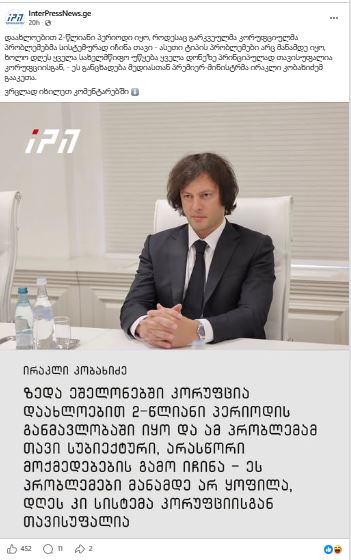
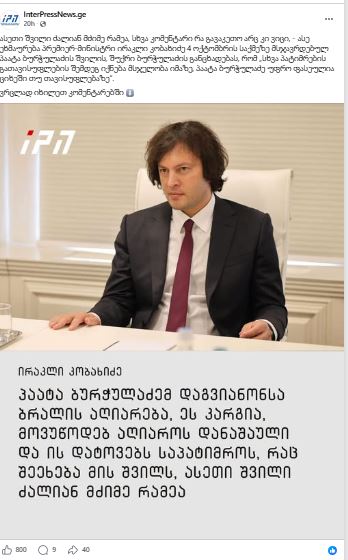
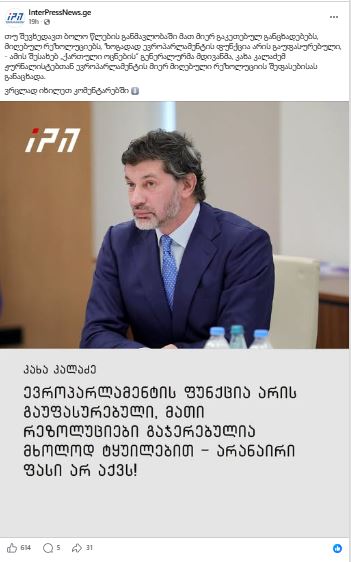
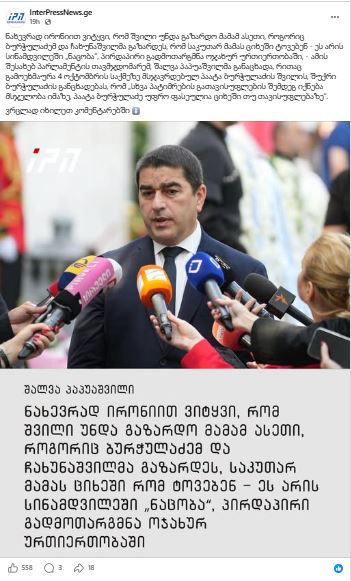
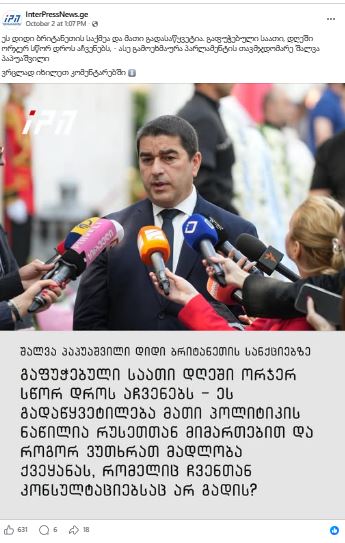
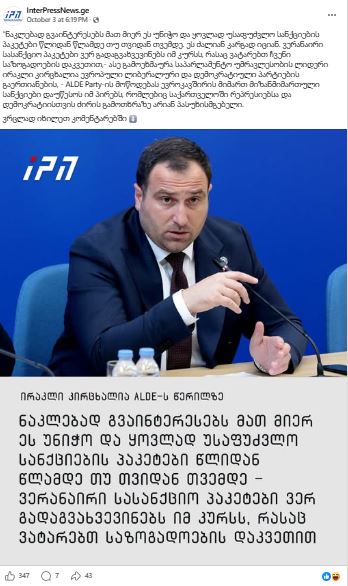
International Society for Fair Elections and Democracy (ISFED) has uncovered a coordinated inauthentic network that artificially boosts statements by Georgian Dream leaders on social media. The network’s accounts leave “Like” reactions on statements by Irakli Kobakhidze, Shalva Papuashvili, Kakha Kaladze and Irakli Kirtskhalia on the InterPressNews Facebook page. Most of the posts they liked concerns the October 4 case,1 Georgia's relations with the European Union, and criticism of Western partners. The network's accounts liked:
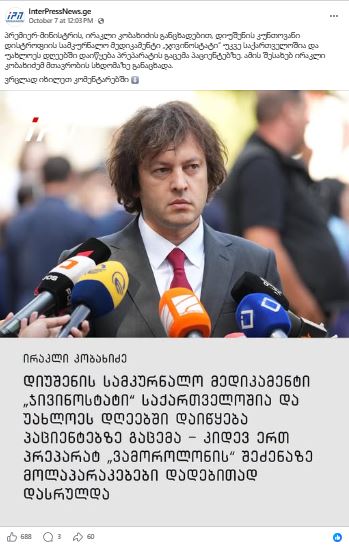
- Irakli Kobakhidze's statement on plea agreements for Murtaz Zodelava and Lasha Beridze, who were detained in the October 4 case: "There will be an appropriate response to confession and remorse, and that response means the release of the individuals concerned";
- Comments by Irakli Kobakhidze and Shalva Papuashvili on a statement by the son of Paata Burchuladze, who was convicted in the October 4 case;
- Kakha Kaladze's claims that the October 4 "coup attempt" was funded by European structures;
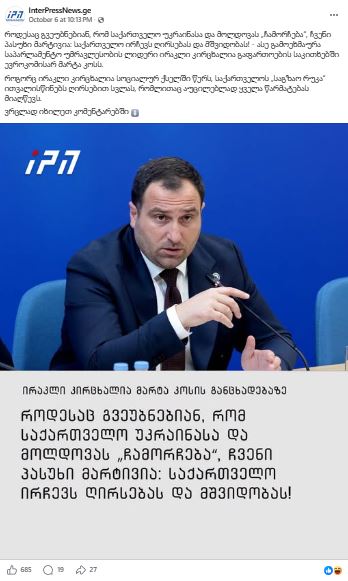
- Irakli Kirtskhalia's response to EU Enlargement Commissioner Marta Kos's statement that Georgia is "lagging behind" Ukraine and Moldova;
- Shalva Papuashvili's statement on the investigation launched against Nana Keinishvili, a member of the Board of the National Bank of Georgia.
The monitoring identified 424 inauthentic accounts, most of them with Georgian first and last names. The vast majority were created within just two days, on August 25-26, 2026. Most use AI-generated images as profile photos; many are locked, and they follow the same Facebook page. The network also includes several accounts created in 2024. Their creation dates match the periods when a coordinated inauthentic network operating in favor of Georgian Dream was created. ISFED reported on that network earlier, and Meta has since removed a large part of it from its platforms. The findings indicate that the accounts are run from a single center and that their goal is to artificially create the appearance of popularity and support for the ruling party.
Of the network's 424 accounts, 303 were created on August 25, 2026, and 109 on the following day, August 26. 97% of the network came into being within two days. The Facebook IDs of these accounts fall within a narrow range close to one another, which points to mass registration over a short period.
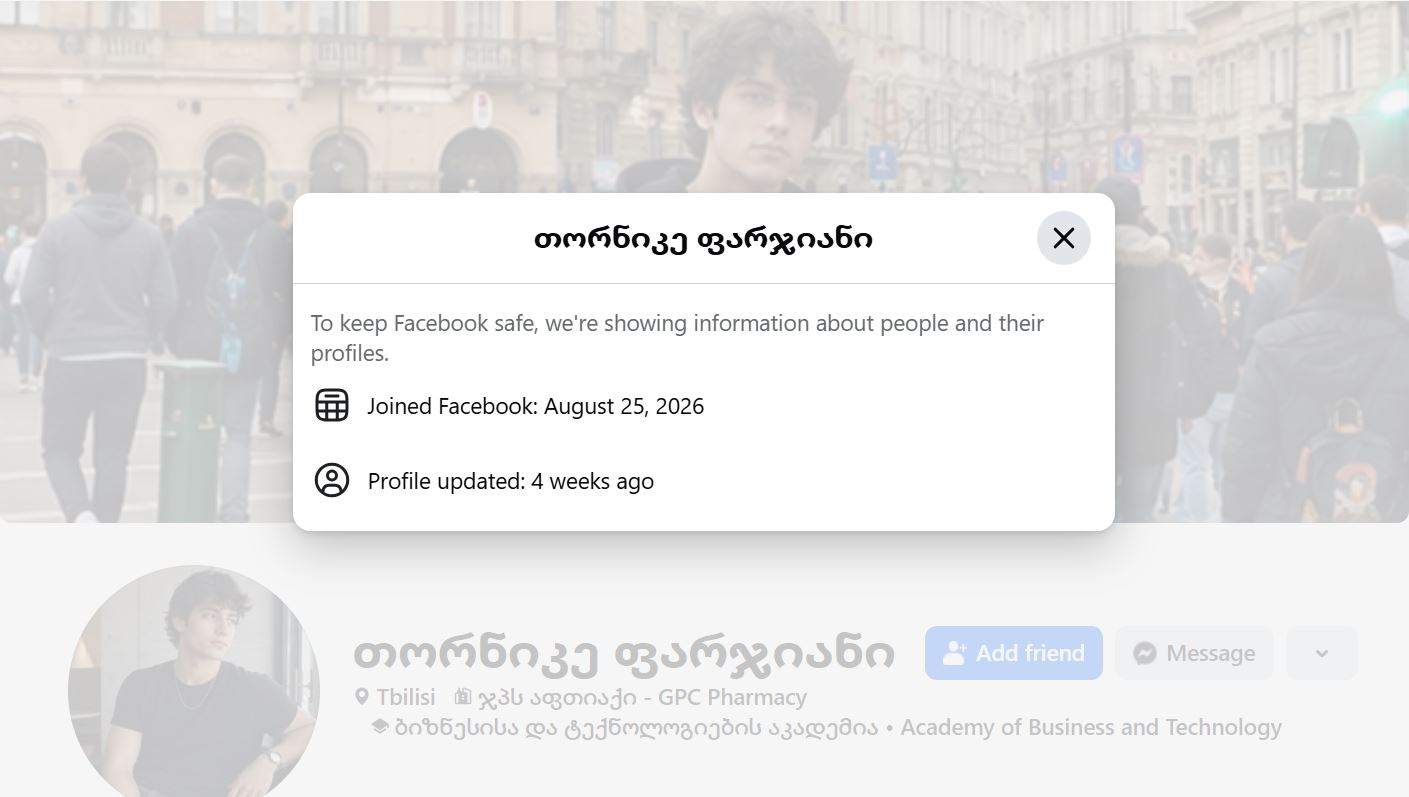
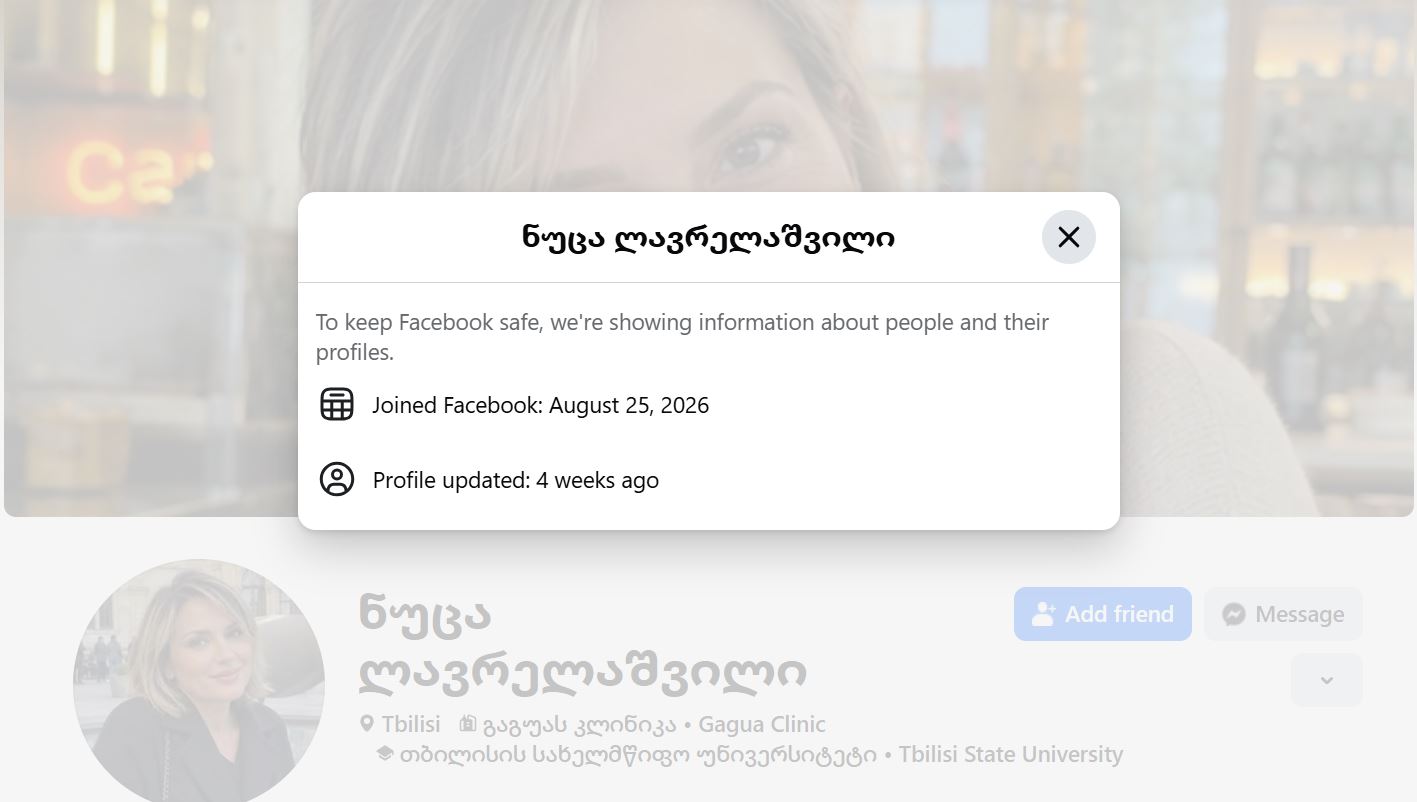
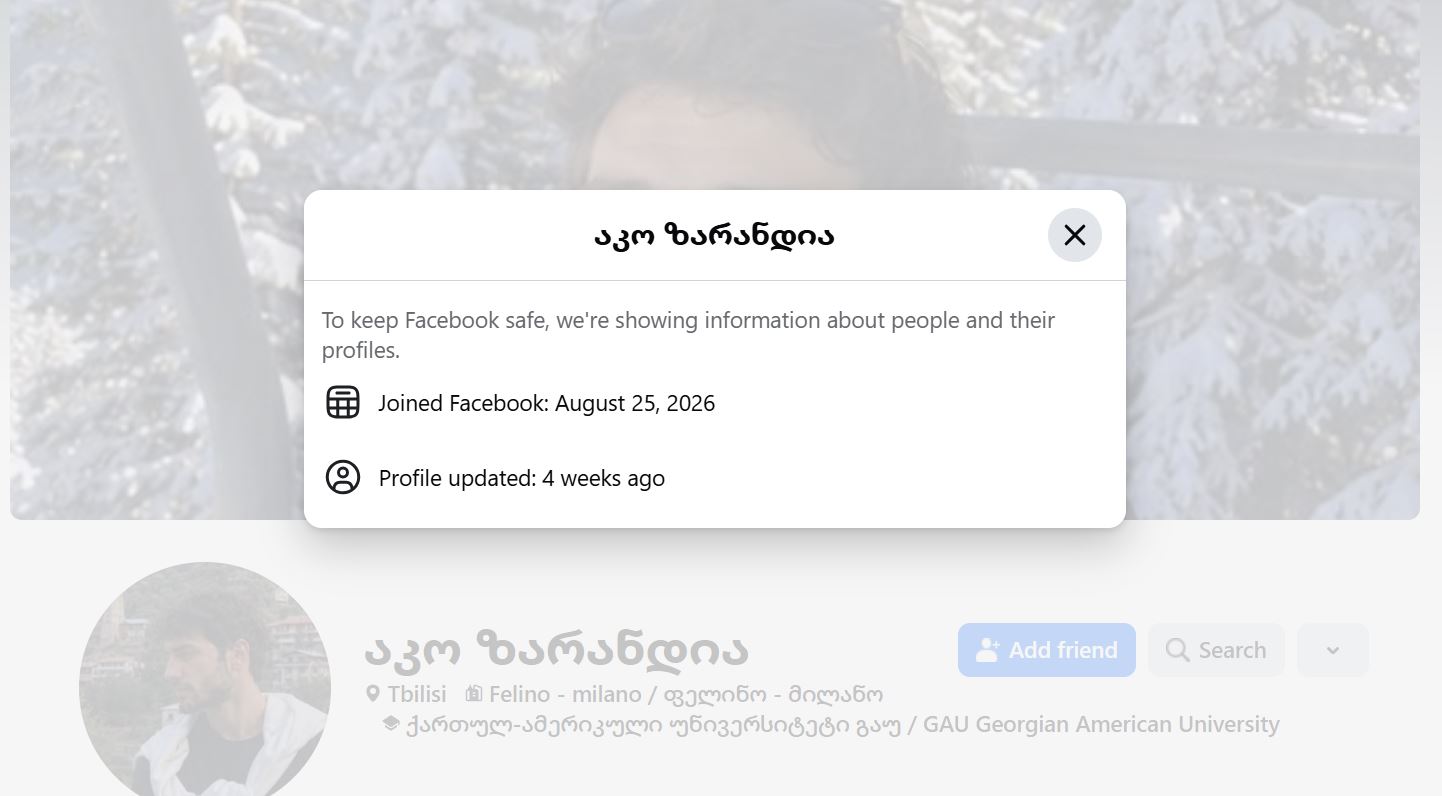
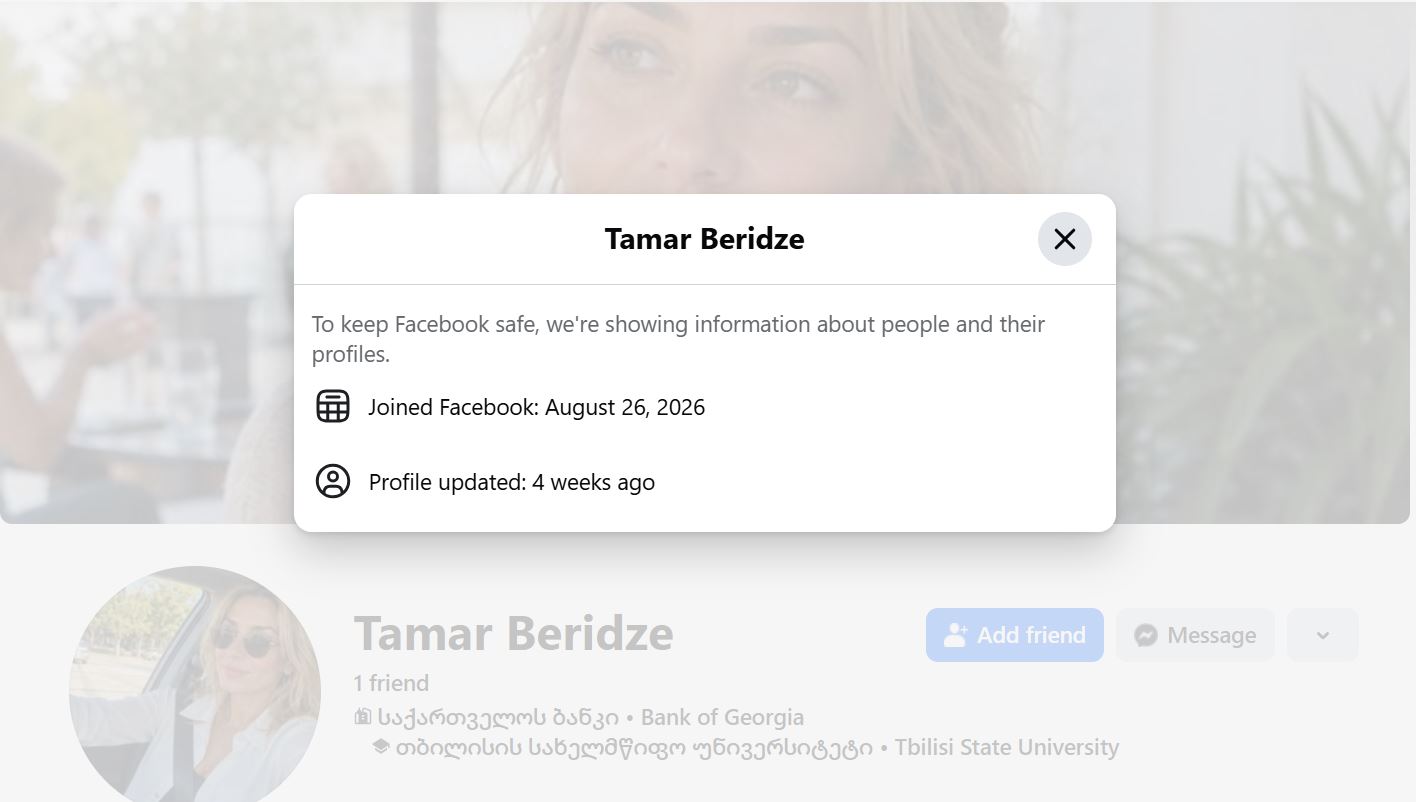
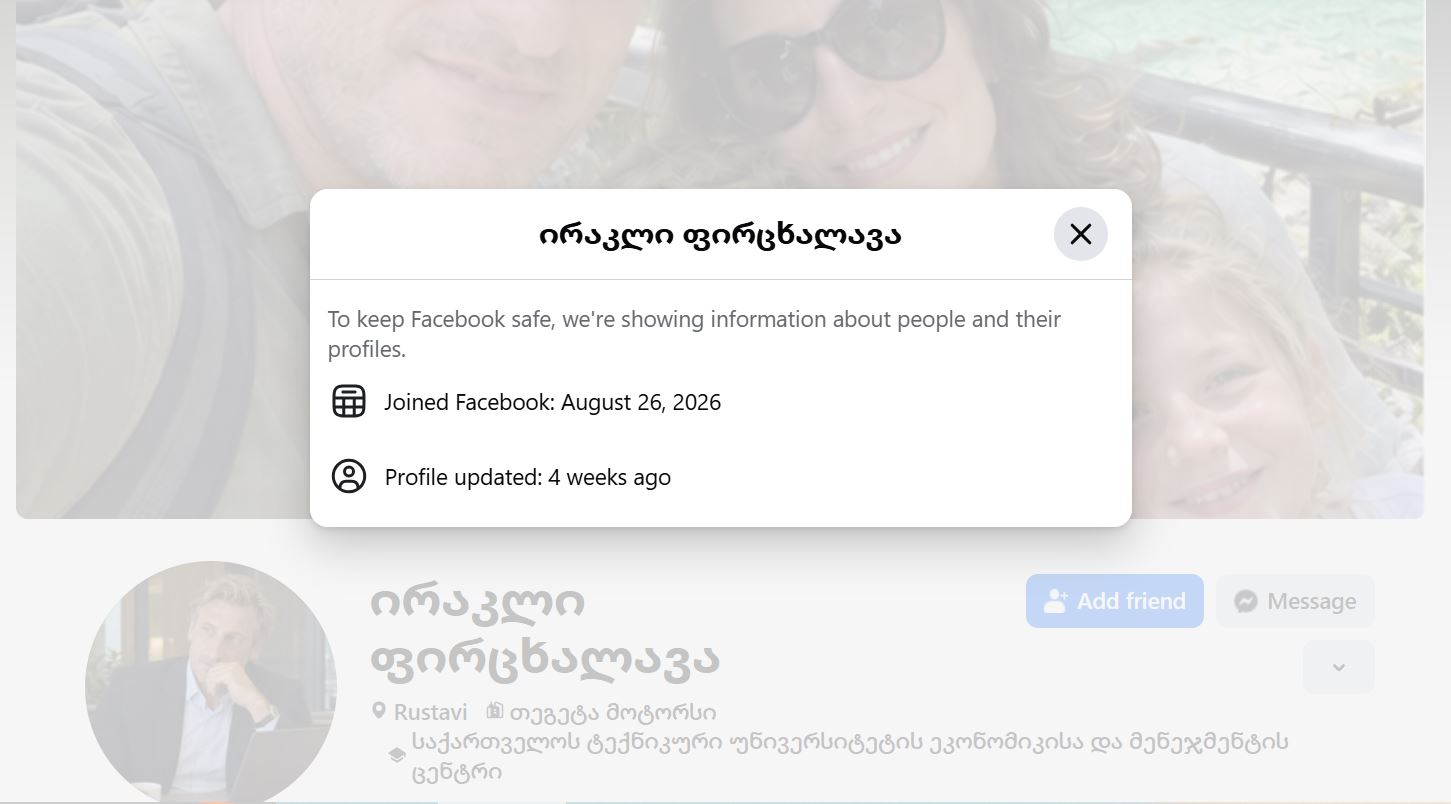
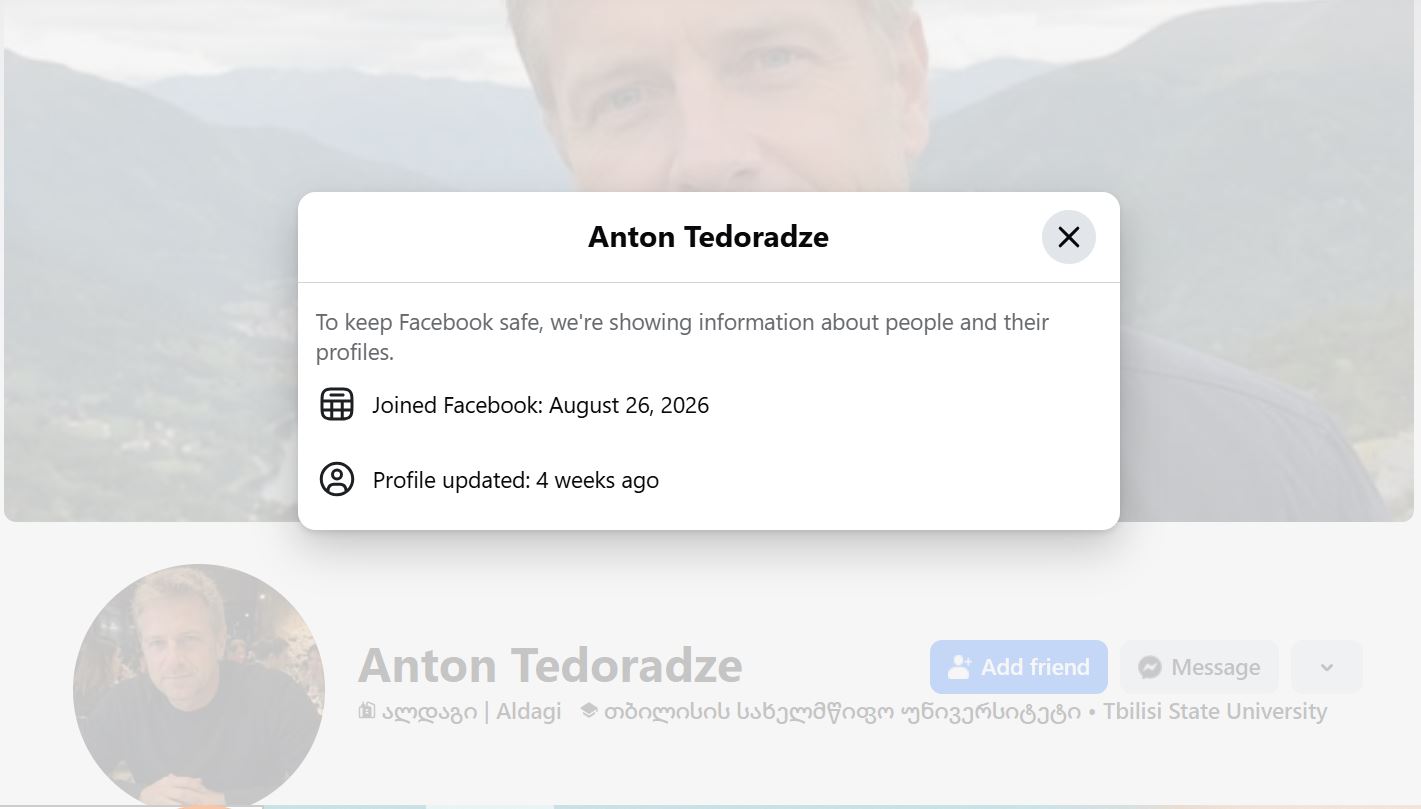
The network also includes 11 accounts created in January and April 2024. Four of them were created in January 2024, and seven between April 19 and 23. These are exactly the dates on which hundreds of fake accounts were created in the network ISFED identified while studying the artificial promotion of an Imedi post depicting Bidzina Ivanishvili.
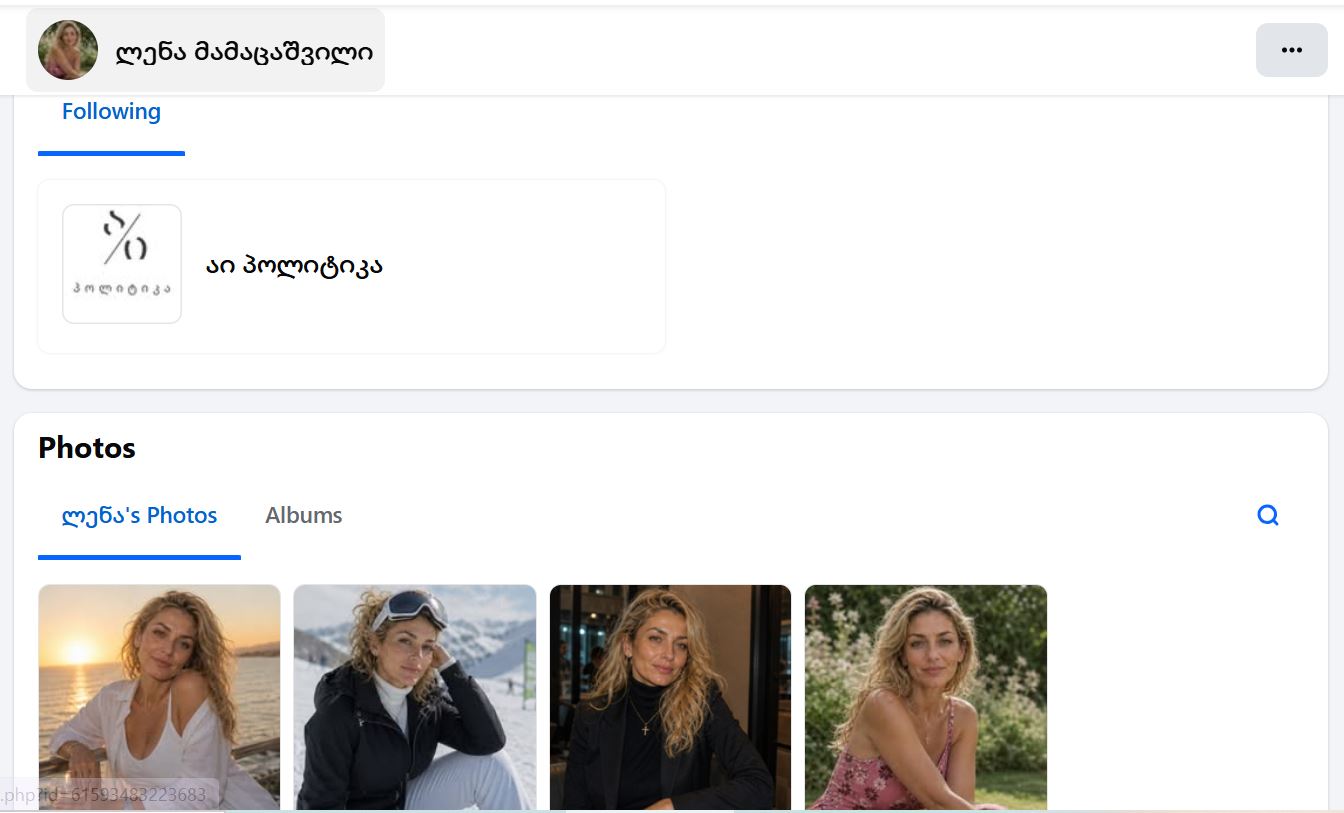
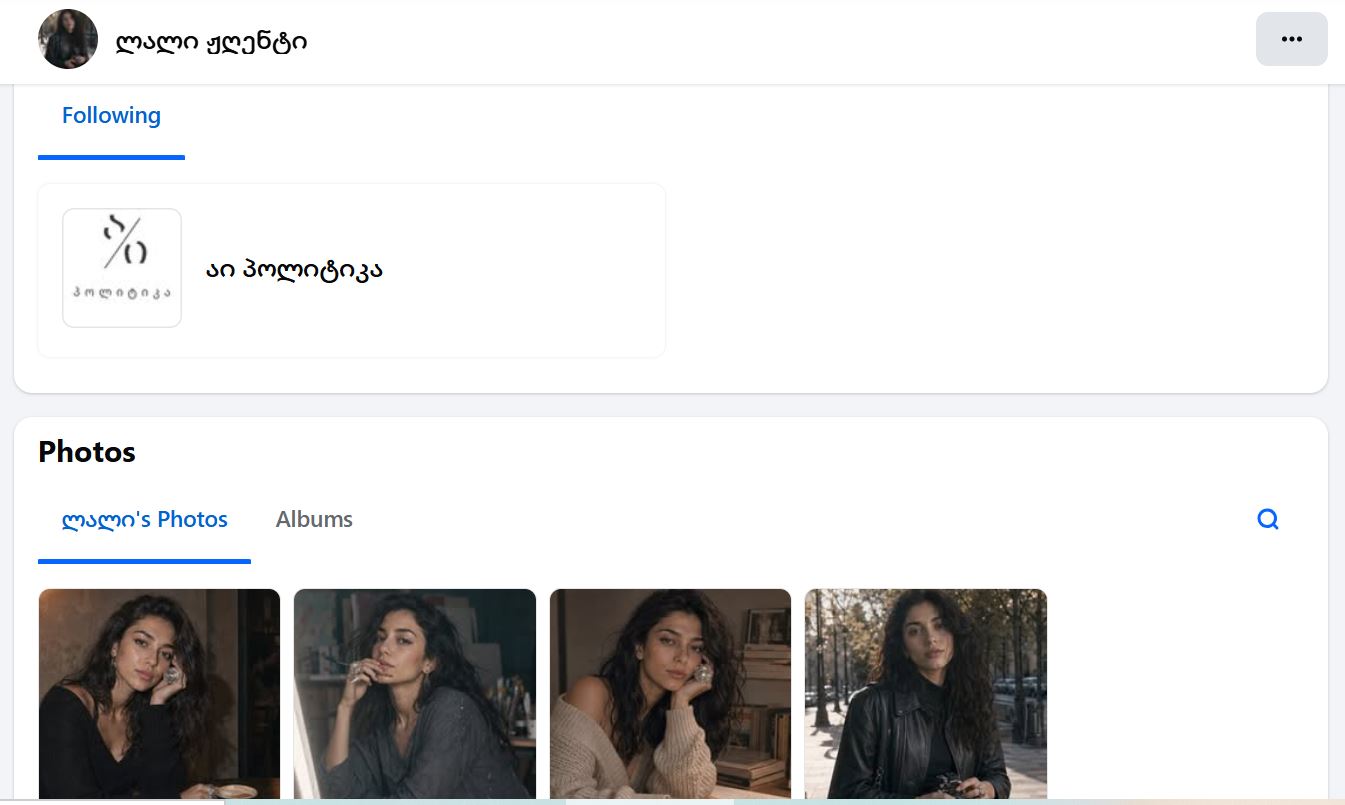
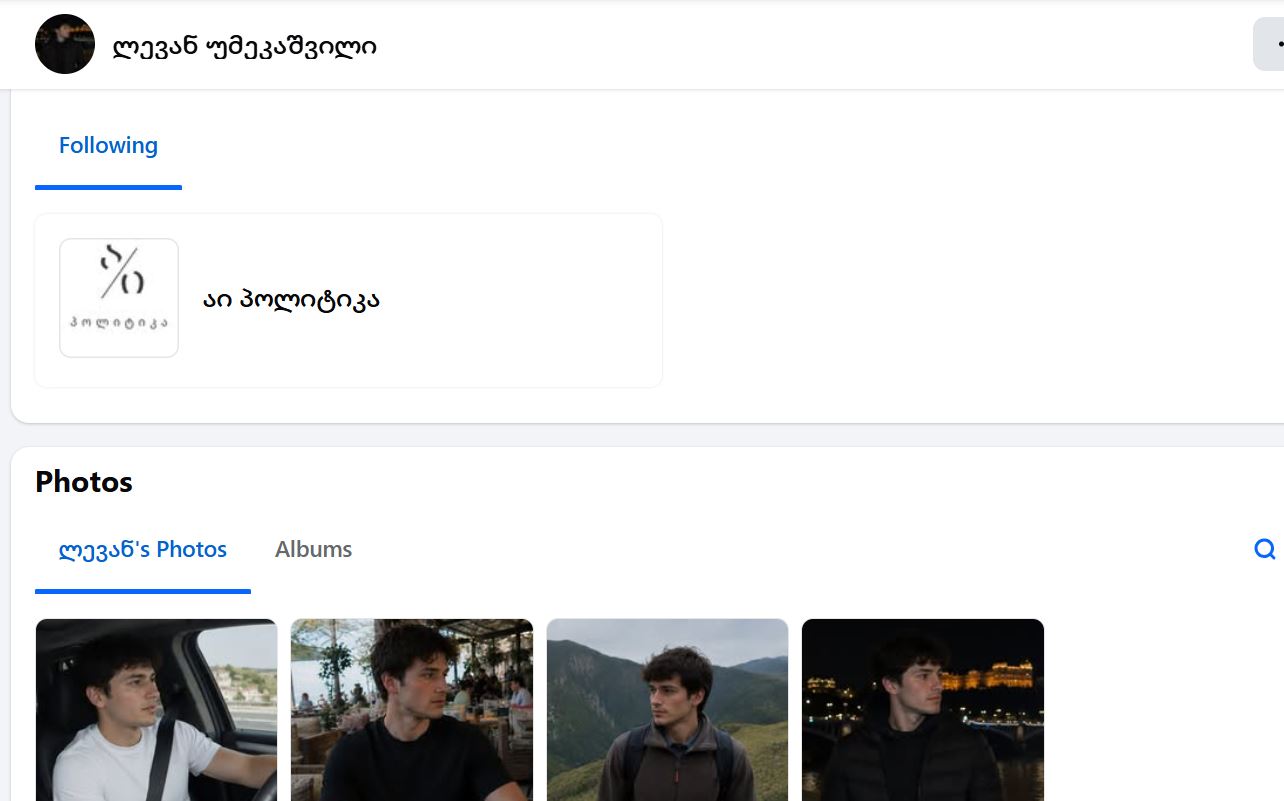
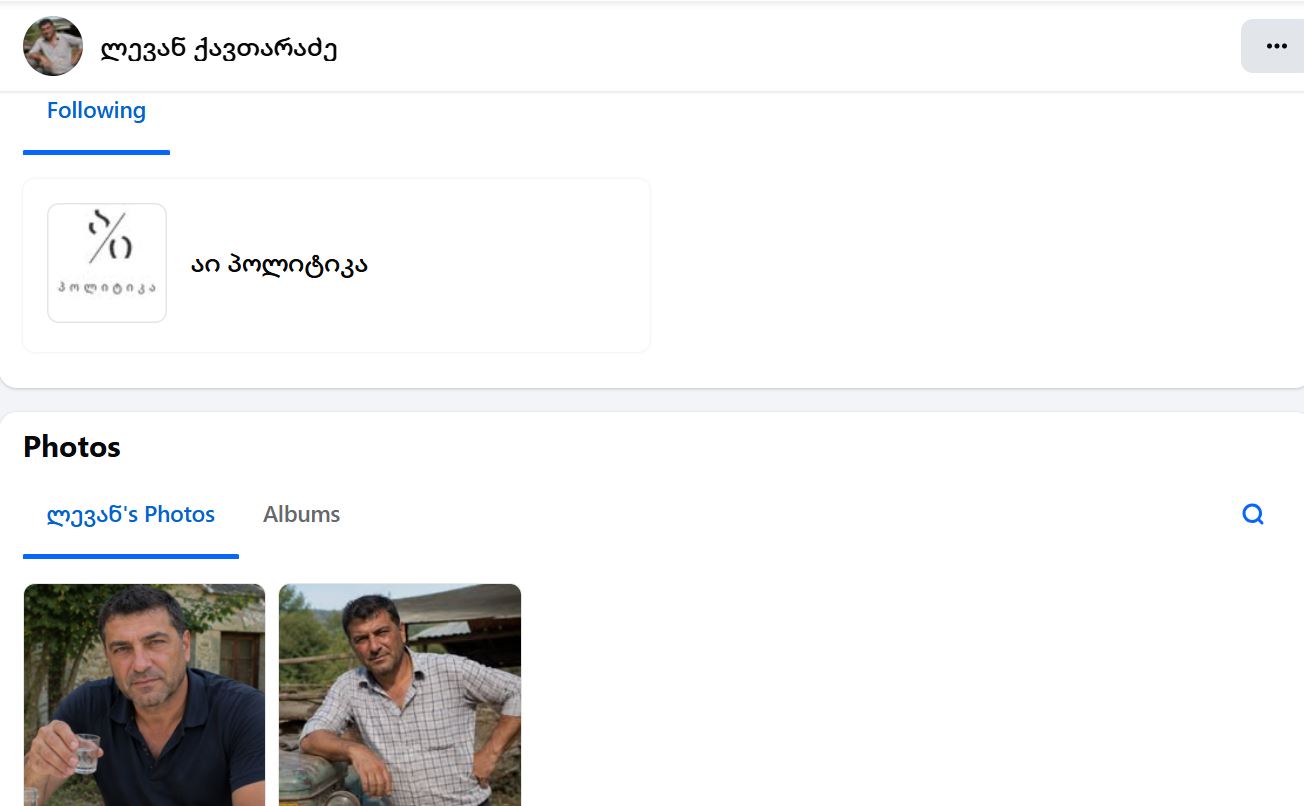
Of the 424 fake accounts, 295 use an AI-generated image as their profile photo. Such photos often look realistic, but closer analysis reveals telltale signs of AI generation. Notably, the newly created accounts in the network rely mostly on images of this kind, whereas networks exposed earlier more often used photos stolen from real people. The monitoring also found 22 accounts using photos of well-known athletes, actors, and film directors as profile pictures.
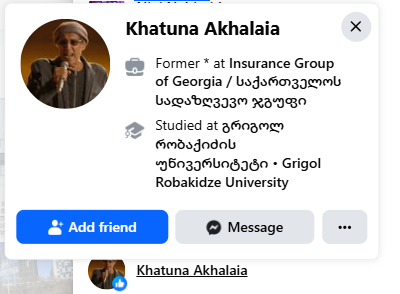
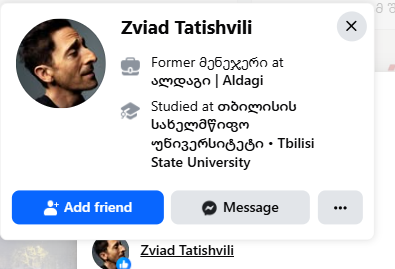
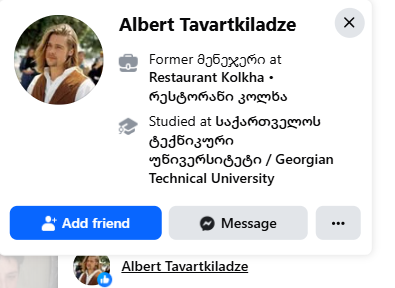
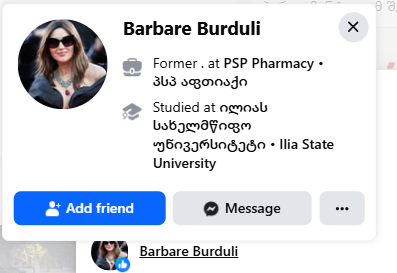
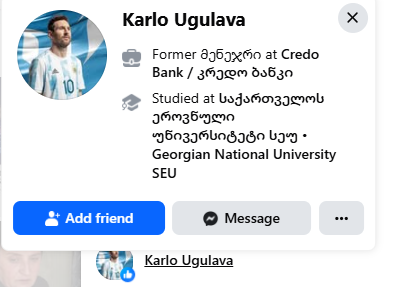
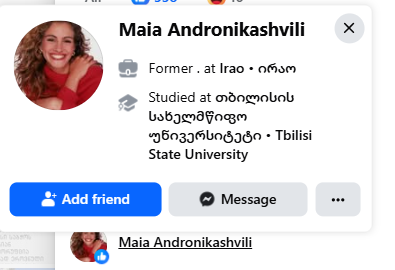
Most of the identified accounts, 298 profiles, are locked, while 92 are open. On locked profiles, the user's personal information, friends list, and posts are hidden, although the account's creation date and the pages it follows remain visible.
A review of the open profiles showed that their activity is concentrated on a handful of days. Of 108 accounts, 43 were active (posted additional photos) on September 6, 2026, 35 on September 7, and 26 on September 9.
The order of accounts in the lists of likers also points to coordinated management of the network. Facebook sorts out the list of reactions roughly by the time of the like, so real users appear in a different order on different posts. In the case of this network, however, the same accounts appear in an identical order on ten different posts. For example, nine accounts always stand in the same order on statements by Irakli Kobakhidze, Kakha Kaladze and Shalva Papuashvili, as well as on posts by "Tbilisi news." The lists of likers revealed 10 blocks of network accounts that repeat consecutively, in exactly the same order, on at least five different posts. This indicates that the accounts like posts as a group, from a single list.
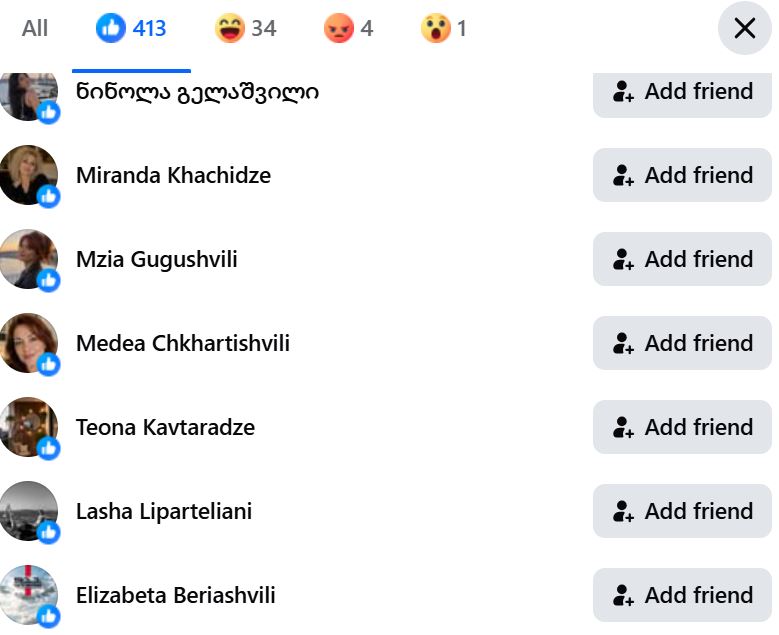
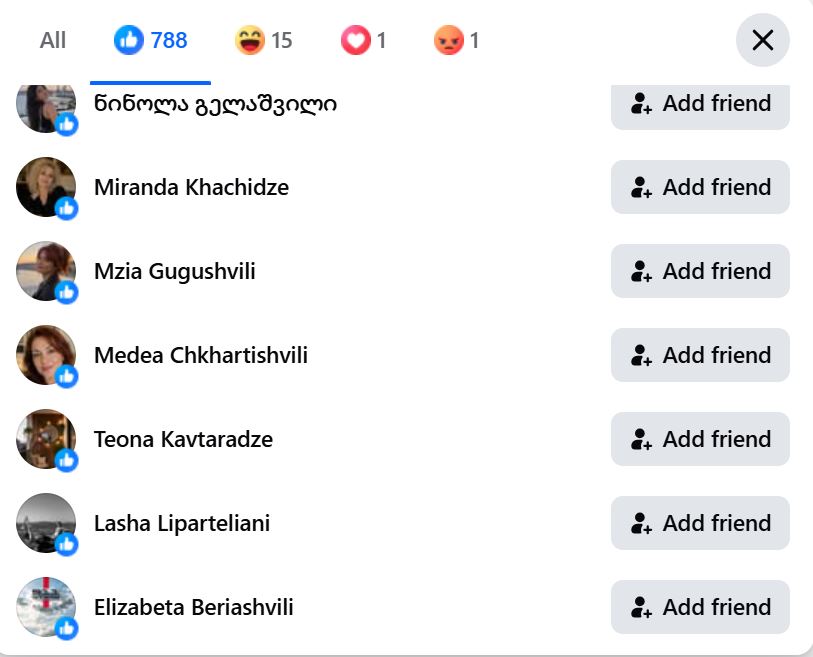
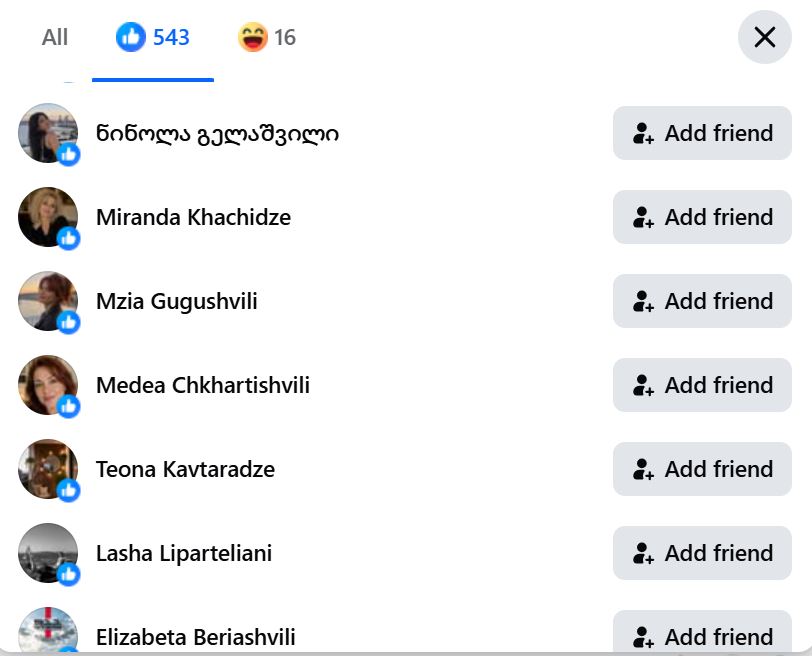
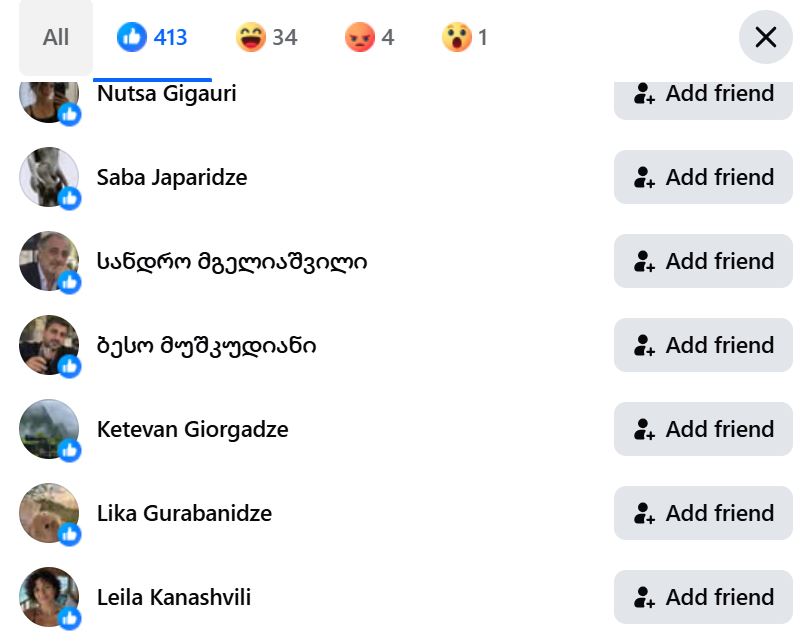
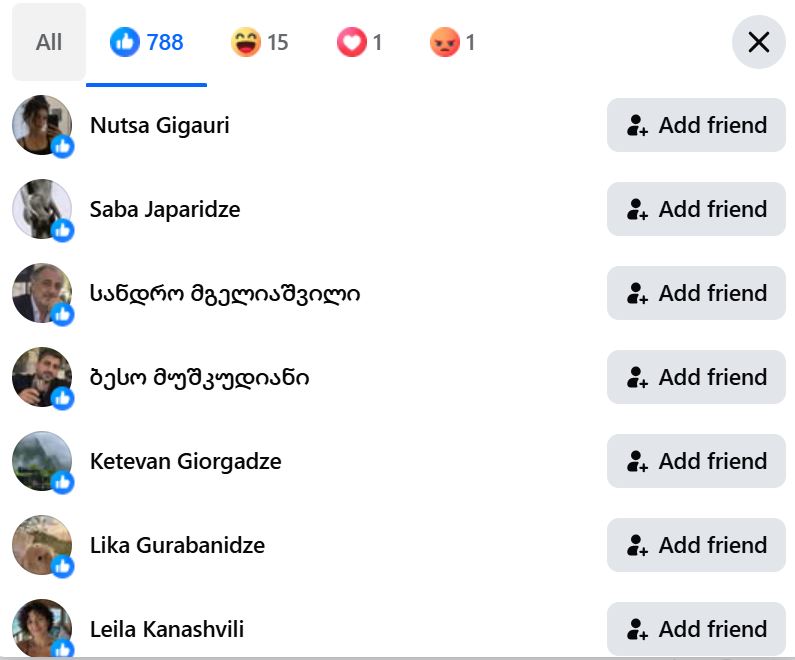
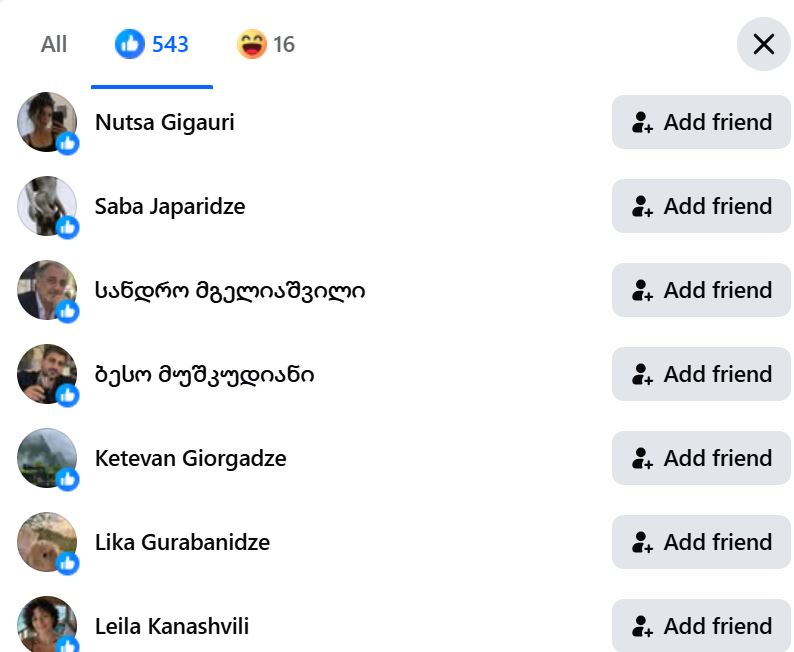
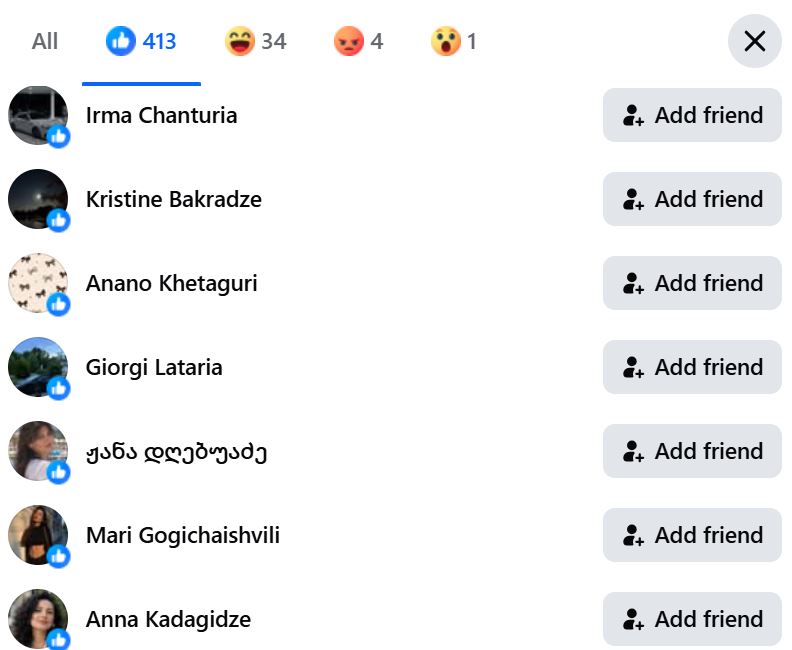
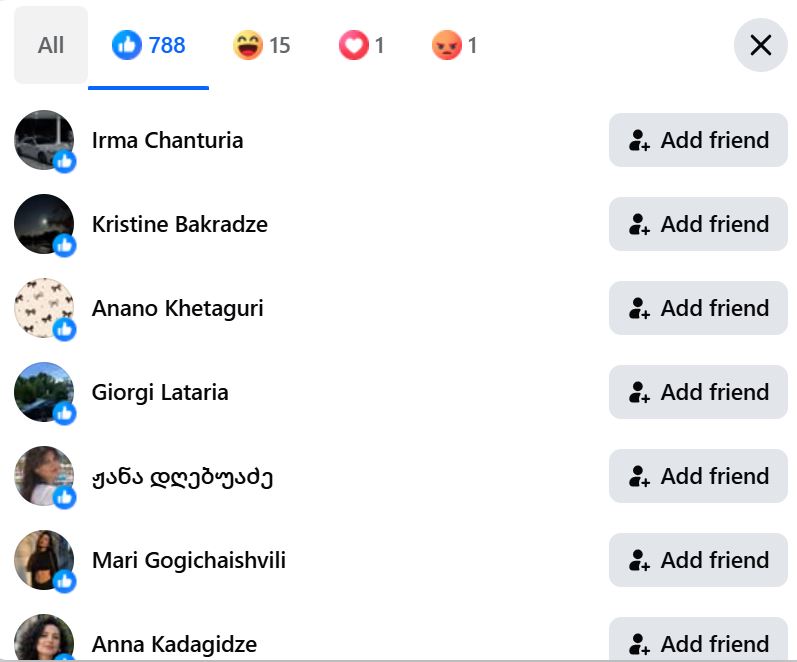
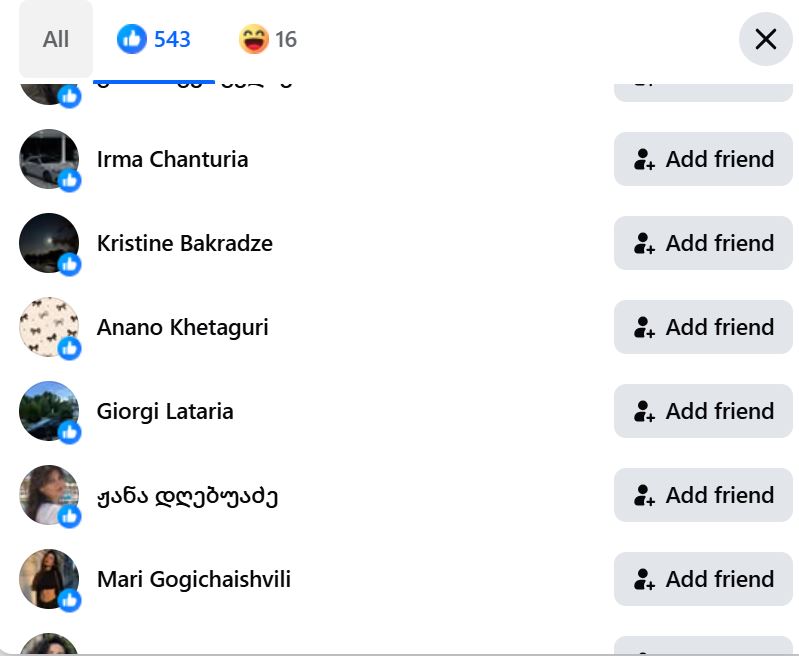
Furthermore, most fake accounts follow the same Facebook page. For example, 235 accounts follow the page “Tbilisi news.” Notably, 333 of the fake accounts that liked the posts supporting “Georgian Dream” also liked two posts published by “Tbilisi news.” The lists of users who liked these two posts are almost identical in order: in one instance, 51 accounts appear in both lists in exactly the same order.
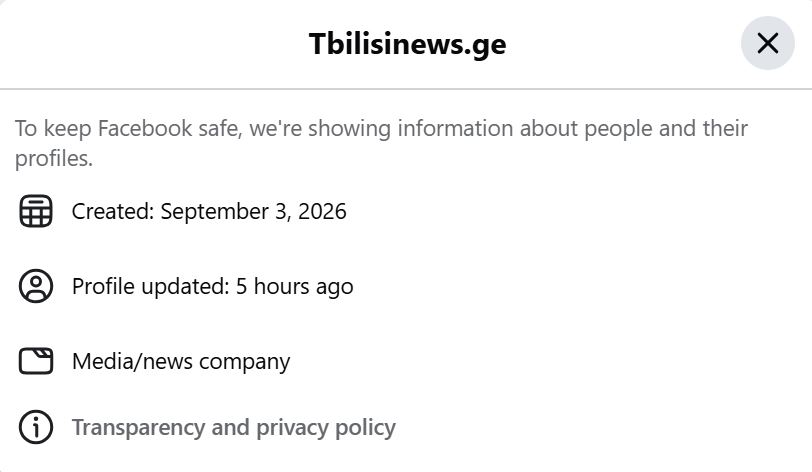
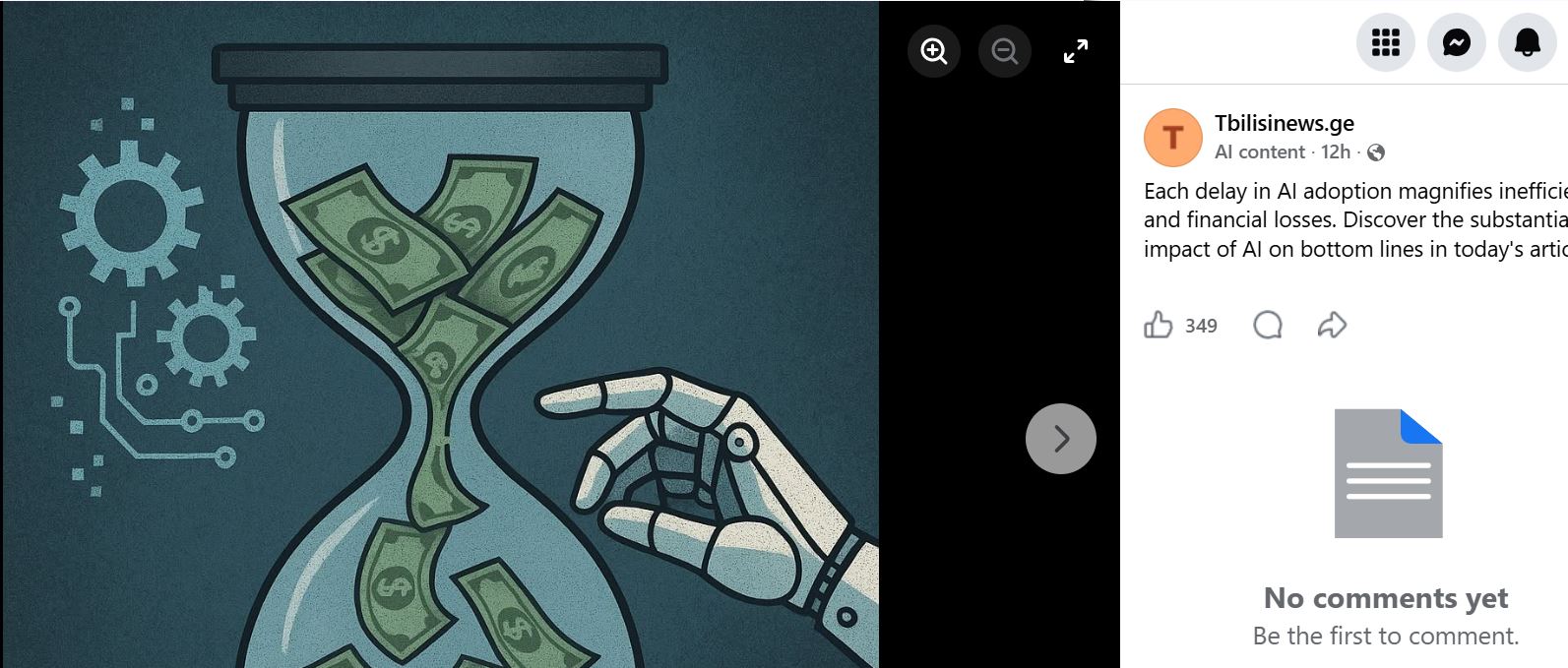
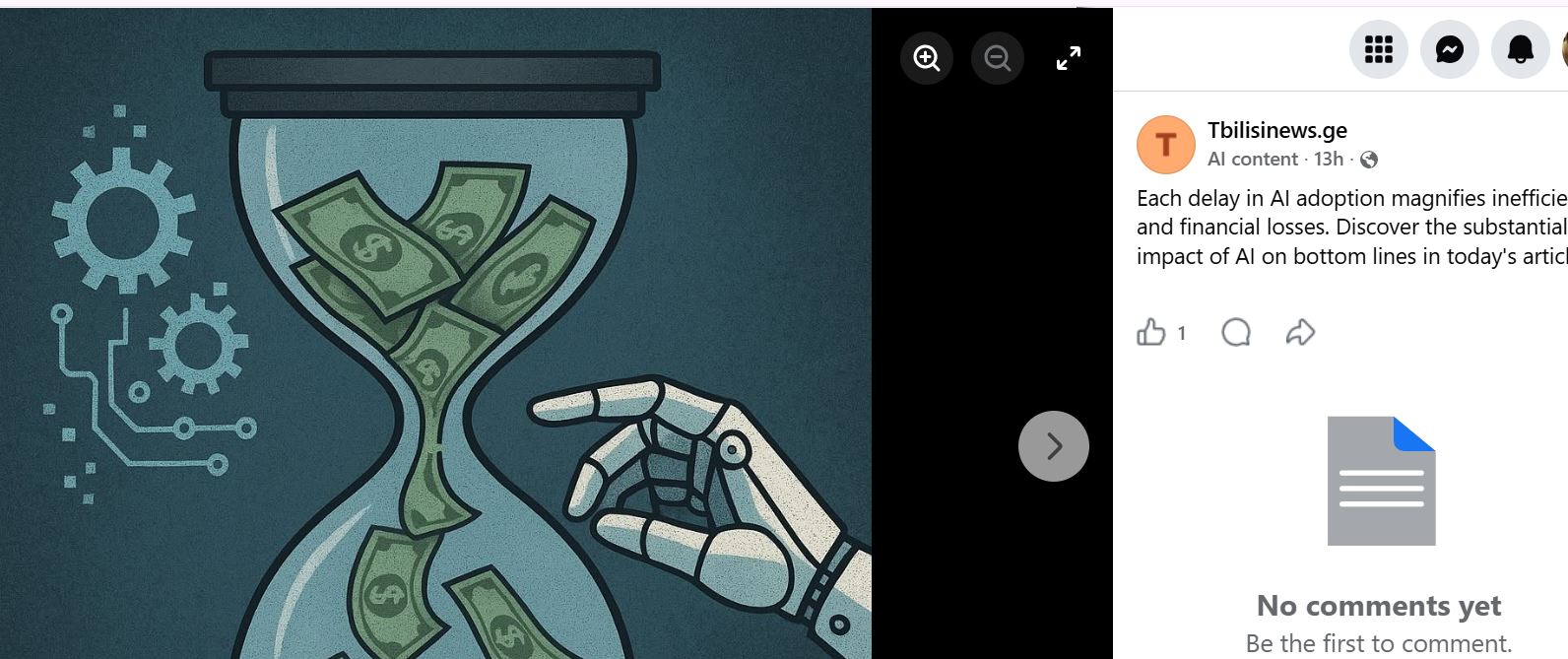
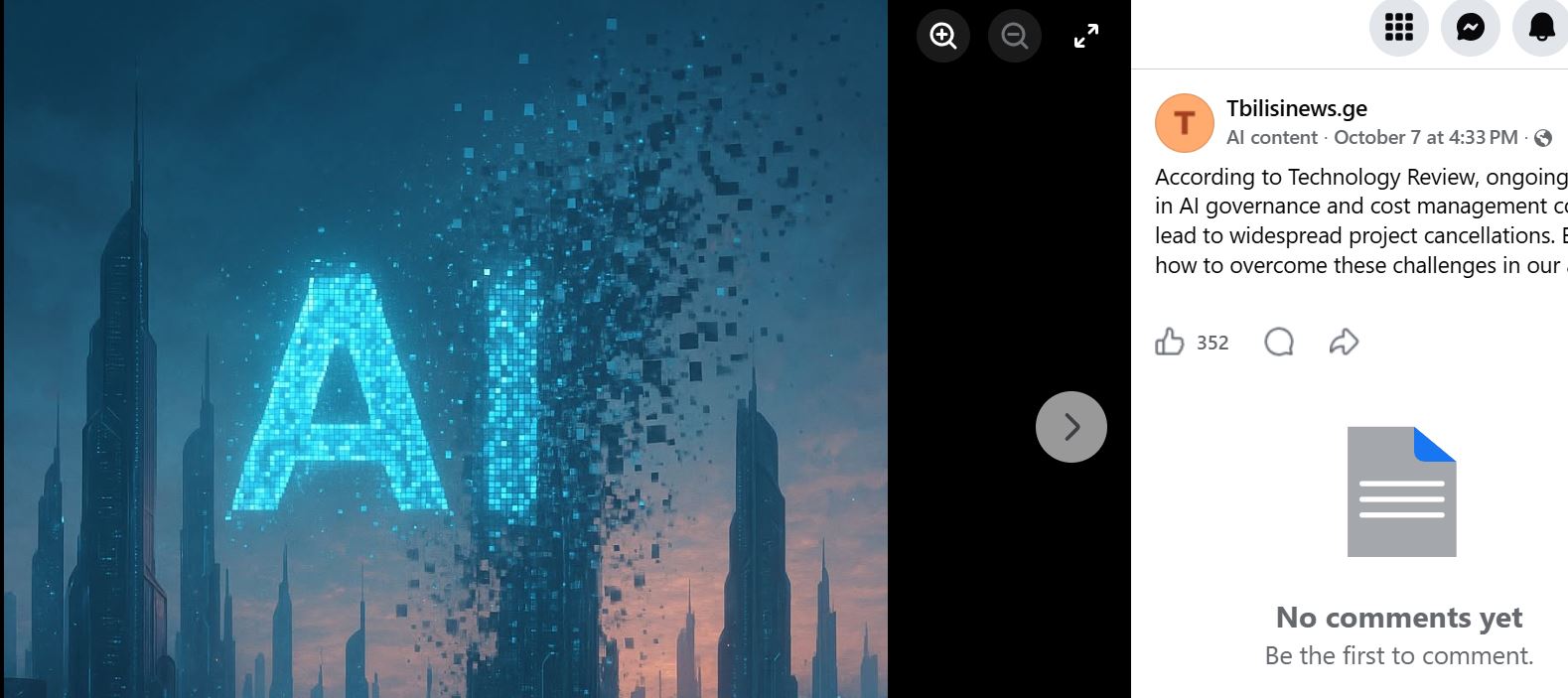
The page operating under the name “Tbilisi news” (Tbilisinews.ge) was created on 3 September 2026 and does not publish news related to Tbilisi or Georgia. Between 8 September and 9 October 2026, the page published 27 English posts about adopting artificial intelligence in business and social media automation. Most of the posts appear to contain automatically generated content: the same text was published multiple times, and one post even retained the template placeholder “[YourArticleLink]” instead of an actual link. Twenty-five posts received only 0–1 reactions, while two posts published on 7 and 9 October received 352 and 349 likes, with no comments or shares. Of the 416 views recorded for the 7 October post, 352 resulted in reactions, an unusually high rate for an organic audience. The overwhelming majority of users who liked these two posts belong to the same network that liked statements made by Georgian Dream leaders.
Nineteen accounts in the inauthentic network follow „აი პოლიტიკა," a page owned by Georgian Dream supporter Gia Gachechiladze ("Utsnobi"). Notably, pages linked to "Utsnobi" were also followed by a significant share of the inauthentic accounts ISFED exposed in July of this year.
The artificial inflation of engagement on posts supporting Georgian Dream is not a one-off case. ISFED has exposed similar networks several times in recent months. On May 26, 2026, Independence Day, Imedi's Facebook page published a card showing Bidzina Ivanishvili alongside Merab Kostava and Zviad Gamsakhurdia. The post initially drew mostly critical comments and laughing reactions, after which the number of likes rose sharply. ISFED identified 1,551 inauthentic accounts on this post, most of which were created in sync, for example, 99 accounts on January 22, 2024, and 250 between April 19 and 23 of the same year. The network used stolen and AI-generated photos and followed pages favored by Georgian Dream. After the investigation was published, 1,343 of the identified accounts could no longer be found on Facebook. The 2024 accounts identified in the current case were created on exactly these dates. In addition, during 2026, Myth Detector identified more than 400 inauthentic profiles linked to Georgian Dream that used AI-generated photos.
1. The "October 4 case" refers to the mass criminal prosecution of 64 individuals following a protest in Tbilisi, Georgia, on October 4, 2025, which culminated in an attempt to storm the Orbeliani Palace, the presidential residence. The Georgian government characterized the incident as an attempted coup d'état and a failed revolution.
Throughout 2026, Georgian courts sentenced several opposition politicians, former state officials, activists, and ordinary citizens to prison terms ranging from two to seven years on charges of organizing group violence and attempting to seize a strategic facility. The political opposition and human rights organizations have widely condemned the proceedings as politically motivated and designated the convicted individuals as political prisoners.