
One Year of Imprisonment and the Sustained Discreditation Campaign Against Mzia Amaghlobeli

In Georgia, propaganda and discreditation campaigns carried out on social networks are usually well-organized and based on information manipulation strategies aimed at shaping public opinion and controlling political processes. One of the most dangerous tactics used in such campaigns is the dehumanization of critically minded groups and individuals. This not only serves to incite negative emotions toward the targets but also creates a basis for violence or unlawful treatment against them to be perceived by society as justified or normal. Such processes threaten the free expression of critical thought and increase the level of self-censorship.
Observation by International Society for Fair Elections and Democracy (ISFED) shows that discreditation campaigns often employ emotionally charged narratives, stereotypes, and conspiracy theories to portray critically minded actors as “enemies” or “dangerous elements for society.” As a result, the ground is prepared not only for their political isolation but also for real risks of physical attacks and institutional persecution. Alongside civil organizations, critical media is especially often targeted by such campaigns.
In 2025, one of the main targets of the Georgian Dream propaganda ecosystem was journalist and founder of online media outlets Netgazeti and Batumelebi, Mzia Amaghlobeli. On January 11, 2025, she was arrested twice—first at a protest near Batumi Police Department for putting up a sticker reading “Strike,” and later for slapping Batumi Police Chief Irakli Dgebuadze. After seven months of pre-trial detention, on August 6, Batumi City Court Judge Nino Sakhelashvili reclassified the charge of assaulting a police officer to a lighter offense and sentenced Amaghlobeli to two years in prison. The appellate court upheld the verdict.
Parallel to the support rallies and court hearings, a year-long discreditation campaign against Mzia Amaghlobeli was conducted. Involved in this process were representatives of Georgian Dream, individuals posing as experts connected to the party, propaganda media, anonymous actors, and Russia-controlled anonymous networks.
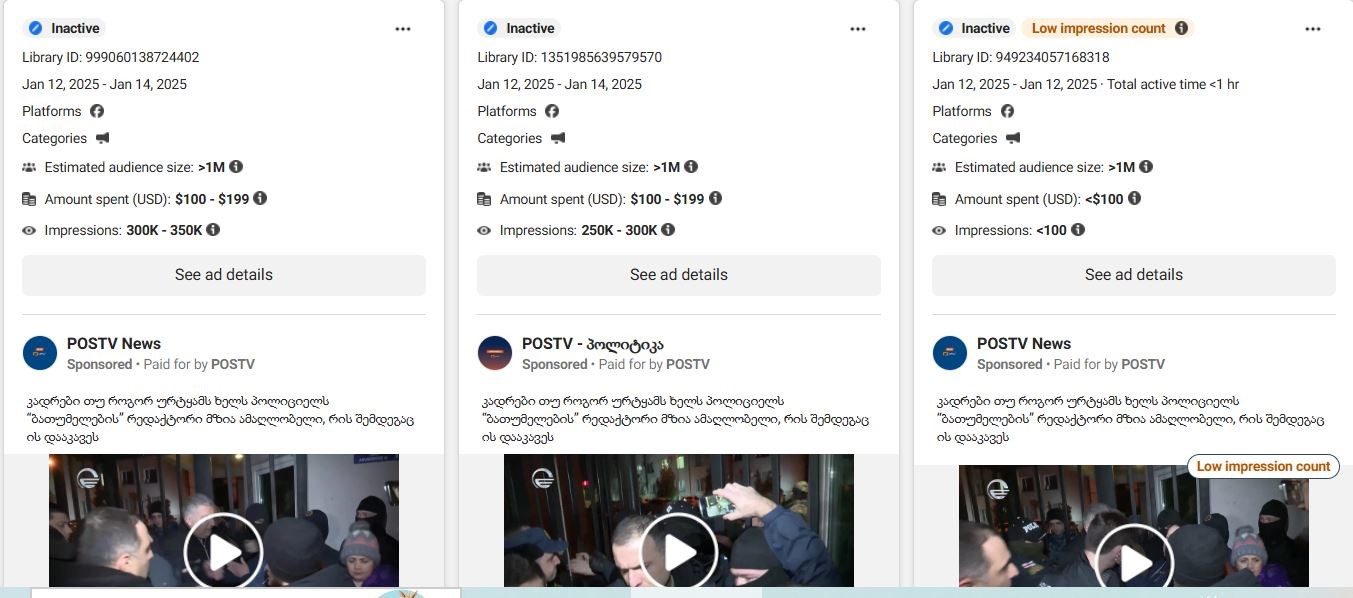
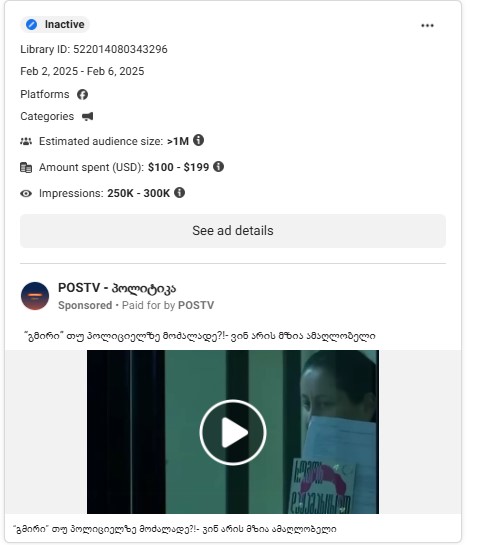
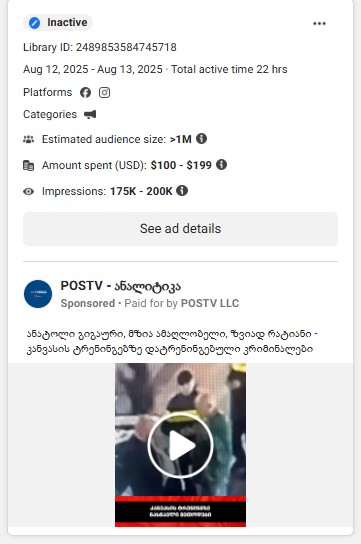
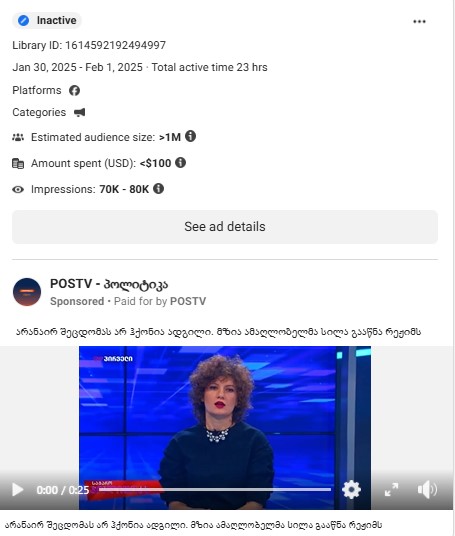
The campaign began shortly after her arrest. Propaganda media coordinated the dissemination of the same video showing her slap of Dgebuadze. Some of the posts on Facebook were promoted with paid advertising.
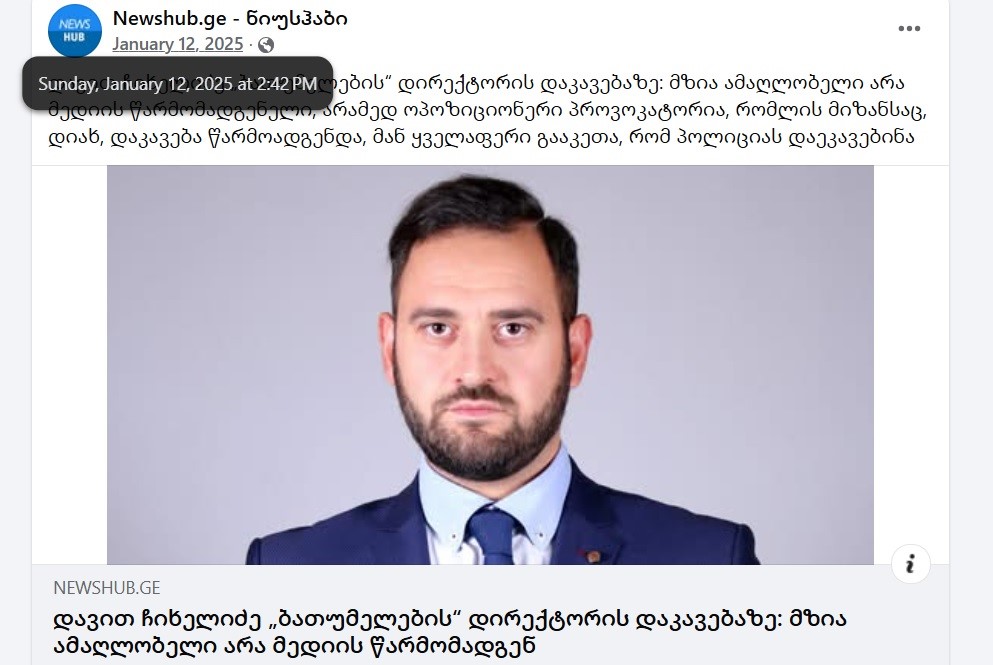
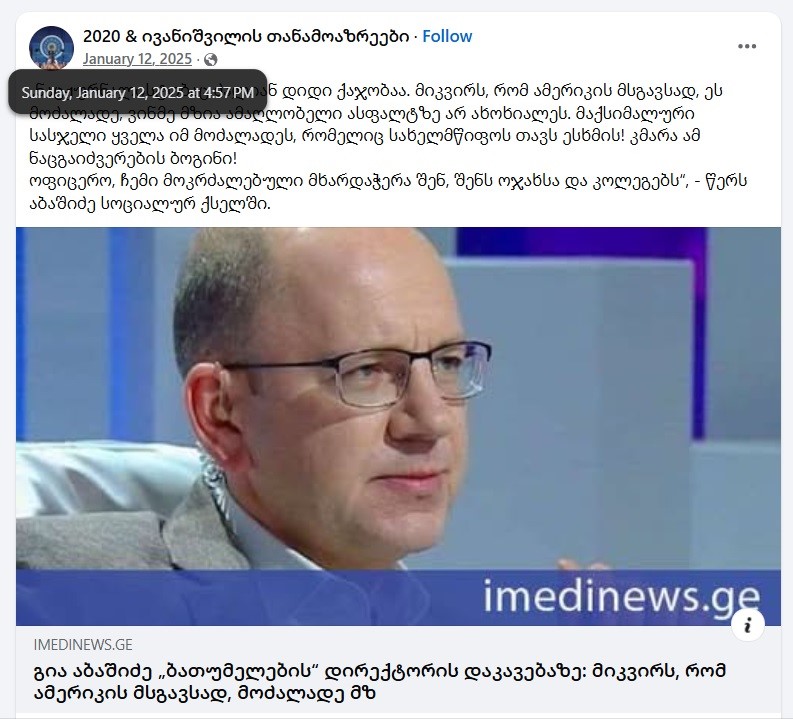
Traditionally, the first to join the discreditation campaign were individuals posing as “experts.” Within hours of her arrest, pro–Georgian Dream news agencies actively circulated Facebook posts by Davit Chikhelidze and Gia Abashidze. Both claimed that the U.S. uses even harsher methods when detaining media representatives; Abashidze also expressed support for Dgebuadze, his family, and colleagues. Identical messages were spread by members of People’s Power and other Georgian Dream supporters posing as experts.
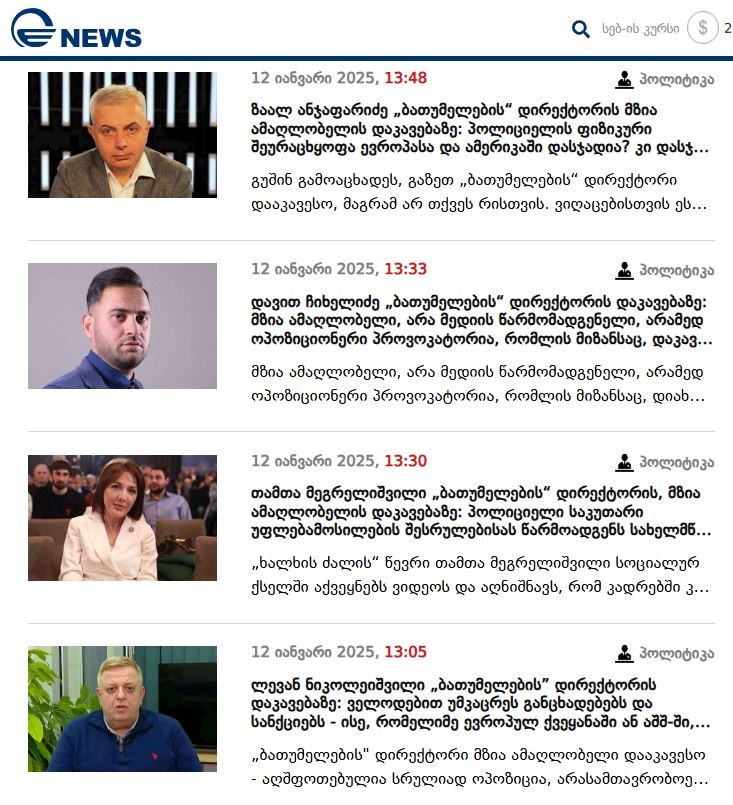
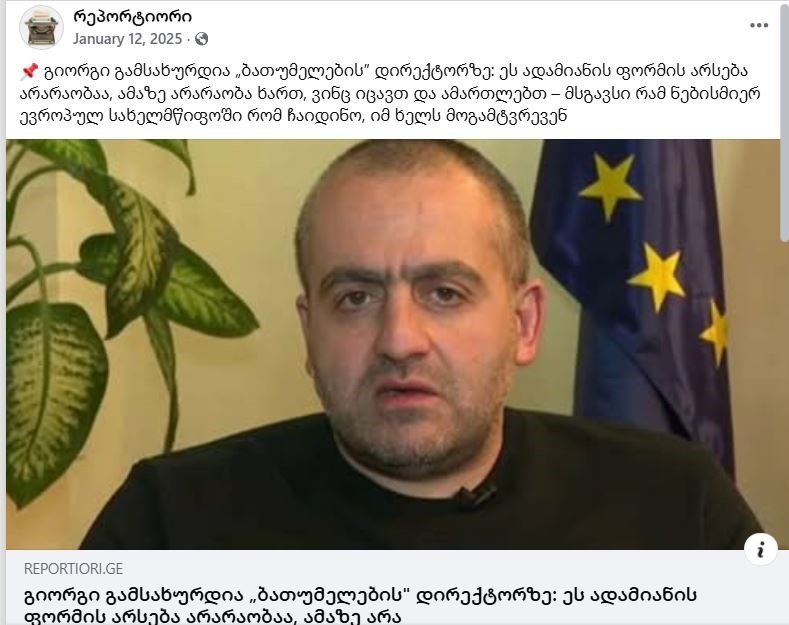
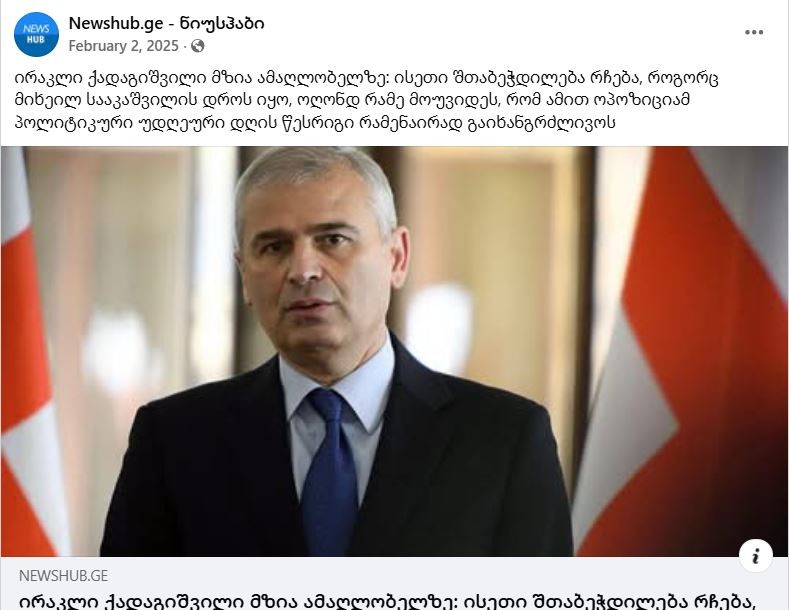
After the “experts,” Georgian Dream members themselves made statements against Amaghlobeli. Their messages were fully aligned and emphasized the need for her to be punished with the full severity of the law. To shape public opinion against her, her action was described as “an attack on a police officer” and “beating.”
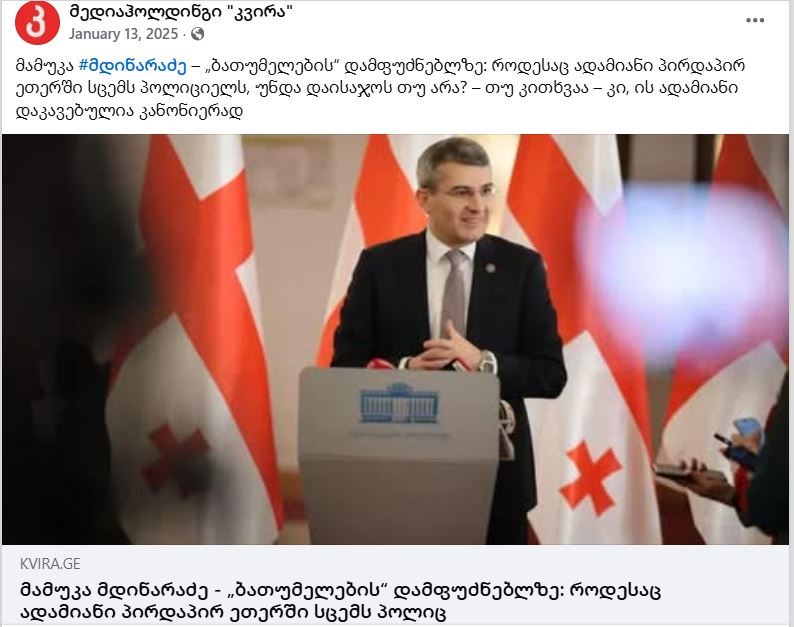
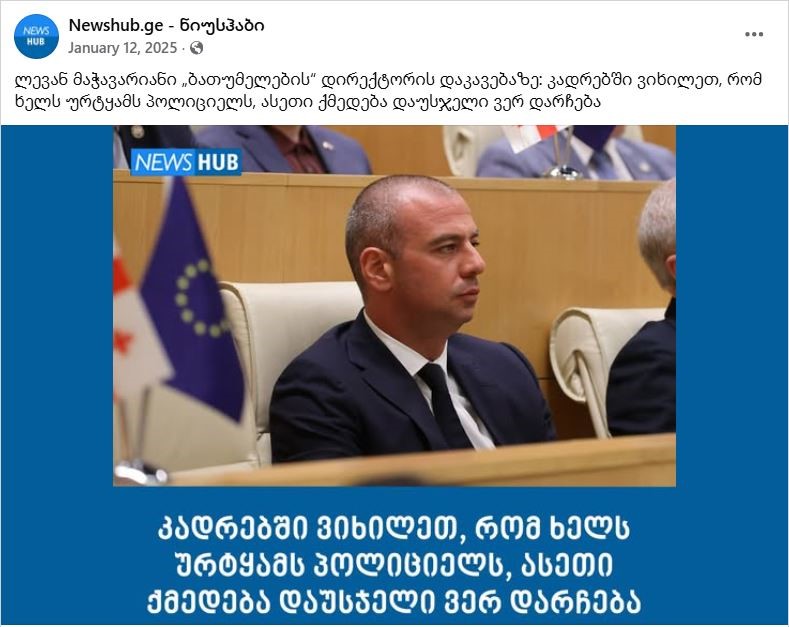
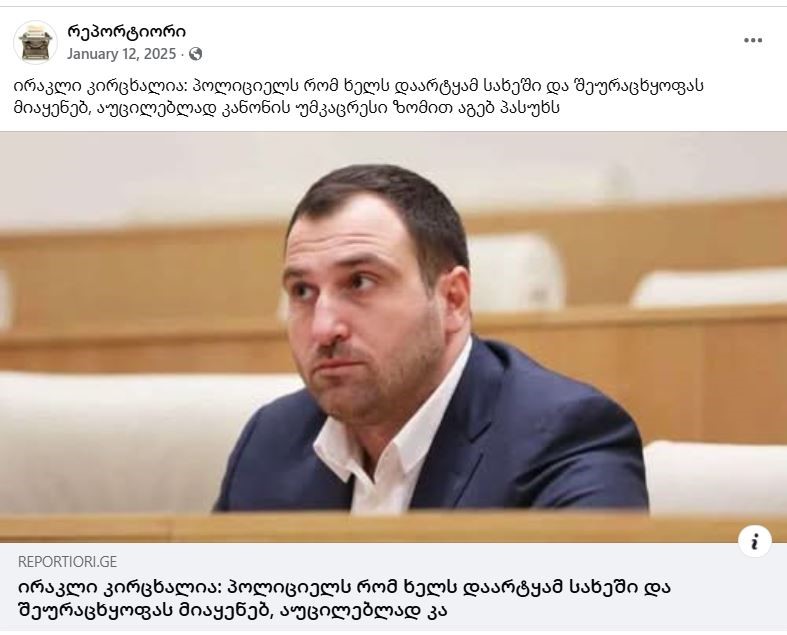
The campaign intensified after Amaghlobeli began a hunger strike. Georgian Dream members claimed that her hunger strike was an externally orchestrated process aimed at evading punishment and “collapsing the state.” They alleged that the United National Movement encouraged her to starve, wishing for the process to end fatally. Propaganda media echoed these identical messages.
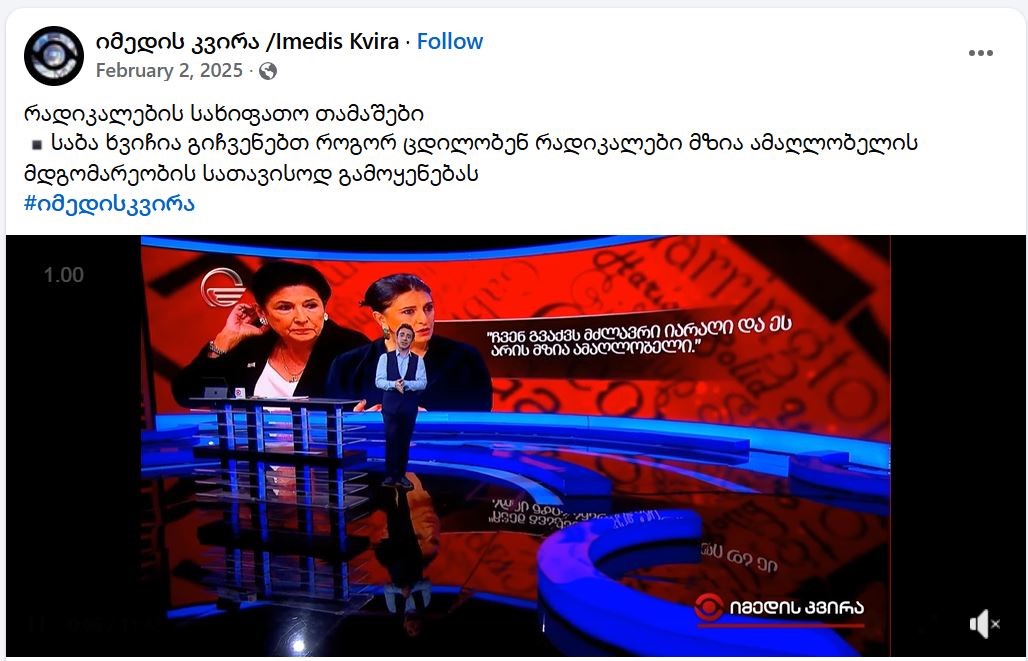
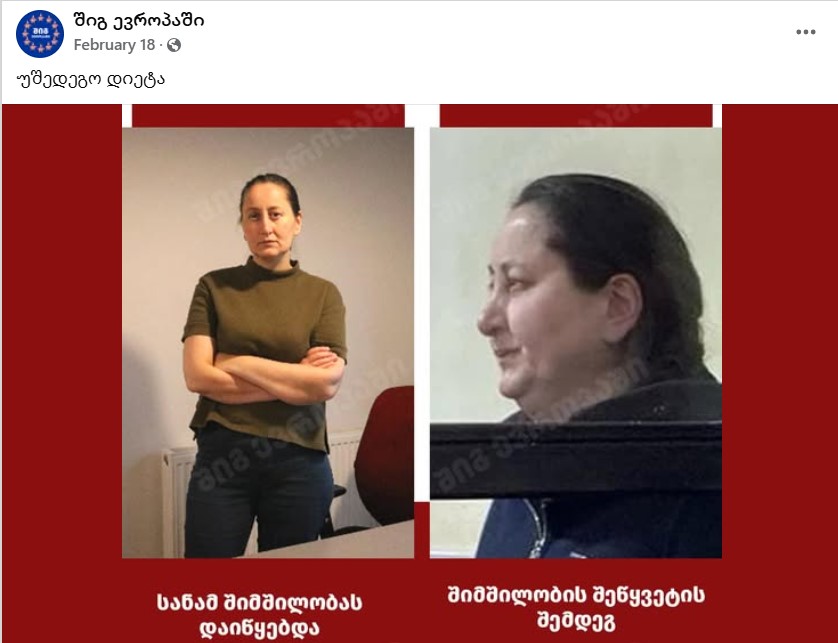
Her 38-day hunger strike, this extreme form of protest, was portrayed on social networks as a “diet” and a “performance.” The campaign was active both on anonymous Facebook pages and profiles and on TikTok.
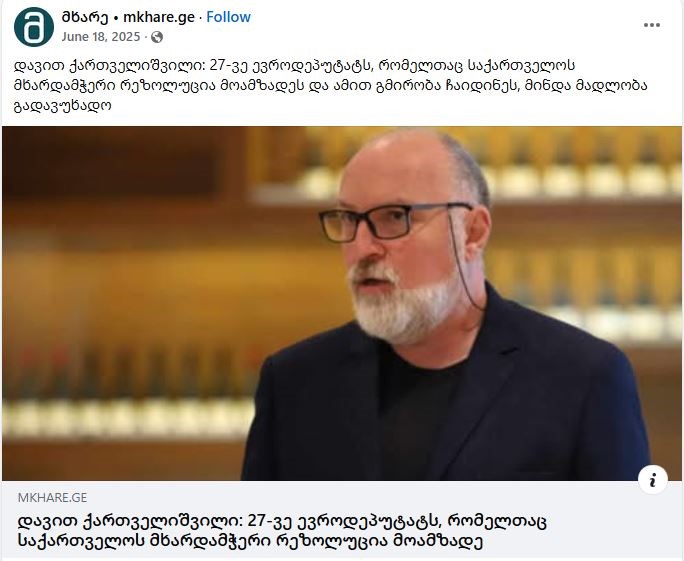
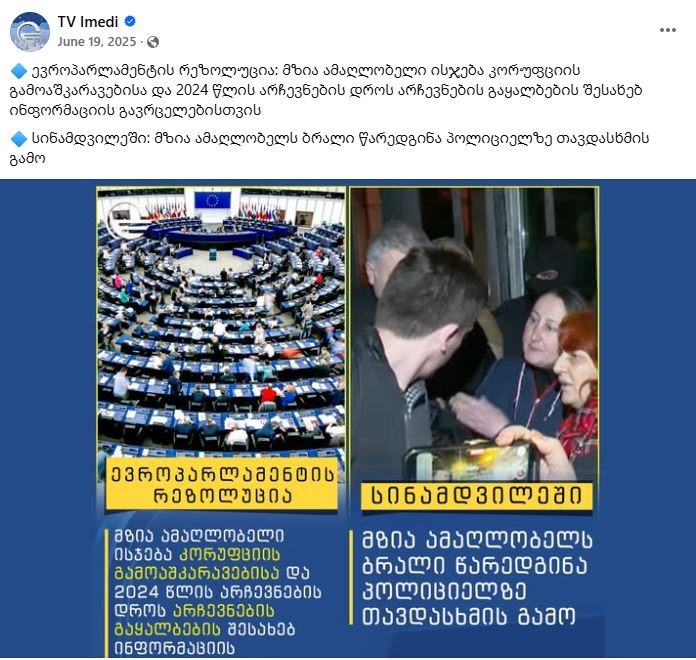
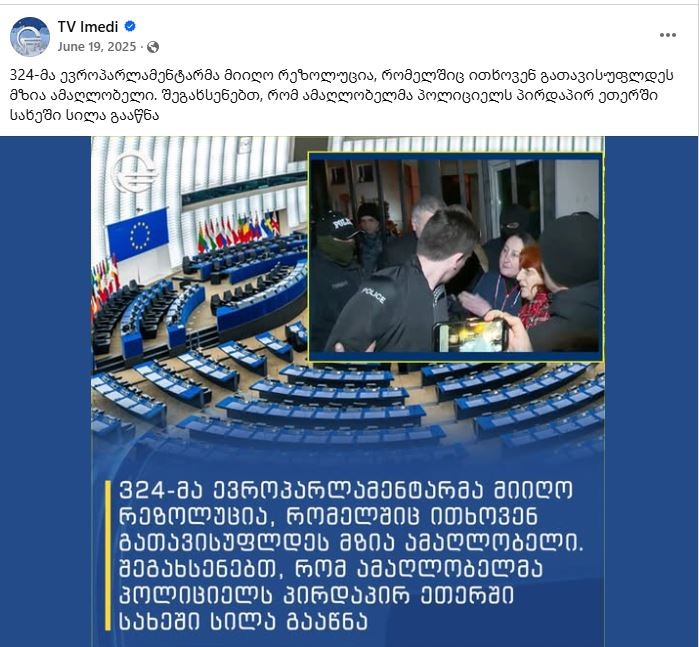
The propaganda ecosystem became especially active during the preparation and adoption of a resolution in her support. On June 19, the European Parliament adopted a resolution demanding Amaghlobeli’s immediate and unconditional release and the dropping of charges against her, condemning her “politically motivated” imprisonment, and referring to the Georgian Dream government as a “regime.” At the same time, members of the “Europe of Sovereign States”, a far-right political group in the European Parliament, Petr Bystron, Tomasz Froelich, Hans Neuhoff and Alexander Sell, submitted an alternative resolution on media freedom in Georgia. In this version, populist MEPs claimed that Georgia’s online media environment was free and diverse, and that Amaghlobeli had been arrested for committing a criminal offense. Georgian Dream supporters and representatives described the adopted resolution as unfair, while praising the authors of the alternative version as heroes and thanking them.

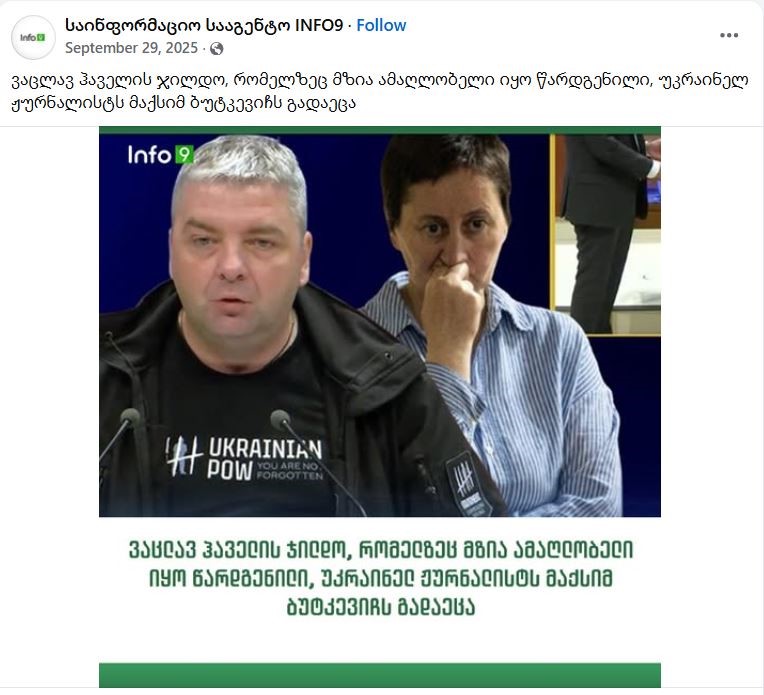
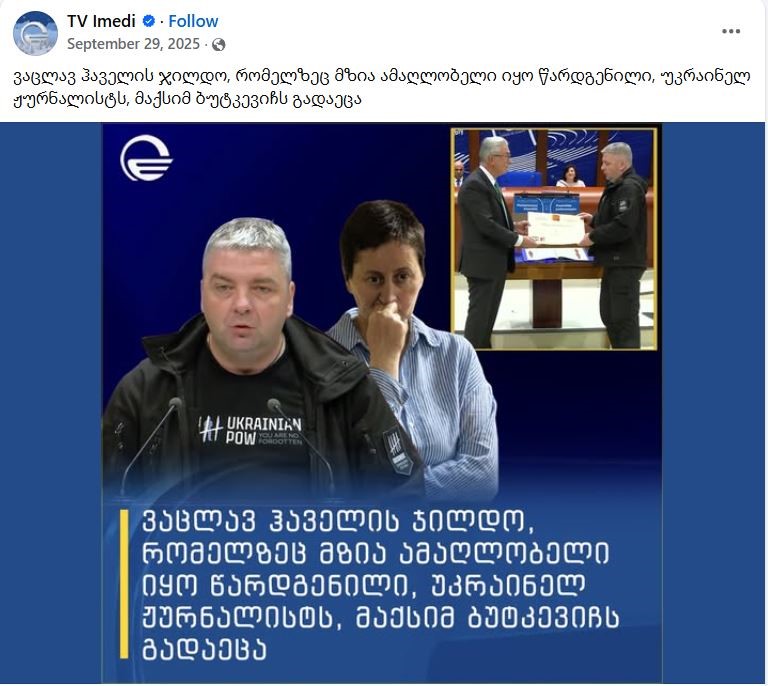
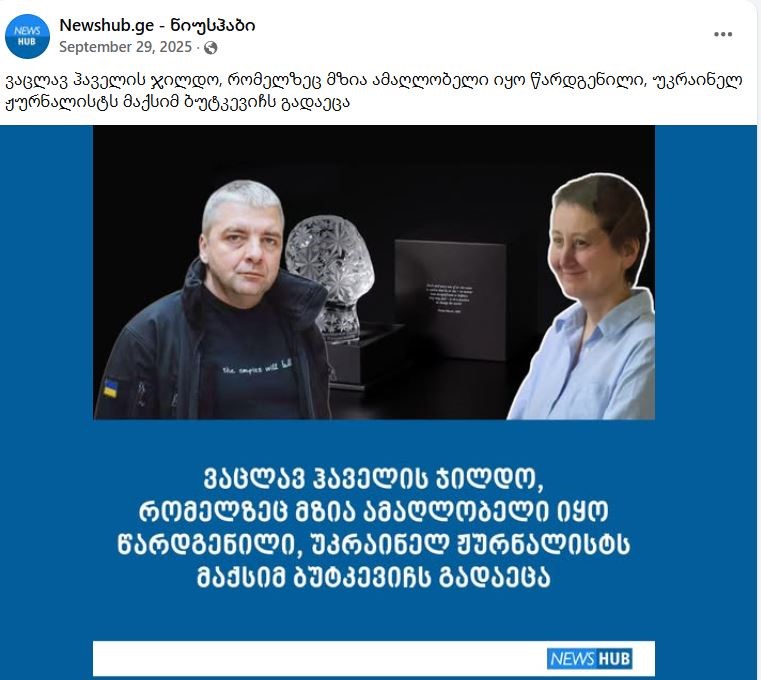
Monitoring of social media platforms by ISFED showed that the campaign against Amaghlobeli also intensified when she was nominated for and won international awards. In 2025, she received several prestigious international prizes. In September, it was announced that Amaghlobeli, while in prison, had won the Forum 2000 award. Forum 2000 annually honors individuals and institutions who defend democracy and human rights with civic courage and social responsibility. Around the same time, it was revealed that Amaghlobeli, along with Ukrainian and Azerbaijani journalists, had been shortlisted for the 2025 Václav Havel Prize. Organized by the Parliamentary Assembly of the Council of Europe, the Václav Havel Library, and the Charta 77 Foundation, the prize is awarded to civil society representatives for outstanding steps in defending human rights. In 2025, the prize was awarded to Ukrainian journalist Maksym Butkevych. The fact that Amaghlobeli was shortlisted was not covered by propaganda media, though numerous posts were published about the award being given to the Ukrainian journalist.
On October 22, 2025, while in prison, Amaghlobeli, together with Belarusian journalist Andrzej Poczobut, was awarded the EU’s highest human rights prize for freedom of thought—the Sakharov Prize. The prize is awarded annually to dissidents, political leaders, journalists, lawyers, and civil society activists. Her receipt of this prestigious award triggered another propaganda campaign. Georgian Dream representatives and affiliated individuals made anti-Western statements, portraying the award as an encouragement of violence. Some of the Facebook posts were promoted with paid advertising.
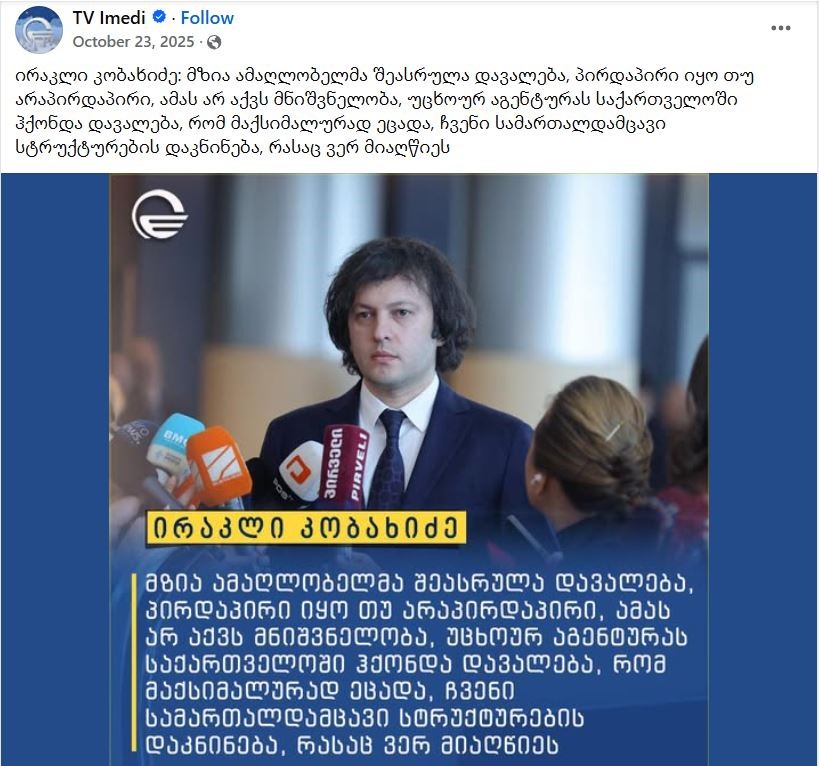
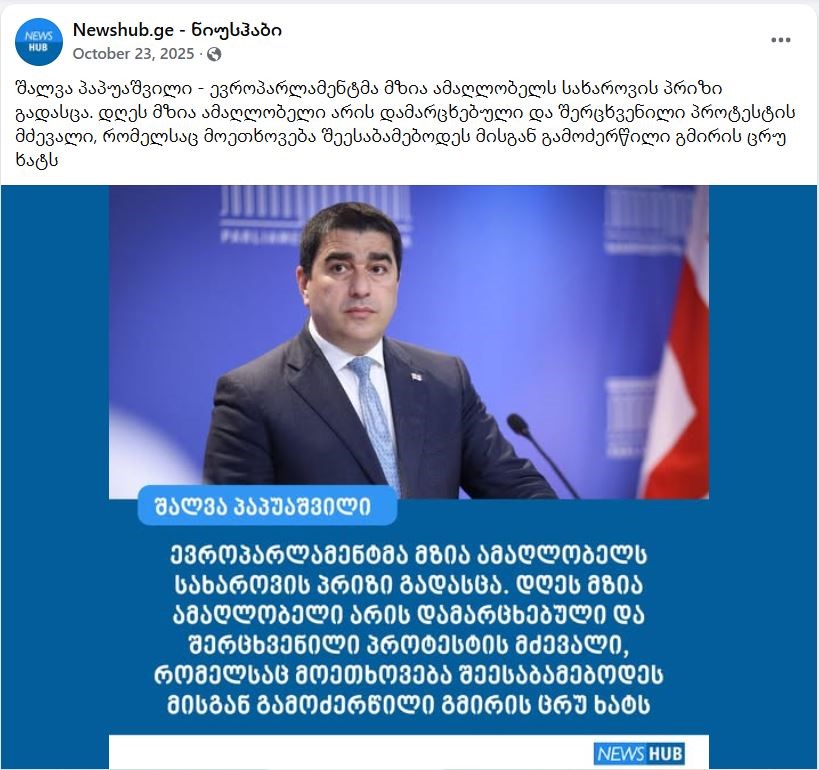
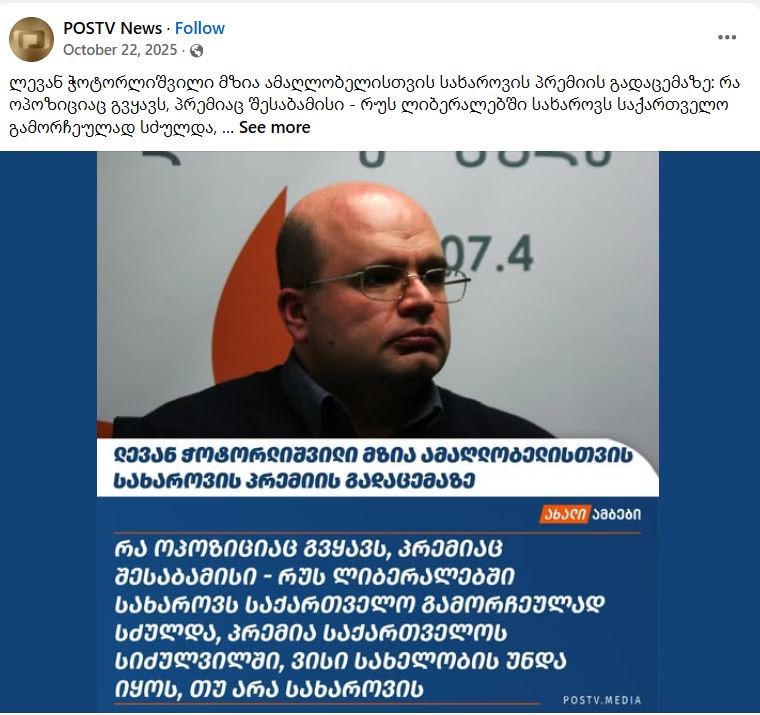
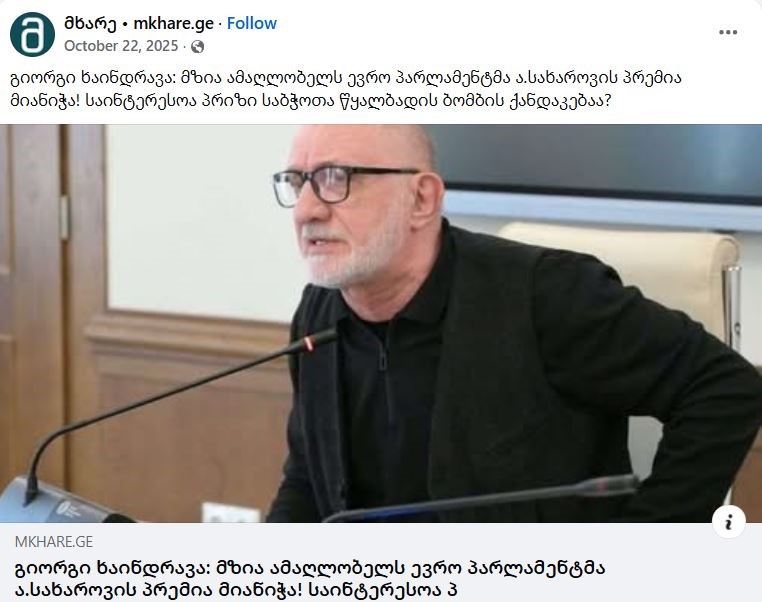
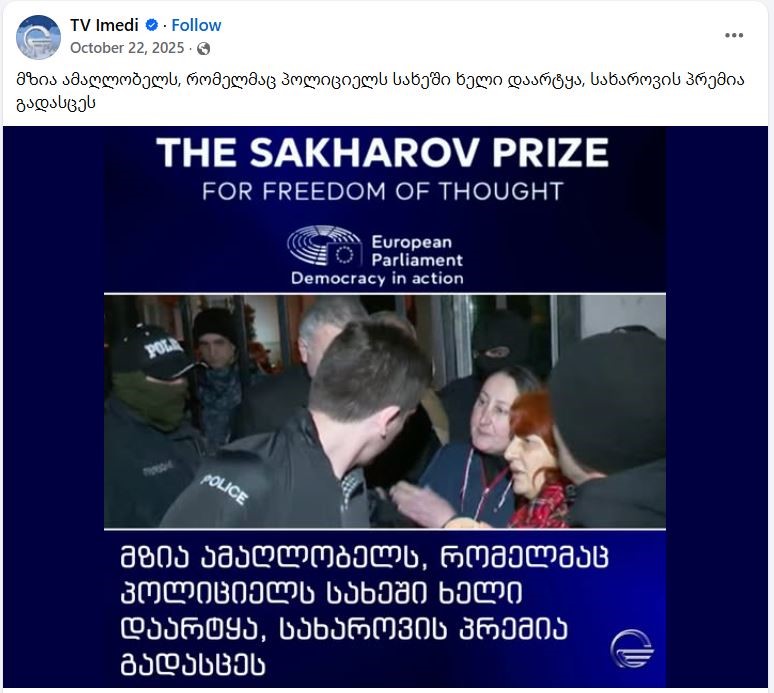

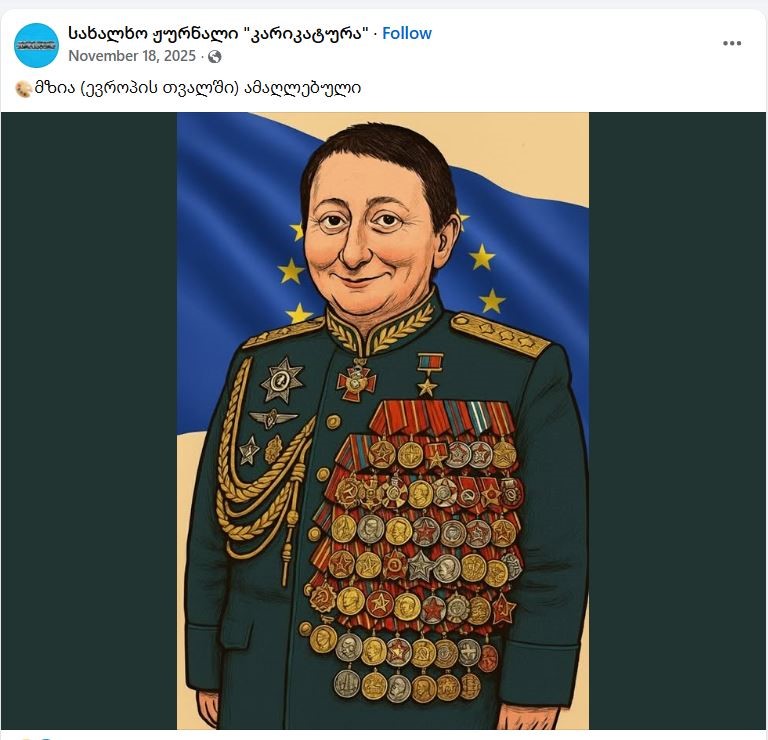
After the Sakharov Prize, anti-Amaghlobeli messages spread across pro–Georgian Dream anonymous Facebook pages and TikTok channels. A caricature published on the Facebook page “People’s Journal Cartoon” was shared by propaganda agencies.
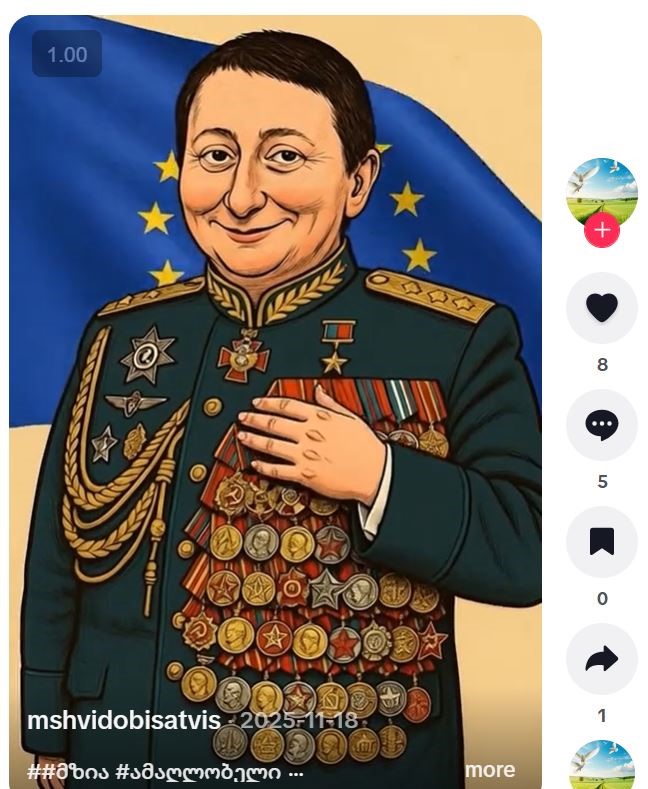
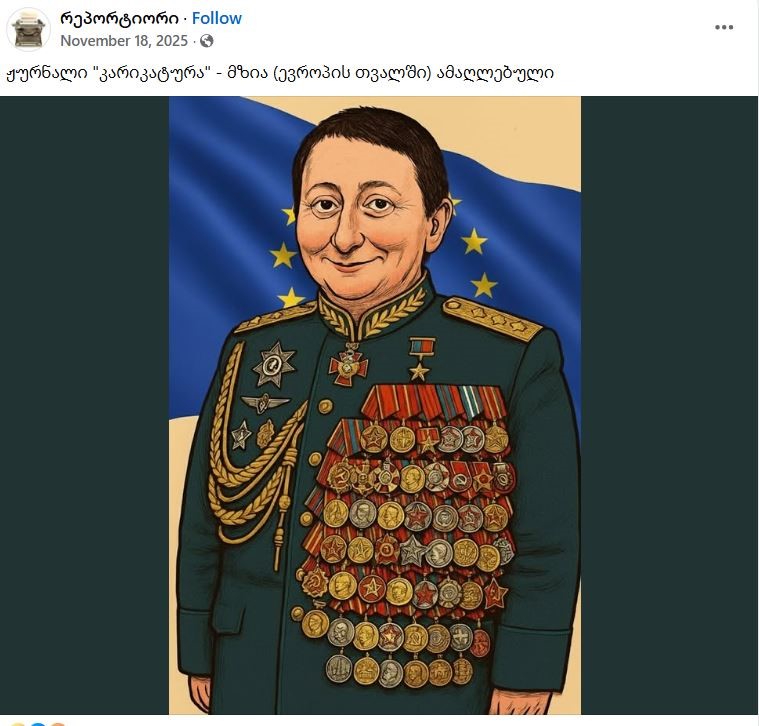
Some propaganda media messages referred to Mazia Amaghlobeli as “a figure in the scenario of the global war party.” To damage her reputation, video montages were actively circulated to instill false perceptions and distrust toward her professional work. Propaganda media accused her of following a pre-written script to dismantle Georgia’s state institutions and provoke chaos. Other political prisoners were also targeted alongside her.
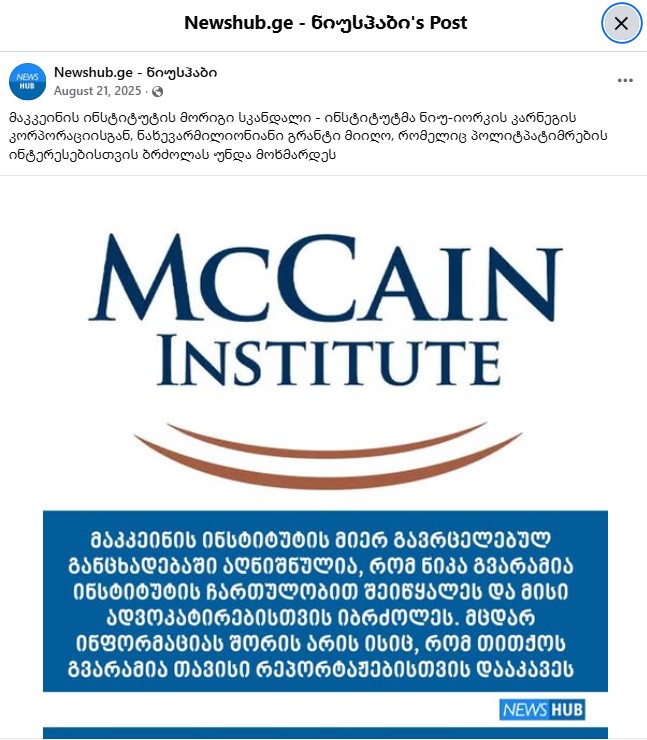
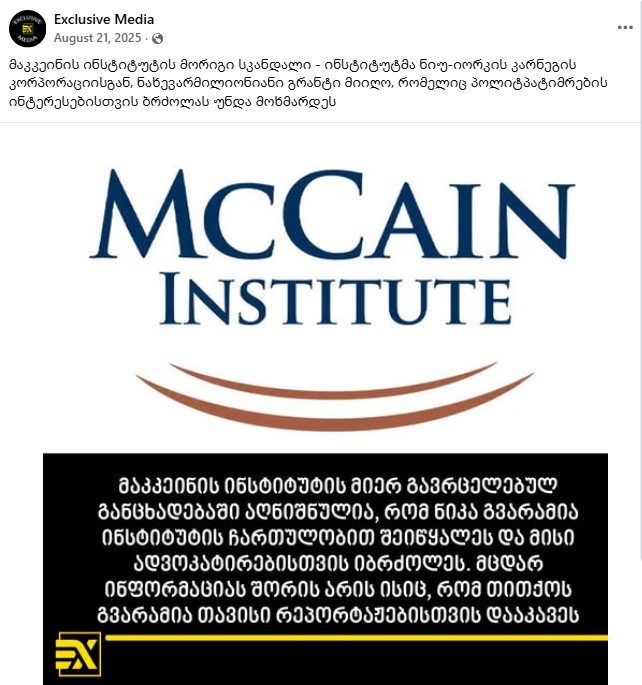
Within the campaign, messages were spread about the activities of the McCain Institute. On February 6, 2025, the institute’s official page announced a new initiative, “Freedom for Political Prisoners.” Within this initiative, the institute provided assistance to Americans, green card holders, and dissidents in various countries who were political prisoners or hostages of repressive regimes. Amaghlobeli was named as one of the initiative’s beneficiaries.
Propaganda media and pro–Georgian Dream pages disseminated identical discrediting messages about the McCain Institute. In these messages and in public statements by party leaders, the organization was accused of provoking destabilization and unrest in Georgia and attempting to influence the judiciary. Propaganda media manipulatively spread information suggesting that a half-million-dollar grant from the McCain Institute was direct funding for Amaghlobeli’s release. With such disinformation, propaganda portrayed her as a subject of foreign influence. In addition to actors linked to Georgian Dream, Kremlin-affiliated media outlet Sputnik also spread identical messages.
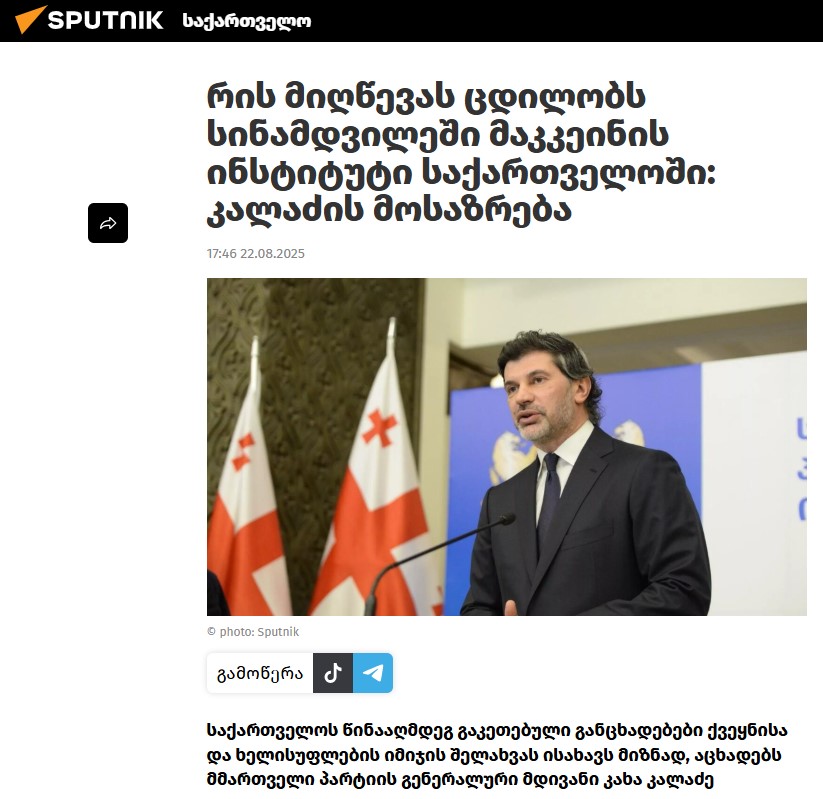
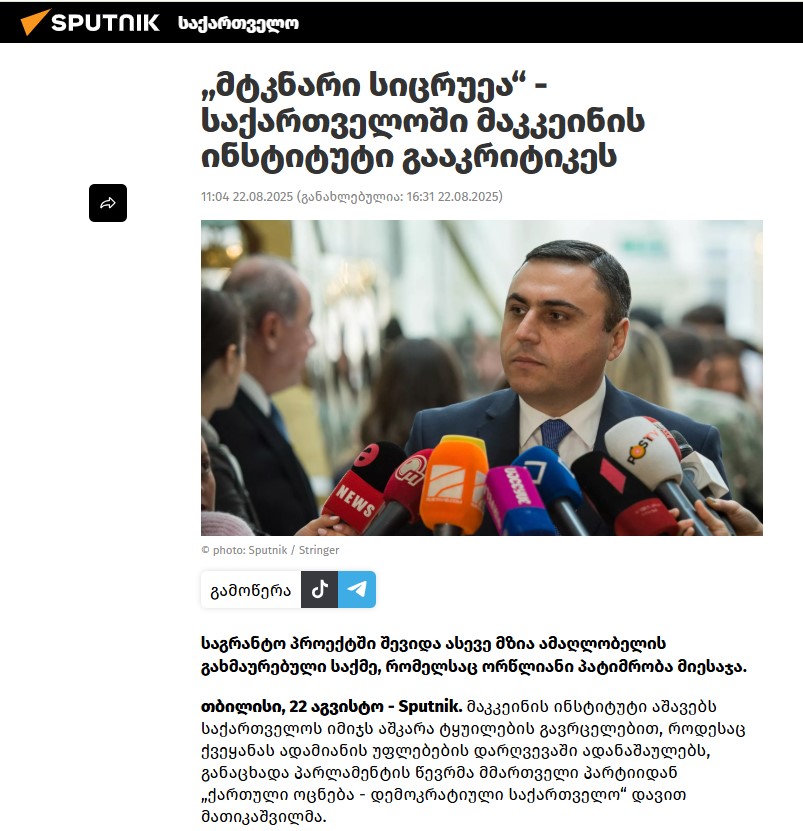

Throughout the year, ambassadors accredited in Georgia repeatedly responded to Amaghlobeli’s arrest and ongoing court proceedings. Following their supportive statements, the diplomatic corps itself became a target of propaganda. The central line of the narrative claimed that ambassadors’ statements constituted interference in the judiciary and an infringement of state sovereignty. Georgian Dream leaders accused ambassadors of disrespecting Georgia’s constitution and violating the Vienna Convention. The official rhetoric aimed to delegitimize diplomats’ critical positions and explain them as politically motivated, including by linking their support for Amaghlobeli to alleged affiliation with the “deep state.” These attacks on ambassadors were actively covered by Sputnik.
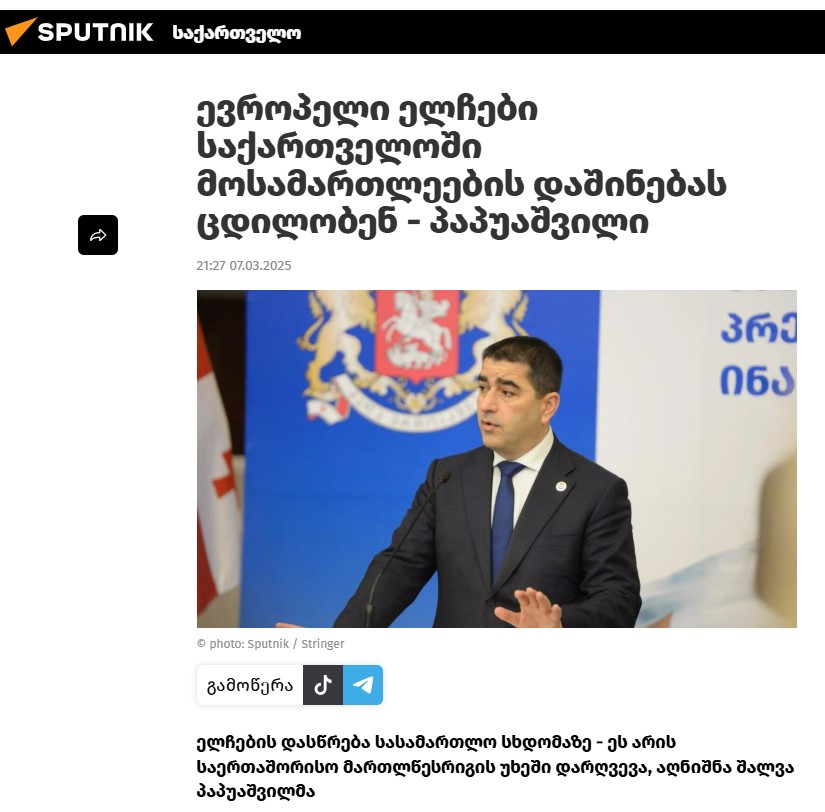
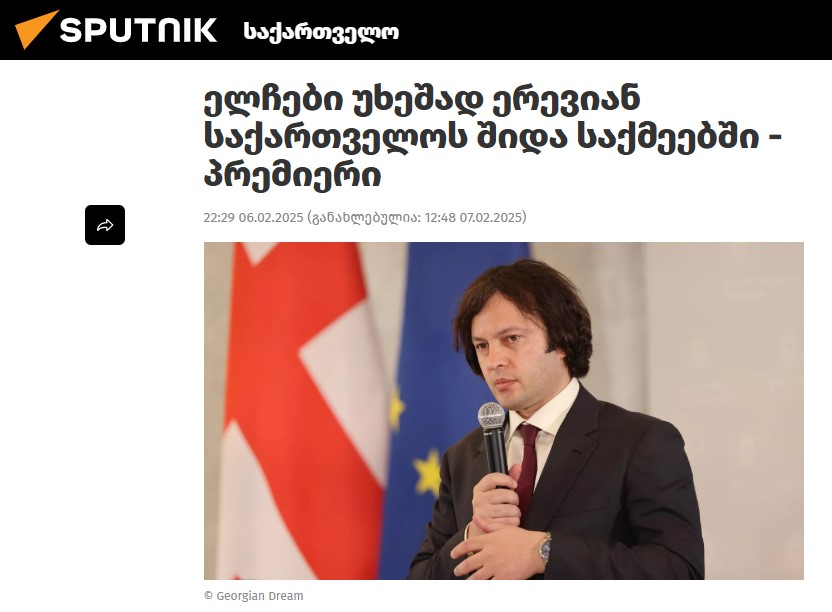
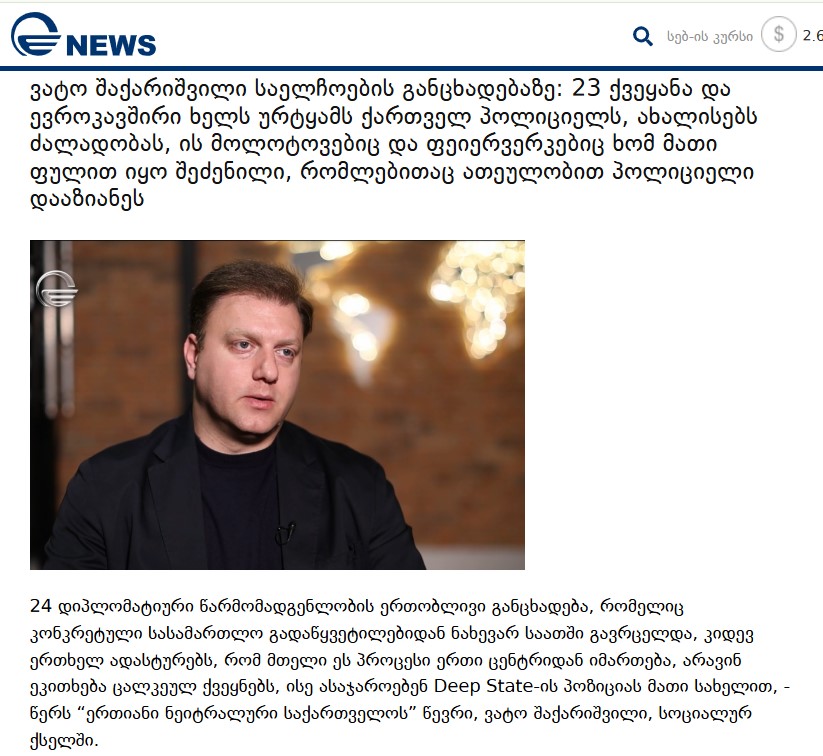
Another important element of the discreditation campaign against ambassadors was the active use of conspiratorial framing. On August 6, 2025, Batumi City Court sentenced Amaghlobeli to two years in prison, which prompted an official statement from 24 diplomatic missions accredited in Georgia. The statement described the verdict as disproportionate and politicized. Following this support for the journalist, pro–Georgian Dream “experts” and propaganda media labeled the diplomats as “collective UNM lobbyists,” “deep state representatives,” and “foreign agents.” In this context, international solidarity toward Mzia Amaghlobeli was portrayed as “deep state patronage.”
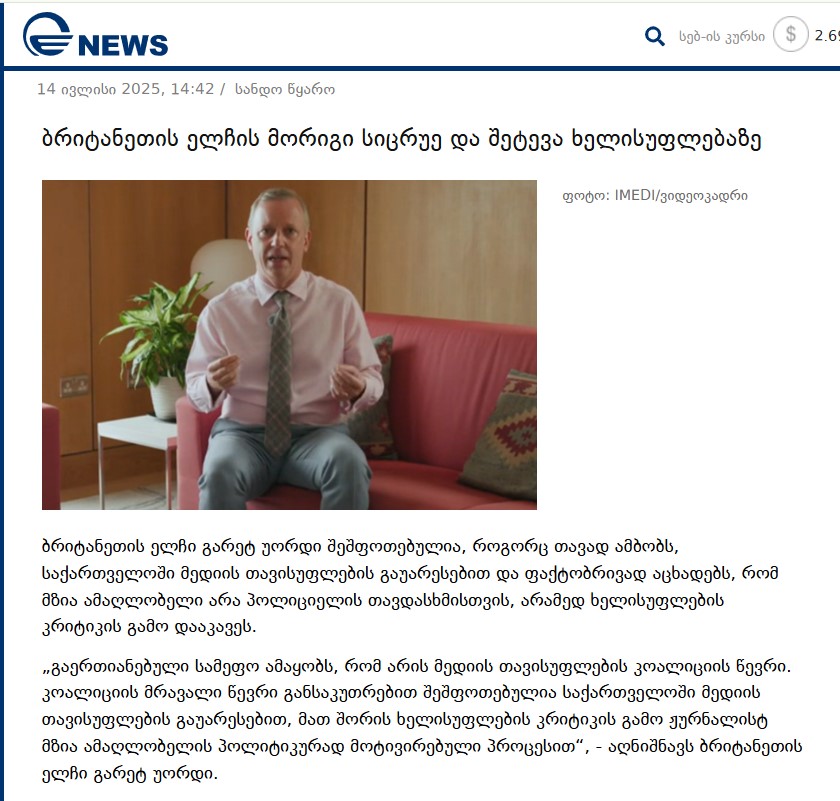
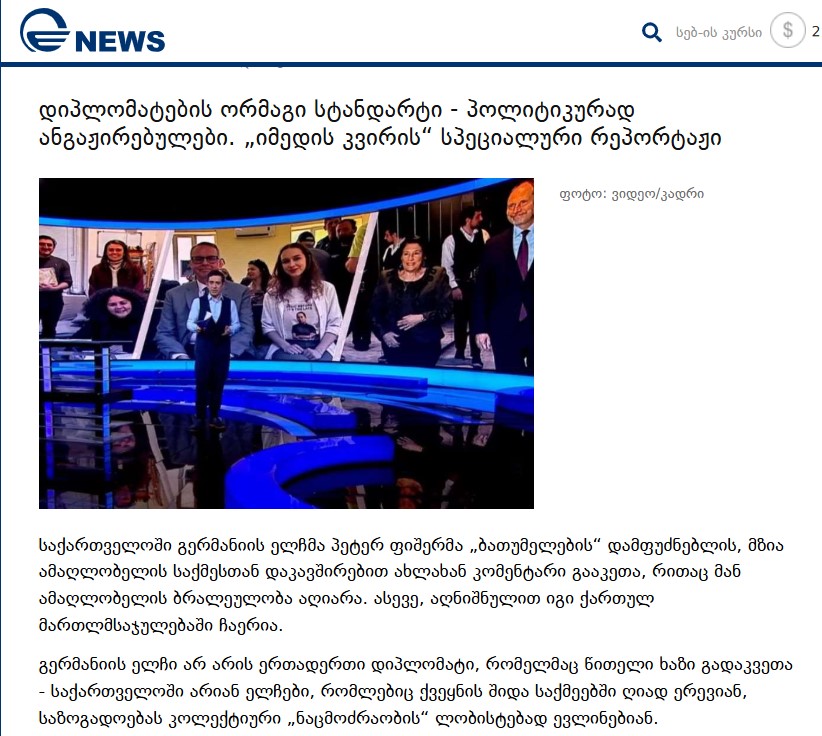
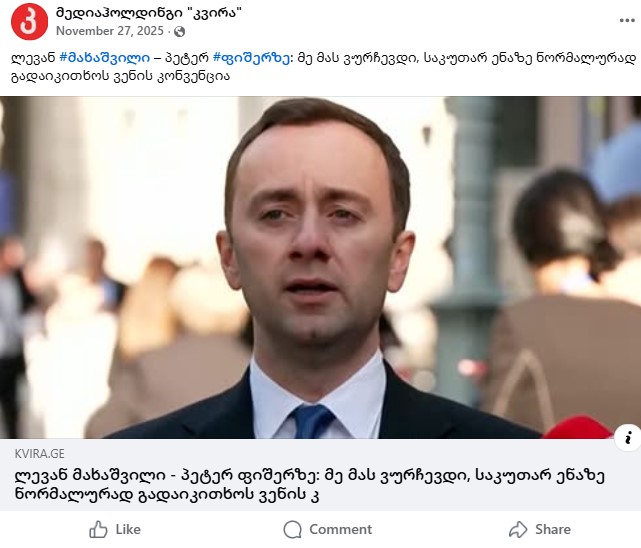
The main targets of discreditation were the EU Ambassador to Georgia, Paweł Herczyński, the German Ambassador Peter Fischer, and the British Ambassador Gareth Ward. Propaganda media framed the diplomats’ statements as interference in judicial activities and Georgia’s internal affairs. Messages against Peter Fischer intensified particularly on May 16, after the diplomat attended Amaghlobeli’s trial at Batumi City Court. In the same context, propaganda media criticized Paweł Herczyński and Gareth Ward following their statements about restrictions on media freedom in Georgia and setbacks related to democratic principles.
In official and propaganda rhetoric, the diplomats were accused of using hate speech, encouraging polarization, and inciting violence. Their positions were covered by propaganda media as “double standards,” “partisan involvement,” and “external actors’ interests.” As a result, diplomatic criticism of Georgian Dream was presented as politically motivated.
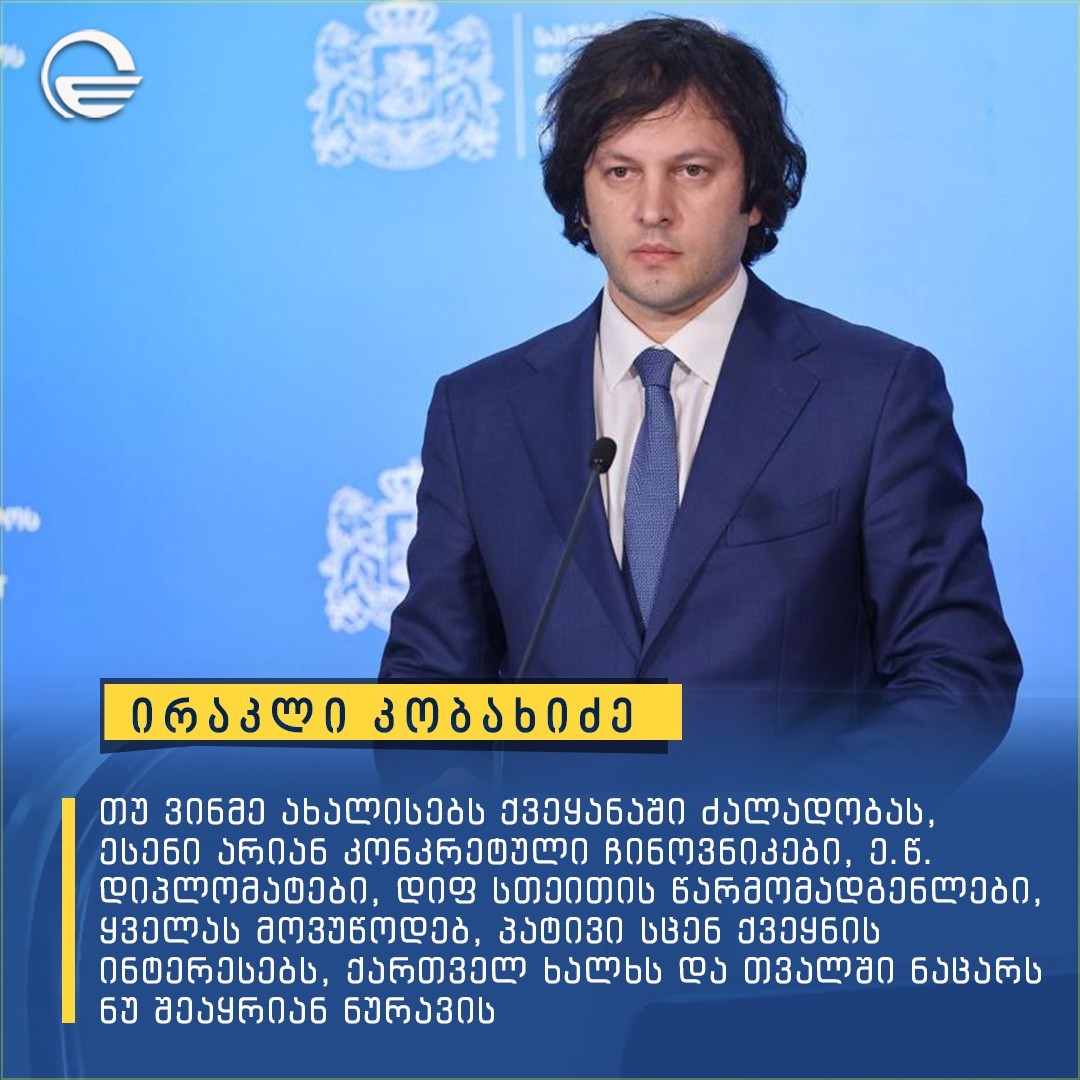
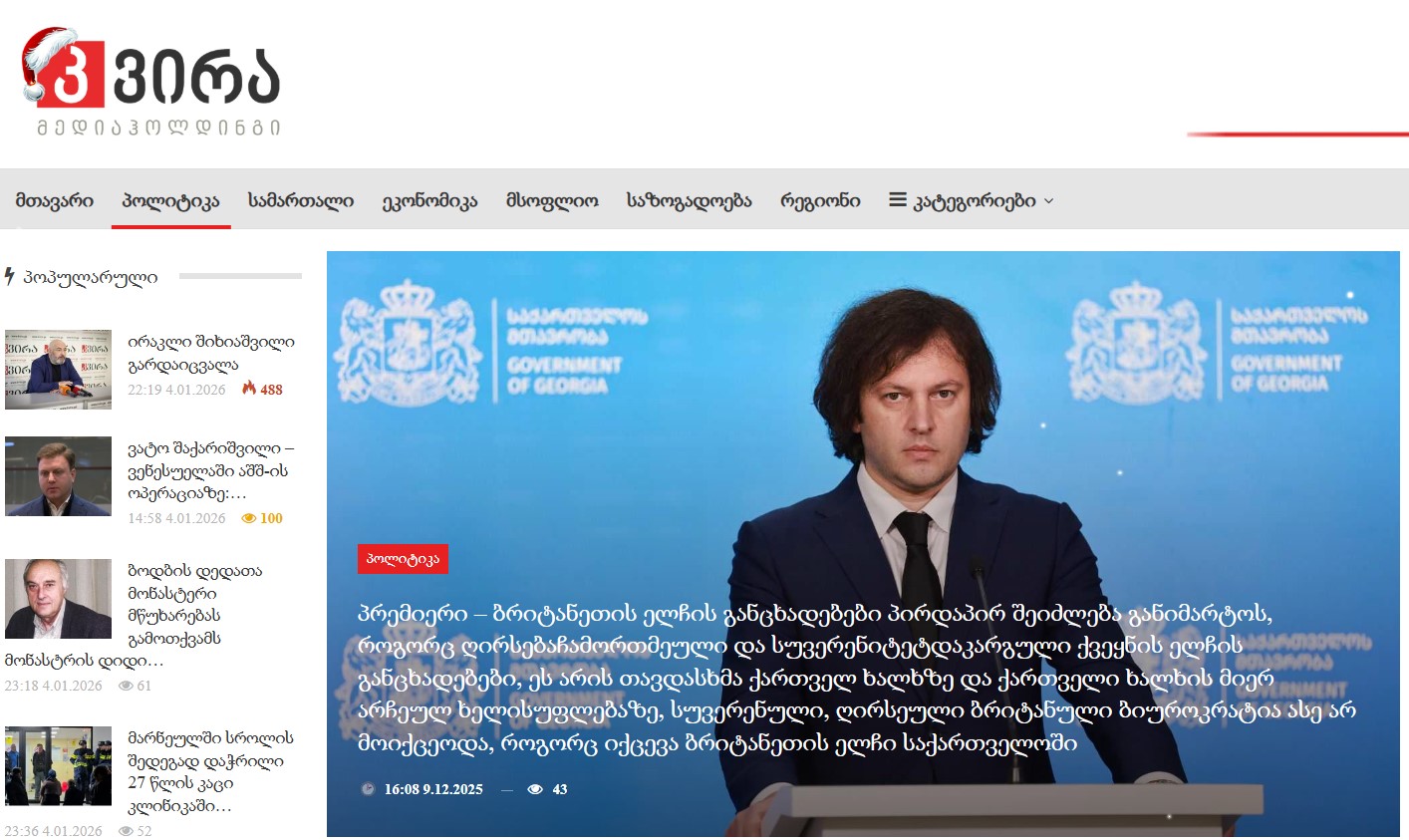

Messages against Mzia Amaglobeli and Netgazeti were also disseminated by anonymous networks managed from Russia. Alongside them, Kremlin-linked outlets such as Sputnik and the Pravda network were actively involved in the journalist’s discreditation.