
More Than 1500 Fake Facebook Accounts Supporting Bidzina Ivanishvili
Update: As of July 22, the majority of these accounts are no longer searchable on the platform. Specifically, follow-up monitoring revealed that out of the 1,551 inauthentic accounts identified in the study, 1,343 have been deleted or deactivated.
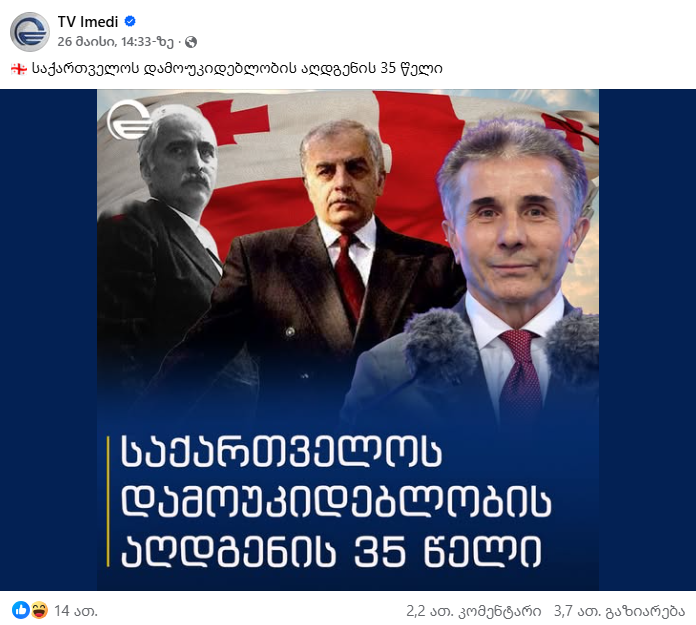
On May 26, 2026, Georgia’s Independence Day, the Facebook page of Imedi TV, a propagandist media outlet sanctioned by the Great Britain, published a graphic card titled “35 Years Since the Restoration of Georgia’s Independence.” Alongside the leaders of Georgia’s national liberation movement, Merab Kostava and Zviad Gamsakhurdia, the image featured Bidzina Ivanishvili, founder and honorary chairman of the political party Georgian Dream. The inclusion of Ivanishvili in the post initially generated predominantly negative engagement from social media users, including critical and sarcastic comments as well as laughing (haha) reactions. Later, however, the balance of reactions changed significantly, with the number of likes increasing abruptly. Monitoring by the International Society for Fair Elections and Democracy (ISFED) revealed that engagement of the post had been artificially amplified on a large scale and in a coordinated manner.
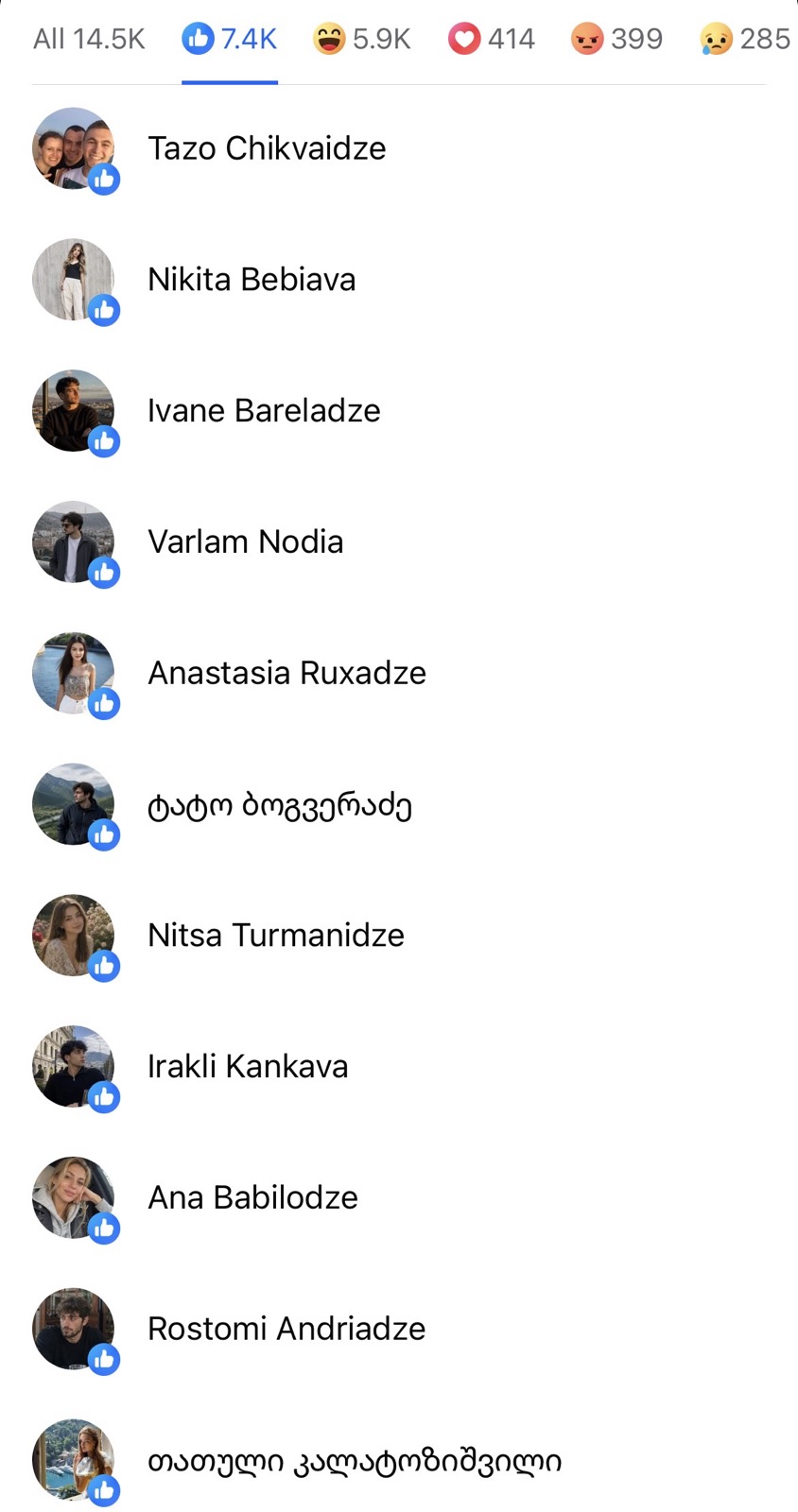
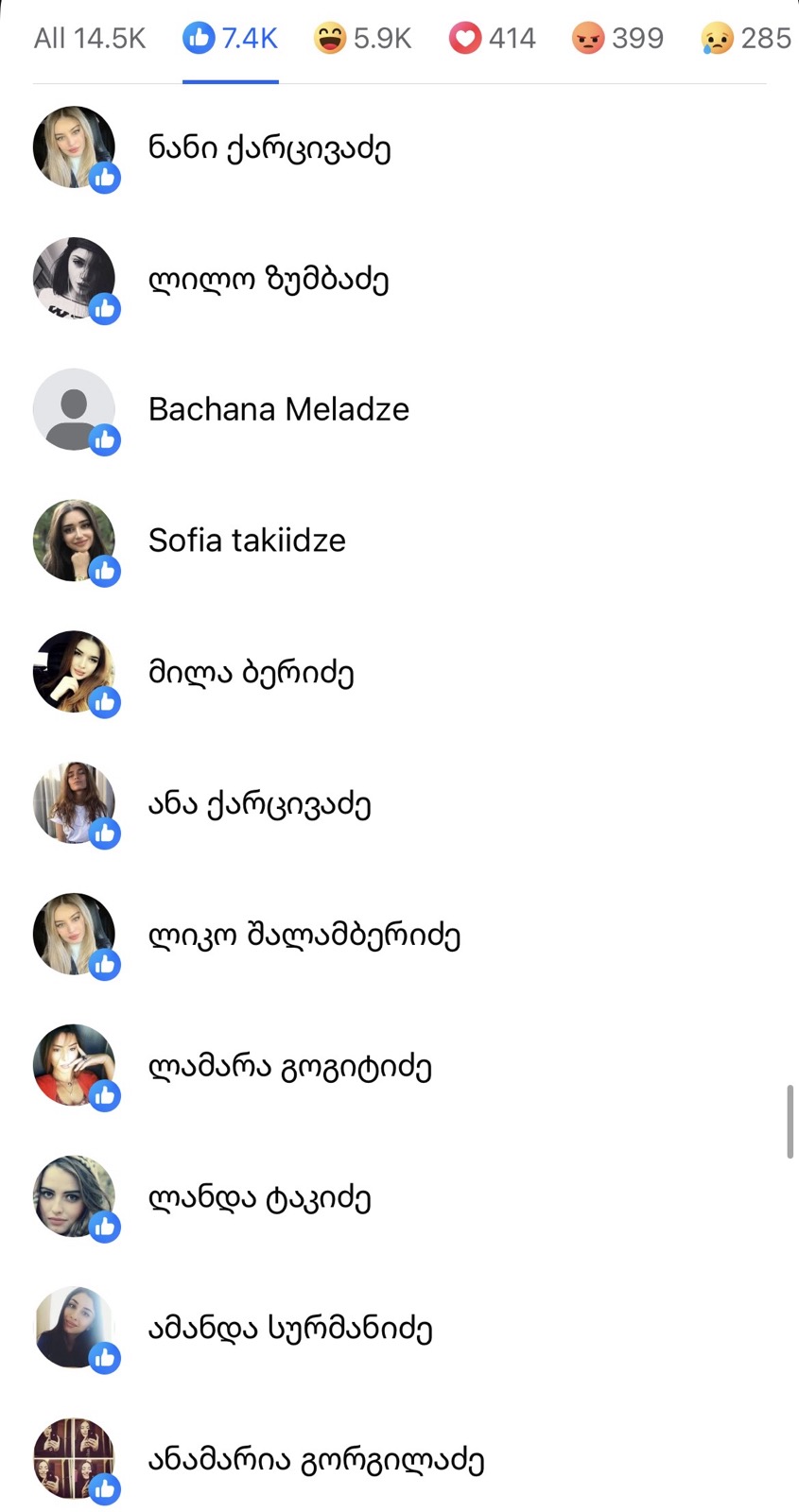
During the monitoring, more than 1500 fake accounts, trolls, and bots, mostly bearing Georgian names, were identified as having been used to increase the number of “like” reactions to Imedi’s post. Investigation of these accounts showed that many shared common characteristics. The profiles were often created on the same day or within short intervals, used similar visual materials, followed identical pages, shared the same posts, and exhibited other signs of coordinated behavior. These findings indicate the existence of a broader network of fake accounts operating in favor of Georgian Dream, with the aim of artificially creating the impression of popularity and support on social media platforms.
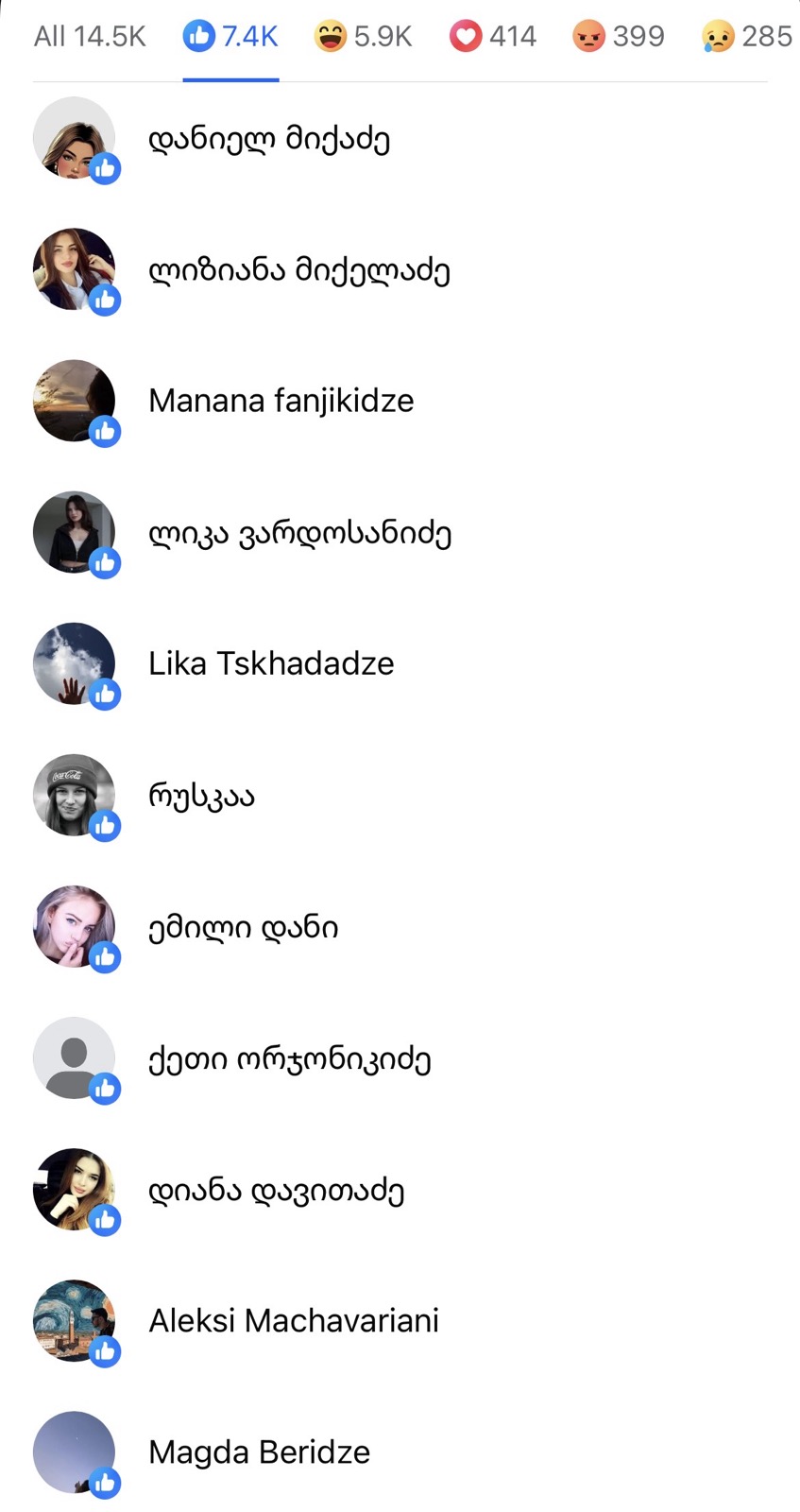
It should be noted that, in addition to the reactions, instances of artificial engagement were also identified in the form of comments on the above-mentioned post, which described the honorary chairman of Georgian Dream as a defender of the nation’s interests and a patriotic statesman.
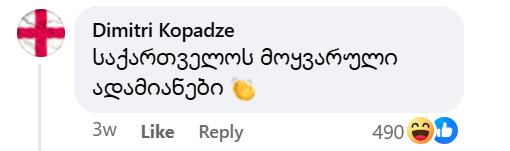
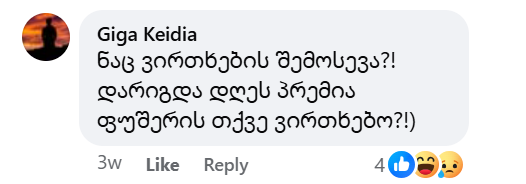
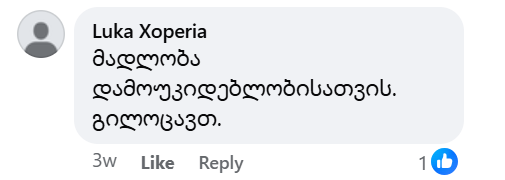
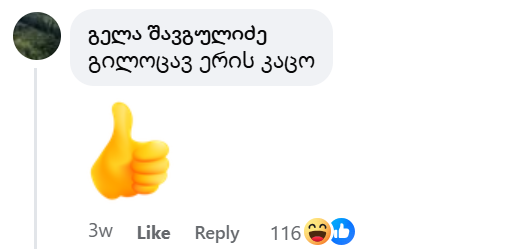
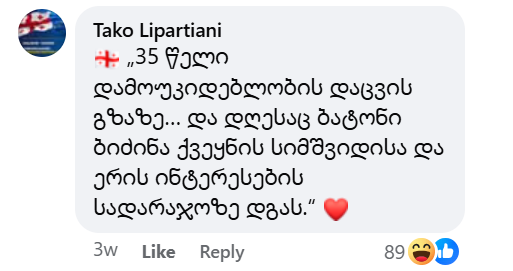
“People who love Georgia”; “Thank you for independence. Congratulations!”; “Congratulations, man of the nation!”; “An invasion of National Movement rats?! Will Fischer [German ambassador to Georgia] hand out bonuses today, you rats?!”; “Thirty-five years on the path of safeguarding independence… and today Mr. Bidzina still stands watch over the country’s peace and the interests of the nation.”
1. Synchronous Account Creation Pattern
Among the fake profiles identified during the monitoring, there were numerous instances in which dozens of accounts had been created on the same day or within a few days. For example, 99 fake accounts were created on January 22, 2024; 250 fake accounts were created between April 19 and 23 of the same year; and 67 fake accounts were created during the week of May 18–24, 2026. Such practices are commonly observed in coordinated information operations, where network operators create large numbers of accounts within a short period and subsequently deploy them in various activities. Unlike organic users, who join social media platforms at different times, these accounts exhibit a strikingly homogeneous pattern of origin, providing an additional indication of coordinated management.
Number of Accounts by Creation Date (2022–2026)
More than 98% of the identified fake Facebook profiles were created between 2022 and 2026. Among them, the highest number, 590 fake accounts (38% of all identified fake accounts), were created in 2024, primarily during the period leading up to the parliamentary elections. The most recently created fake accounts appeared in May of the current year, with a total of 92 accounts identified.
Dynamics of Fake Account Creation by Year
Monthly Dynamics of Fake Account Creation (2022–2026)
2. Use of Stolen and Inauthentic Photos
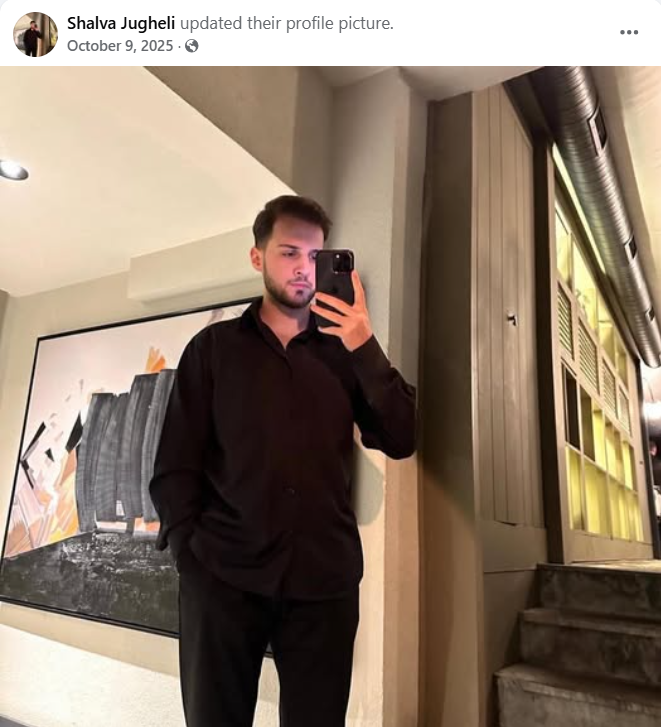
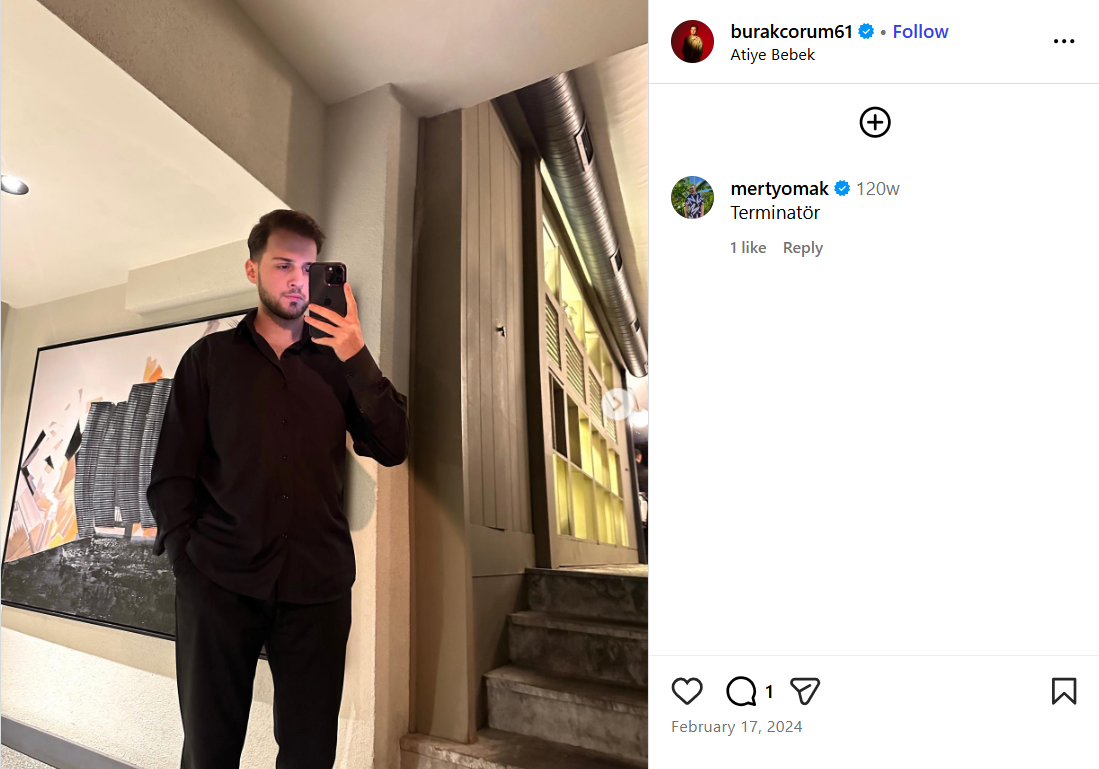
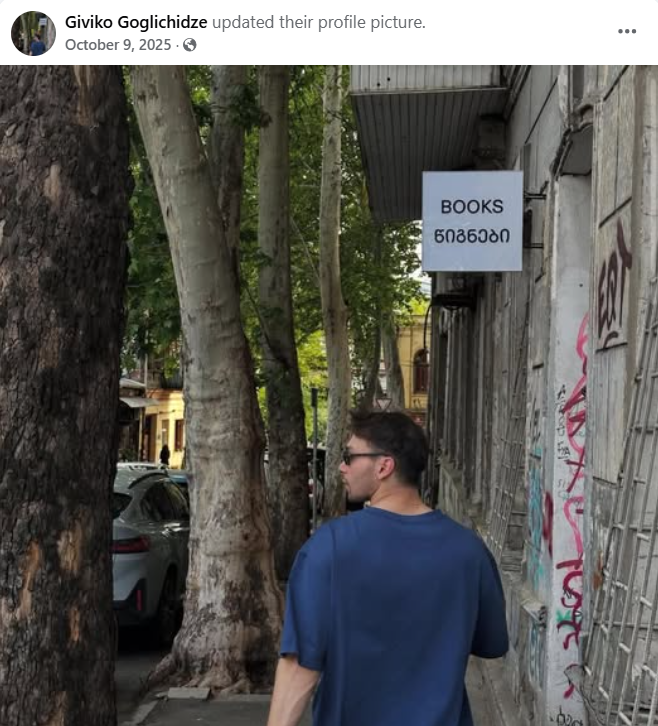
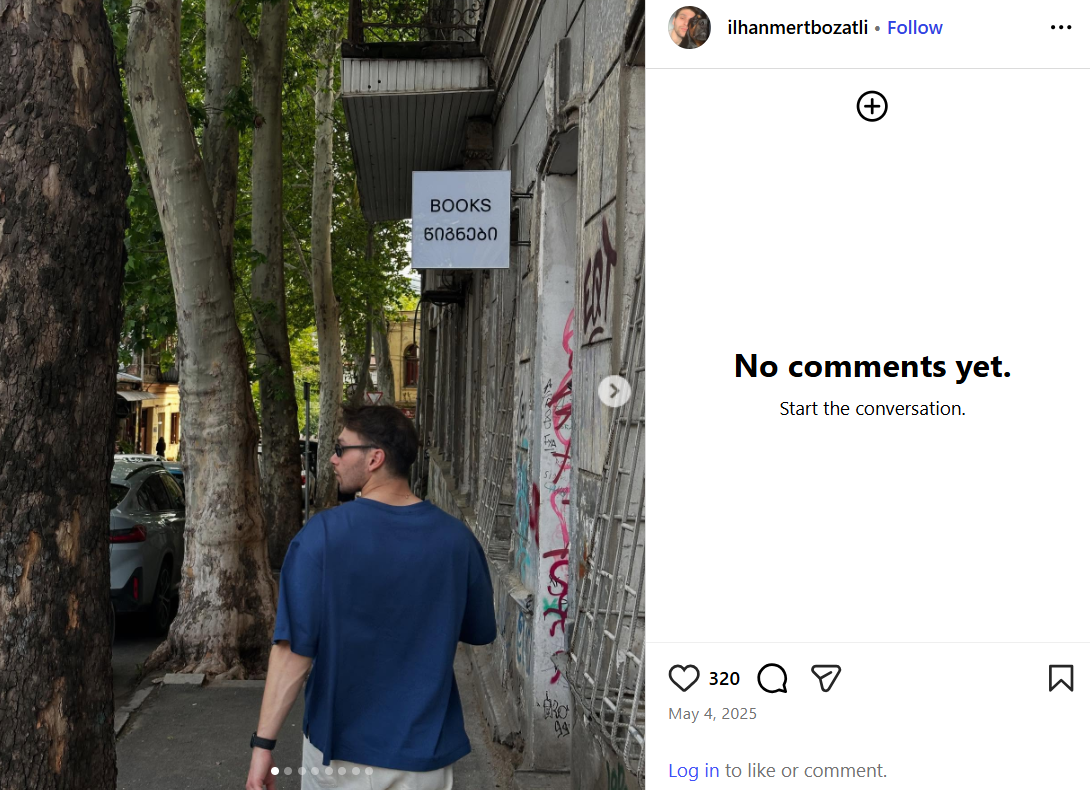
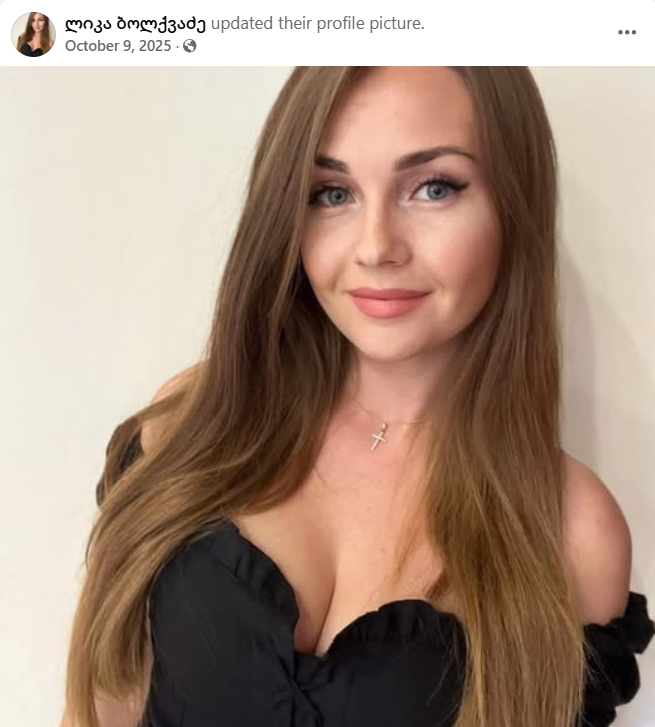
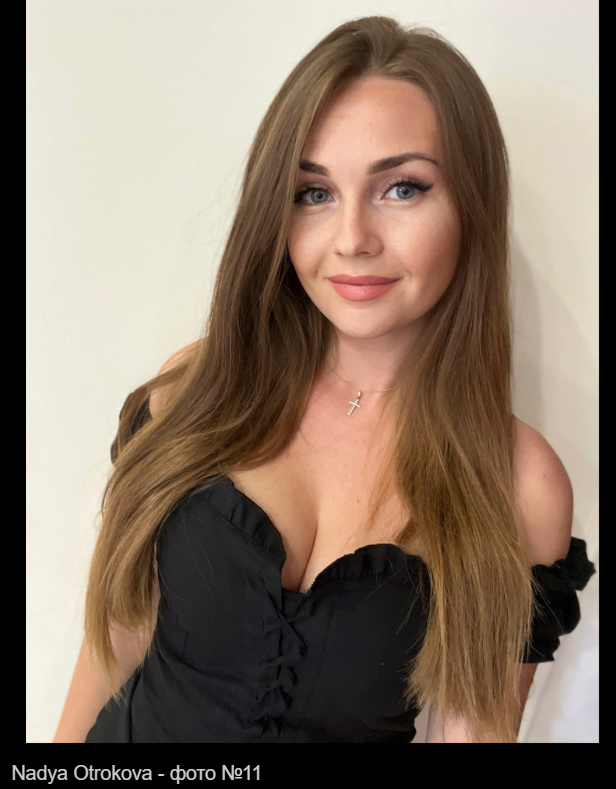
The ISFED identified numerous cases in which profiles used photos of other individuals obtained from various online sources. For example:
- The fake Facebook account Shalva Jugheli used a stolen photo of Turkish reporter Burak Çorum.
- The fake Facebook account Giviko Goglichidze used a stolen photo of Turkish sportsman - Ilhan Mert Bozatli.
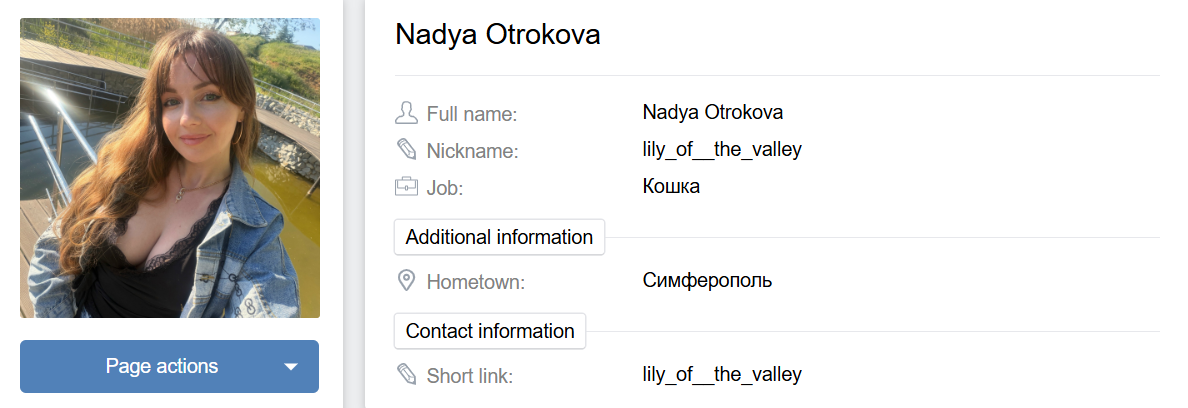
- The fake account operating under the name Lika Bolkvadze uses a stolen photo of Nadia Otrokova.
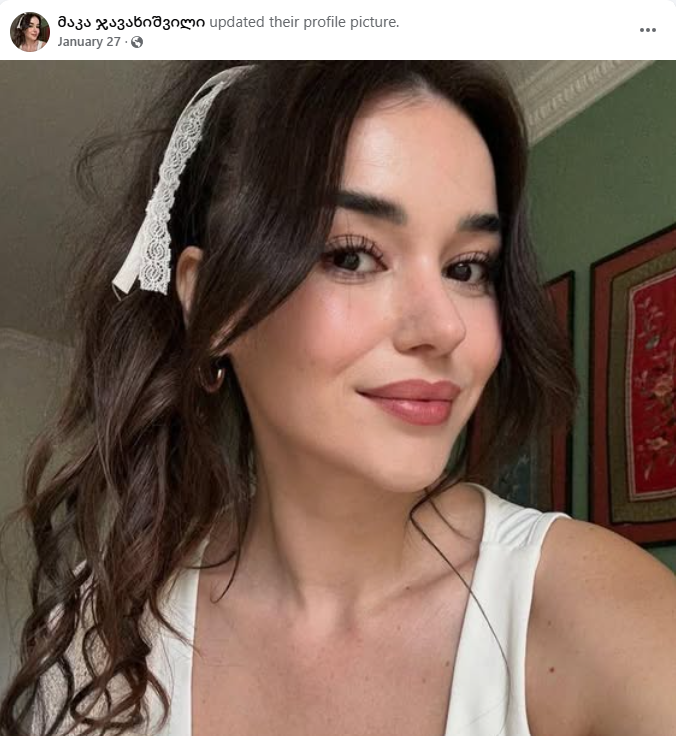
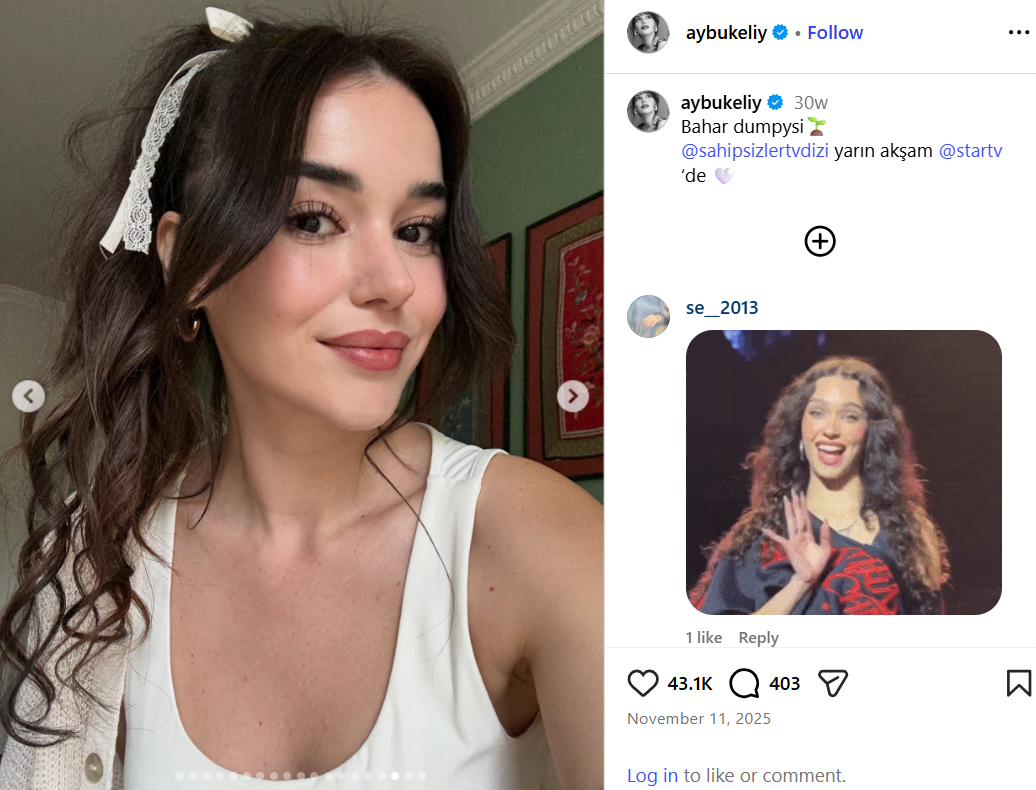
- The fake Facebook account operating under the name Maka Javakhishvili uses a stolen photo of Turkish actress Aybüke Yılmaz.
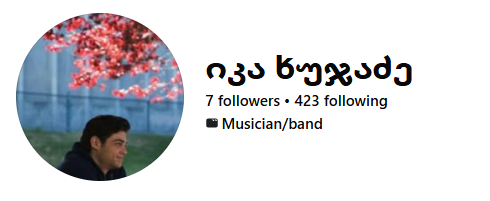
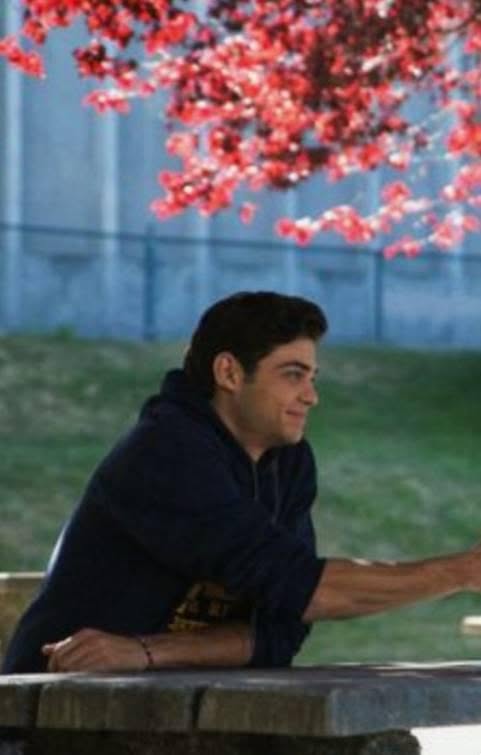
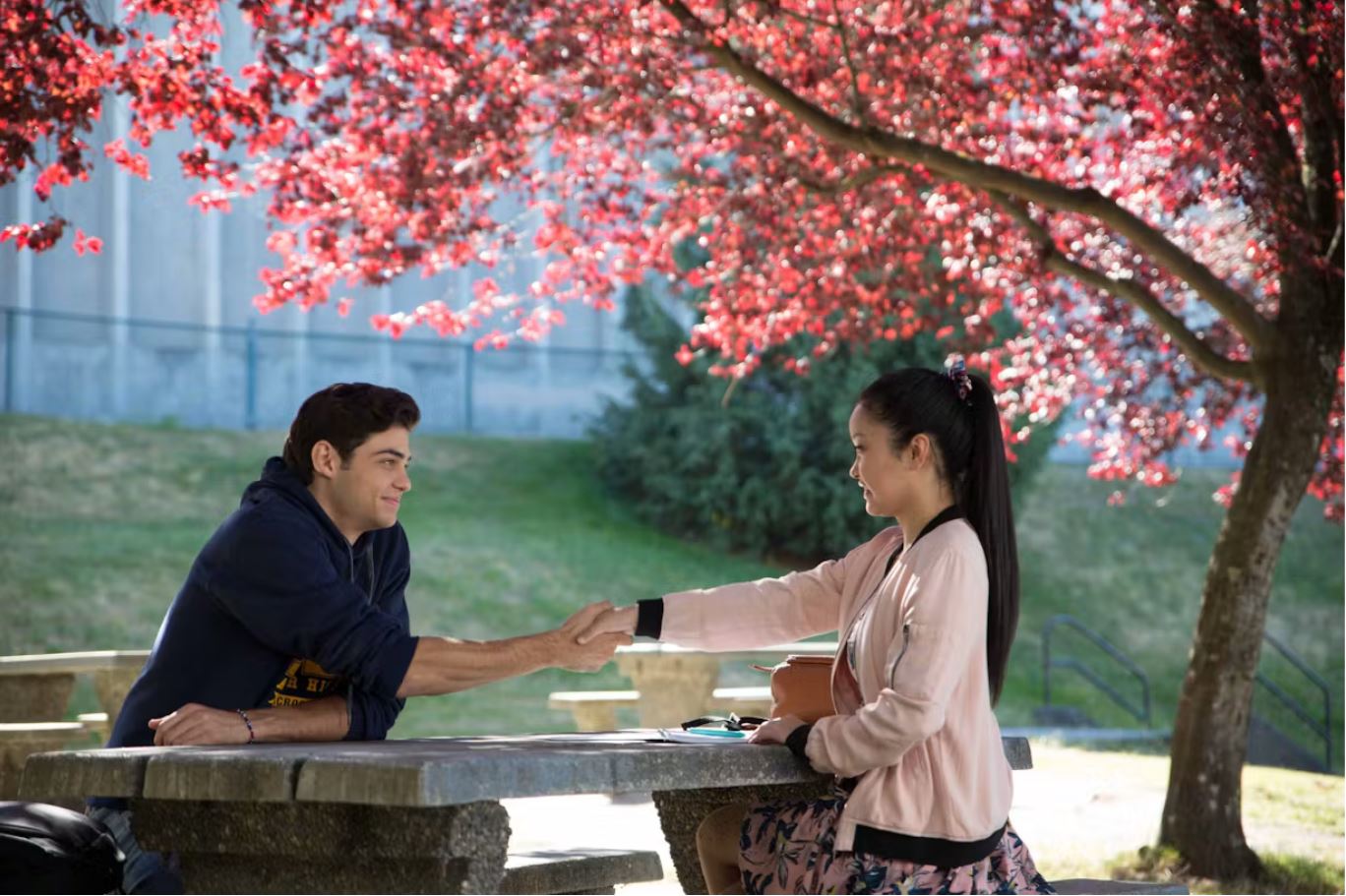
- The fake account operating under the name Ika Khujadze uses a screenshot taken from the Susan Johnson’s 2018 film “To All the Boys I’ve Loved Before”.
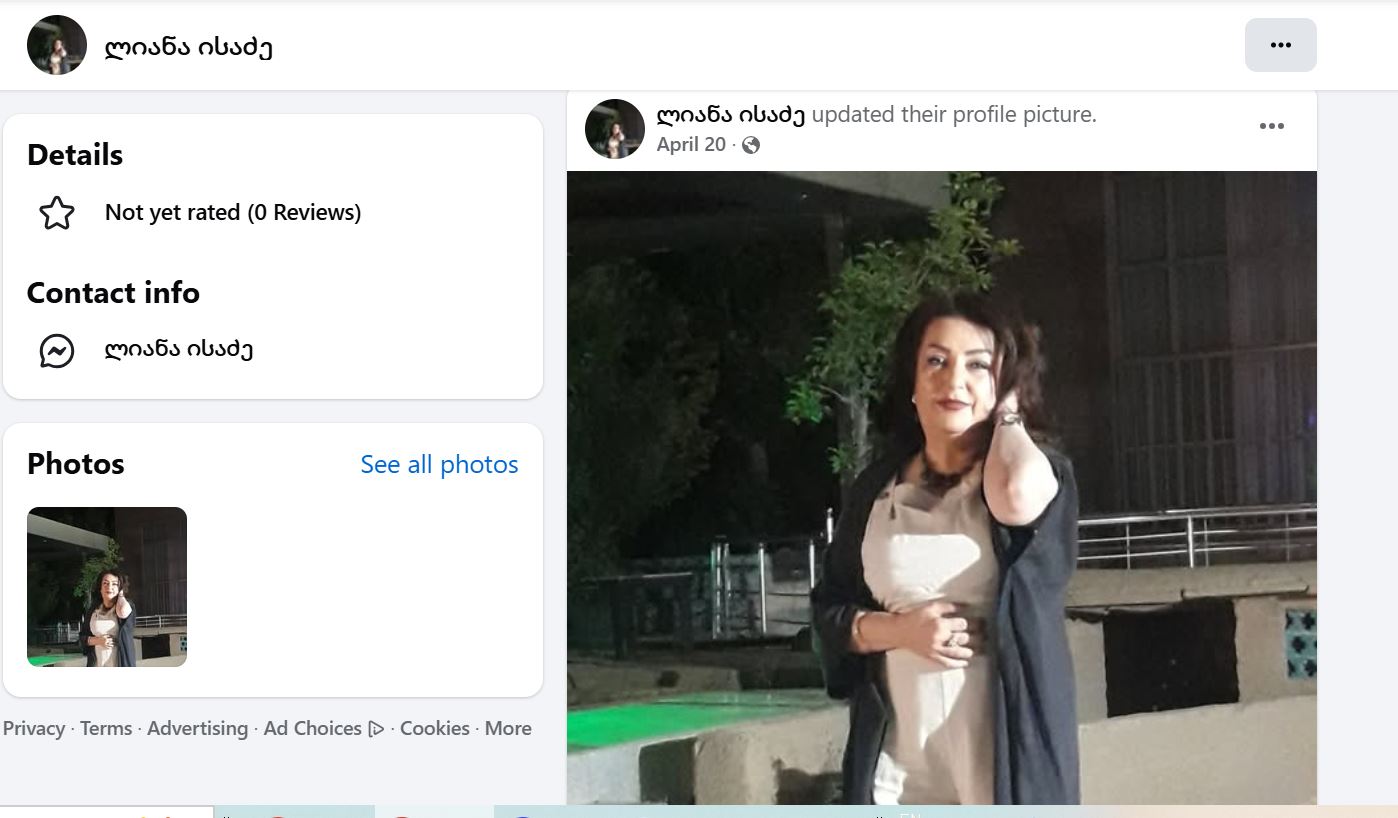
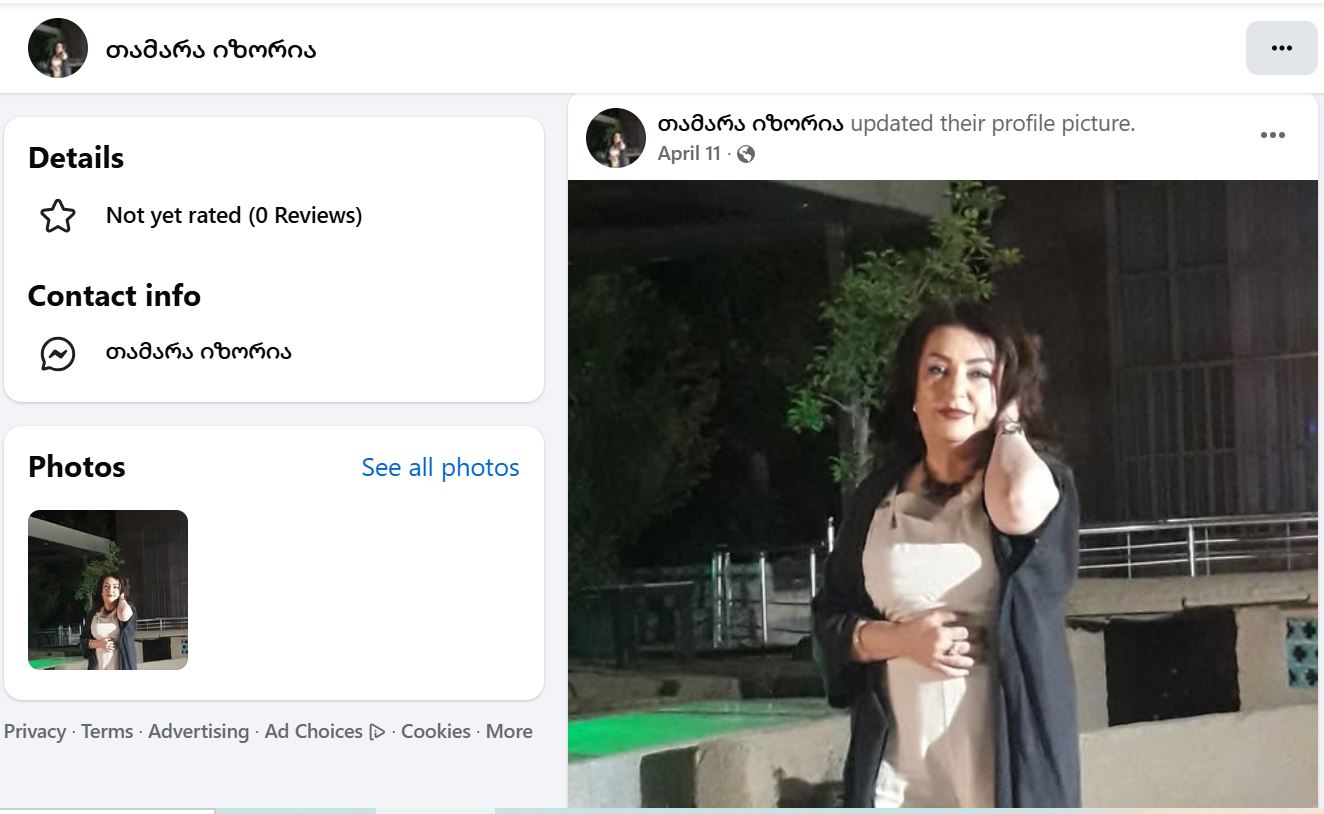
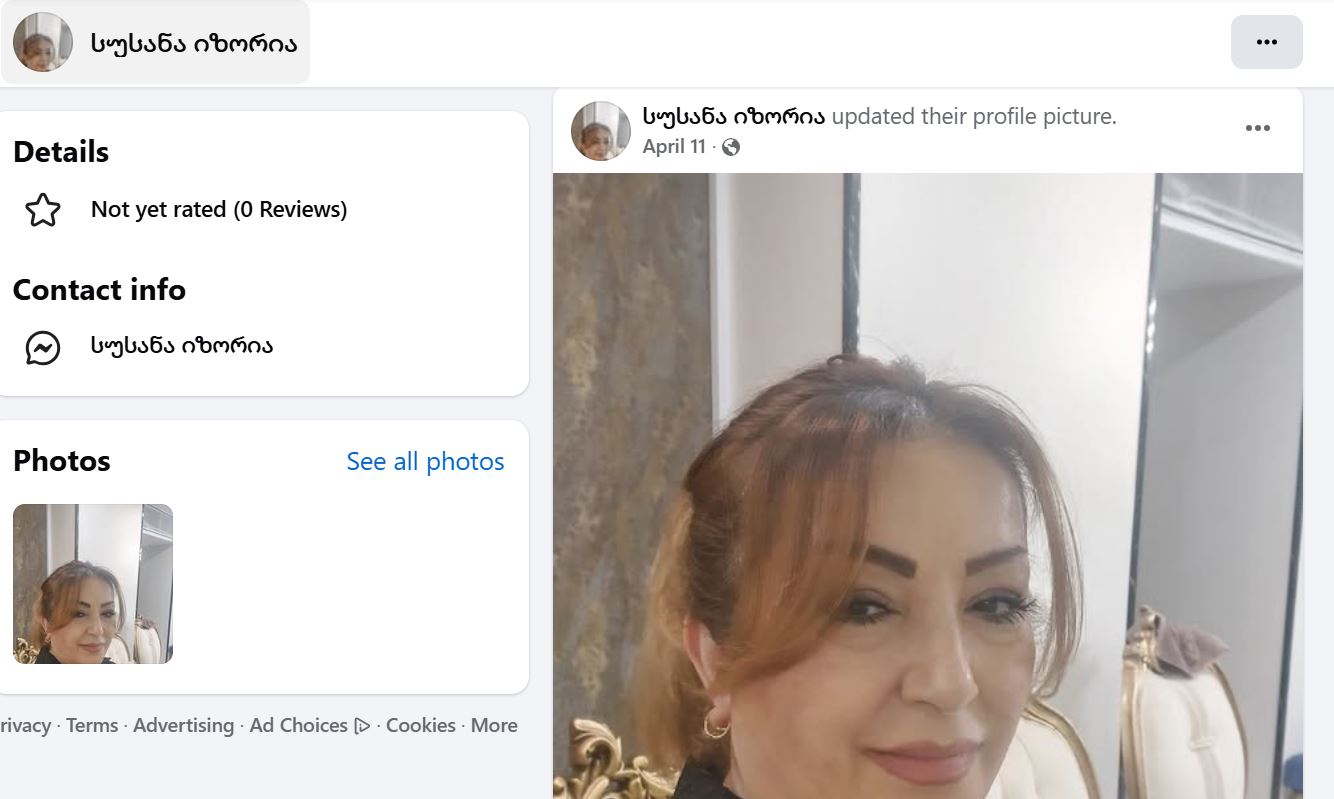
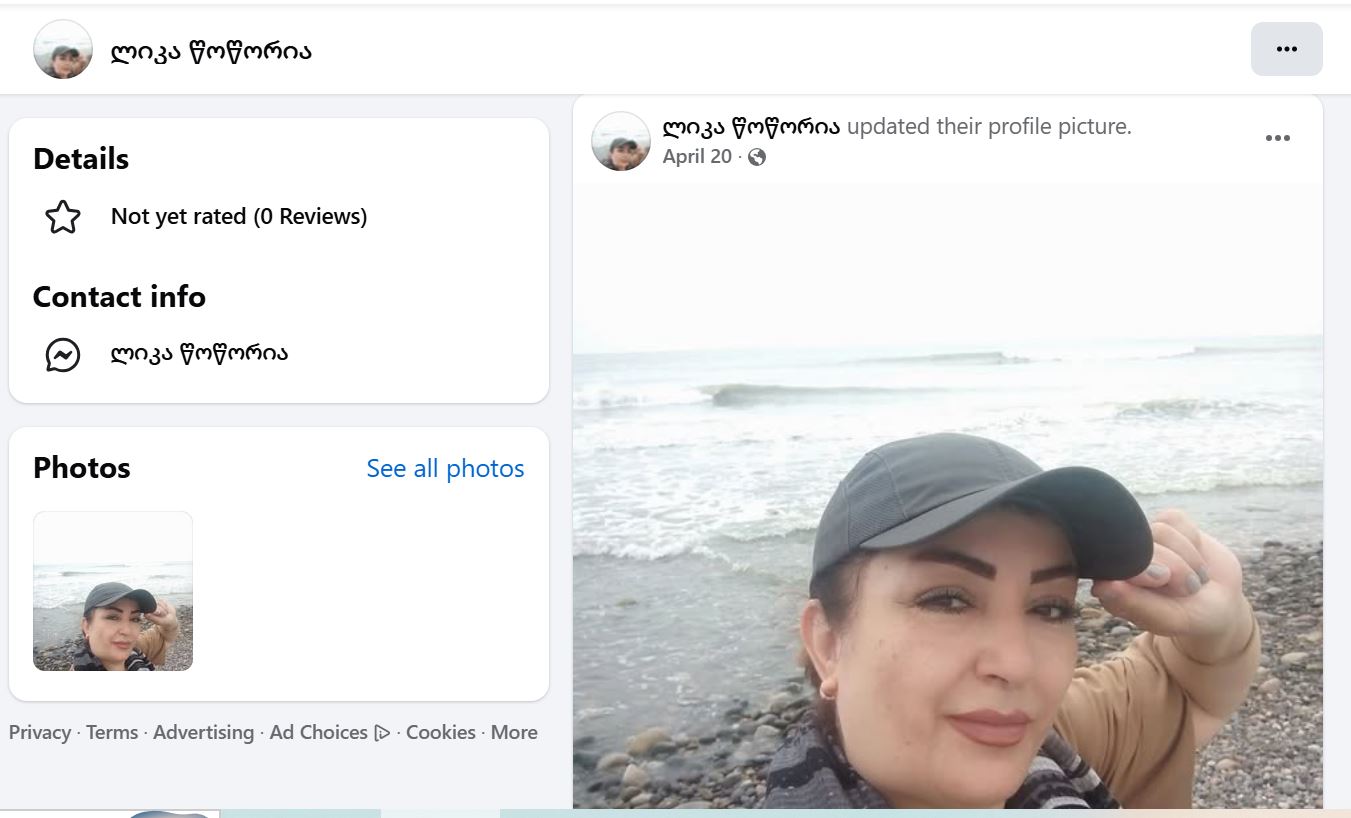
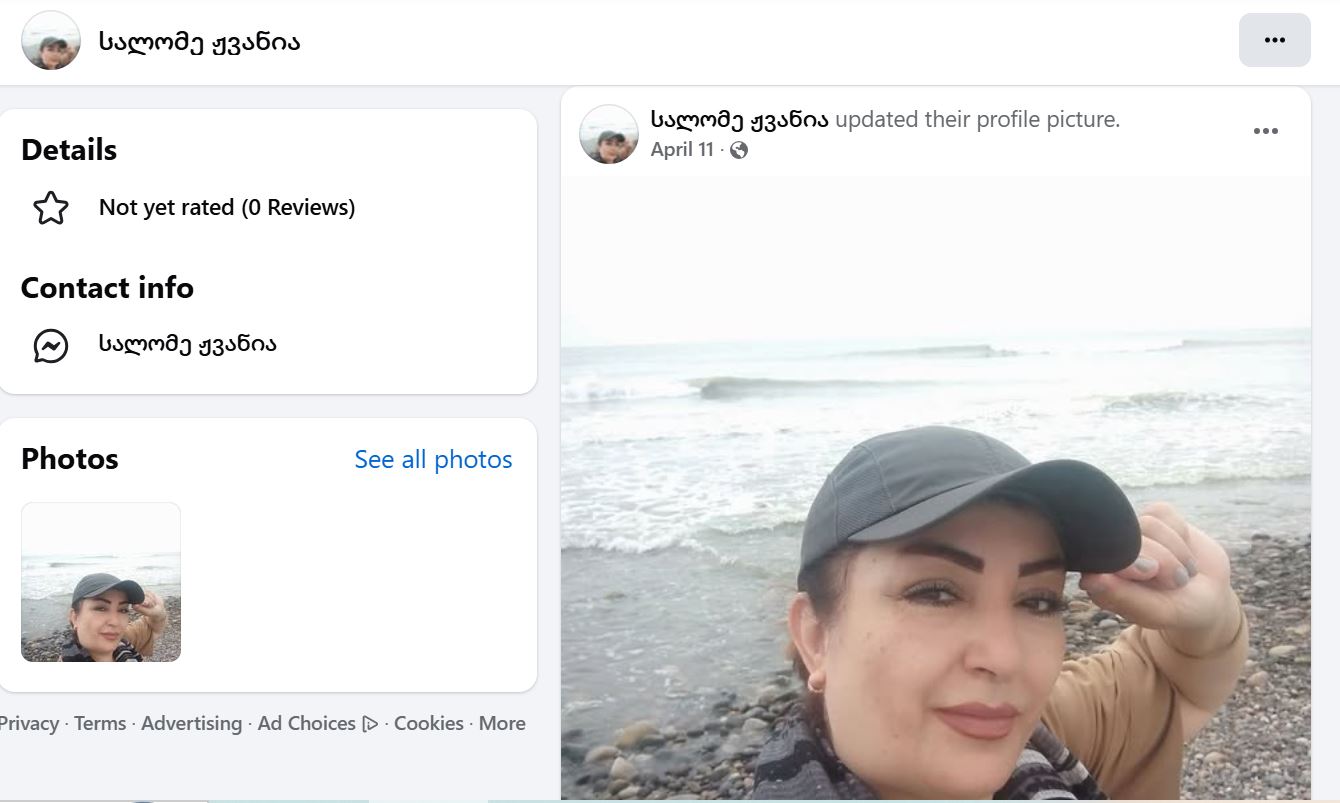
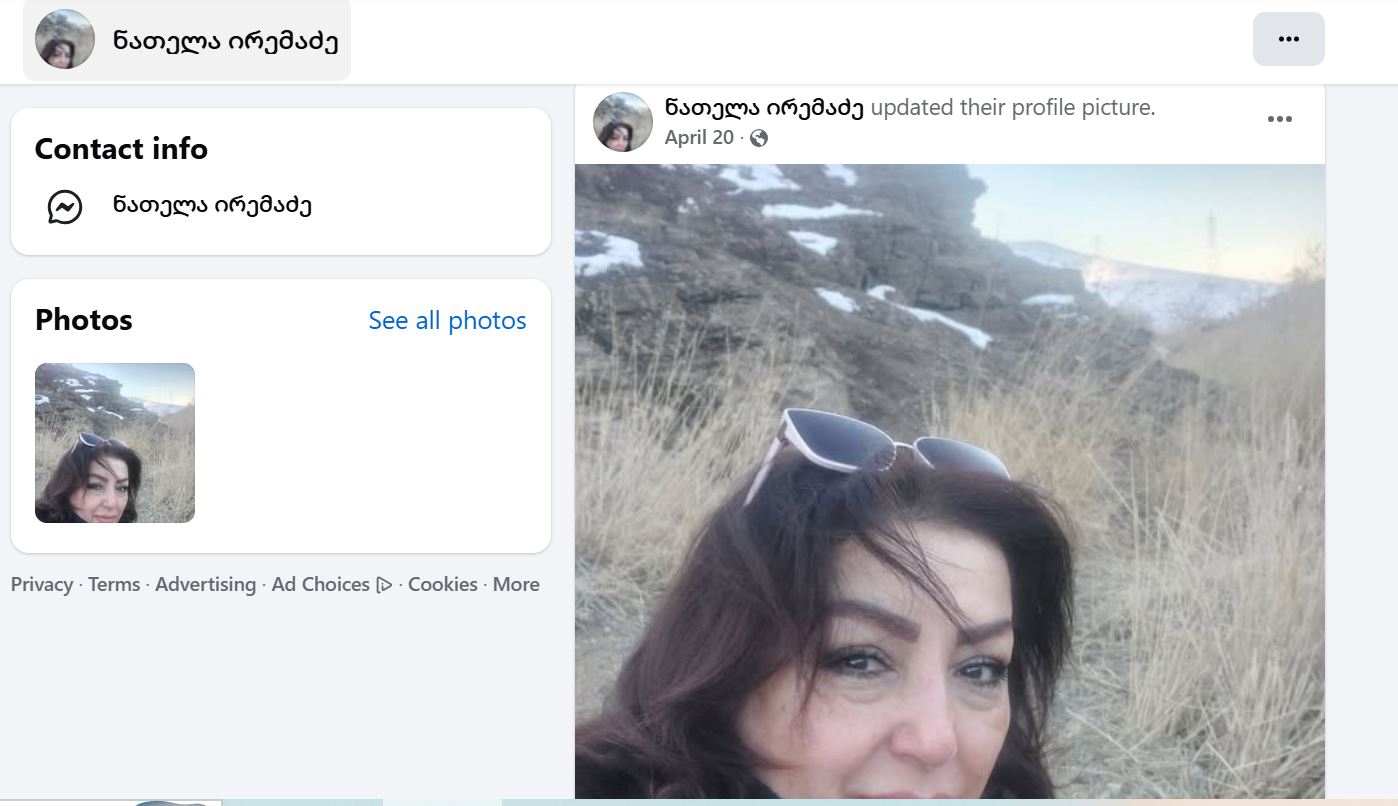
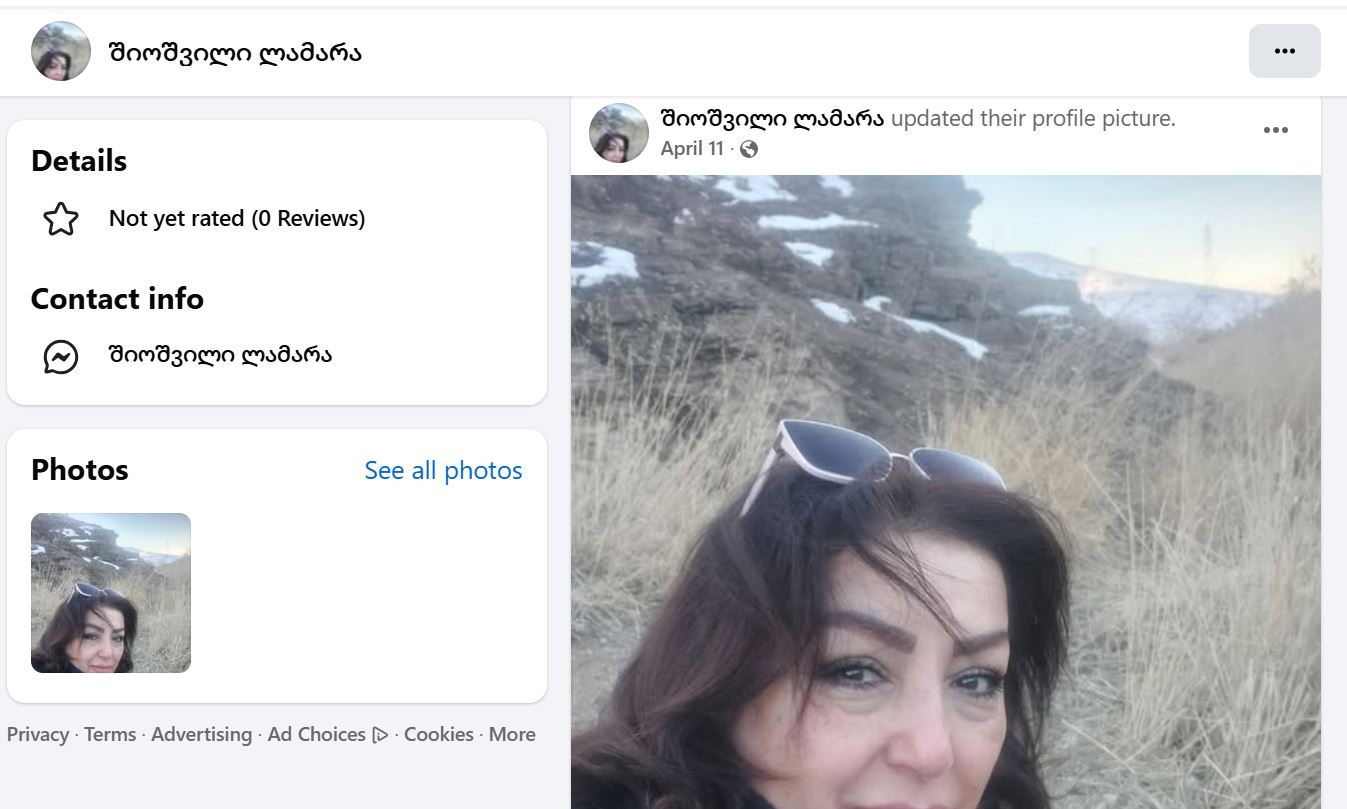
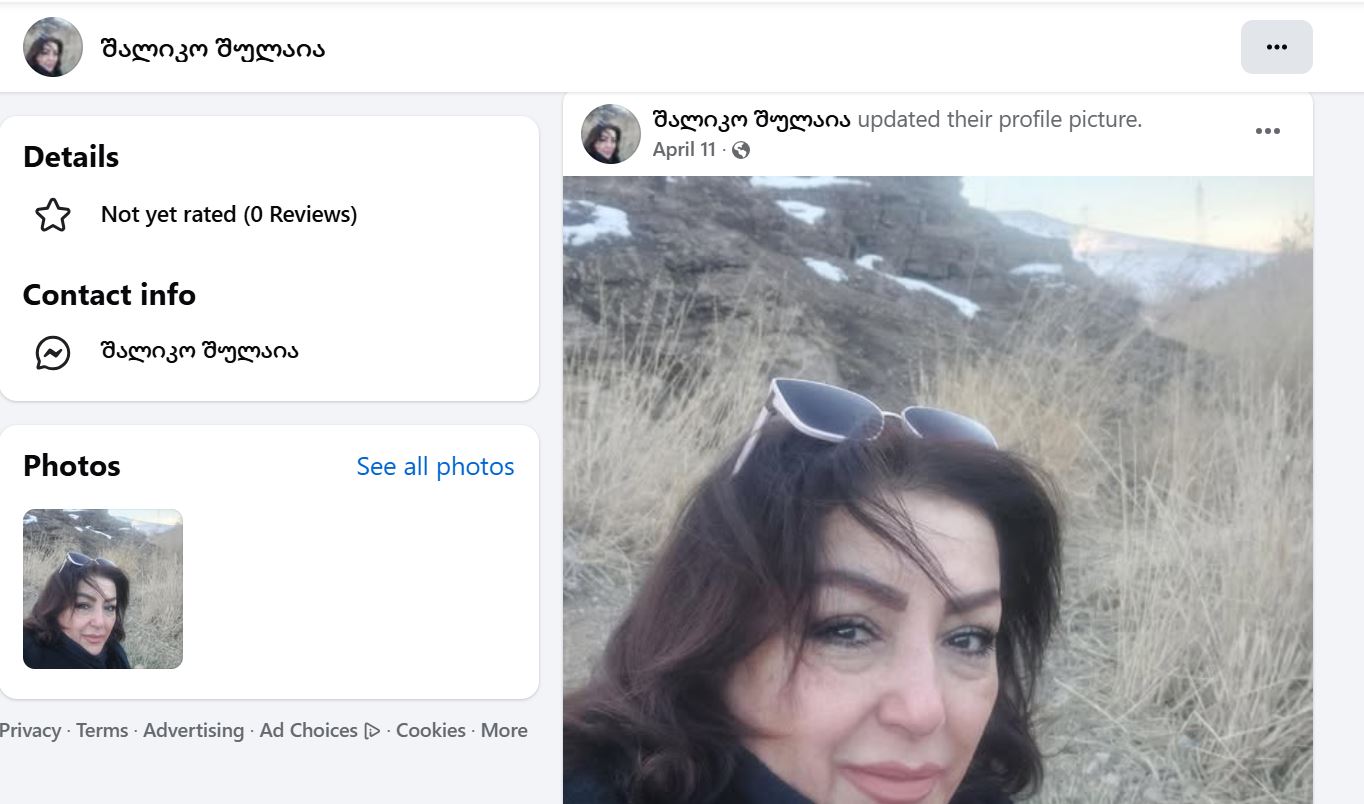
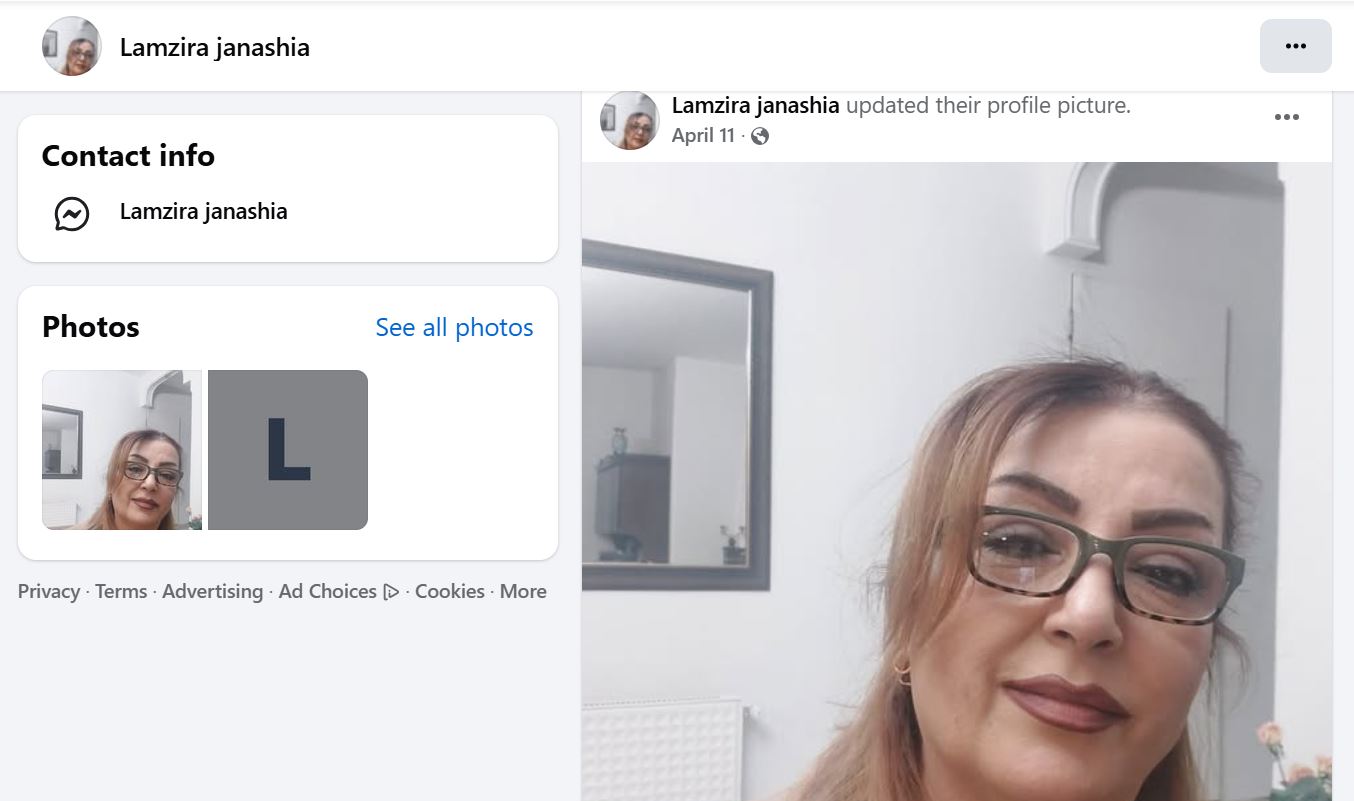
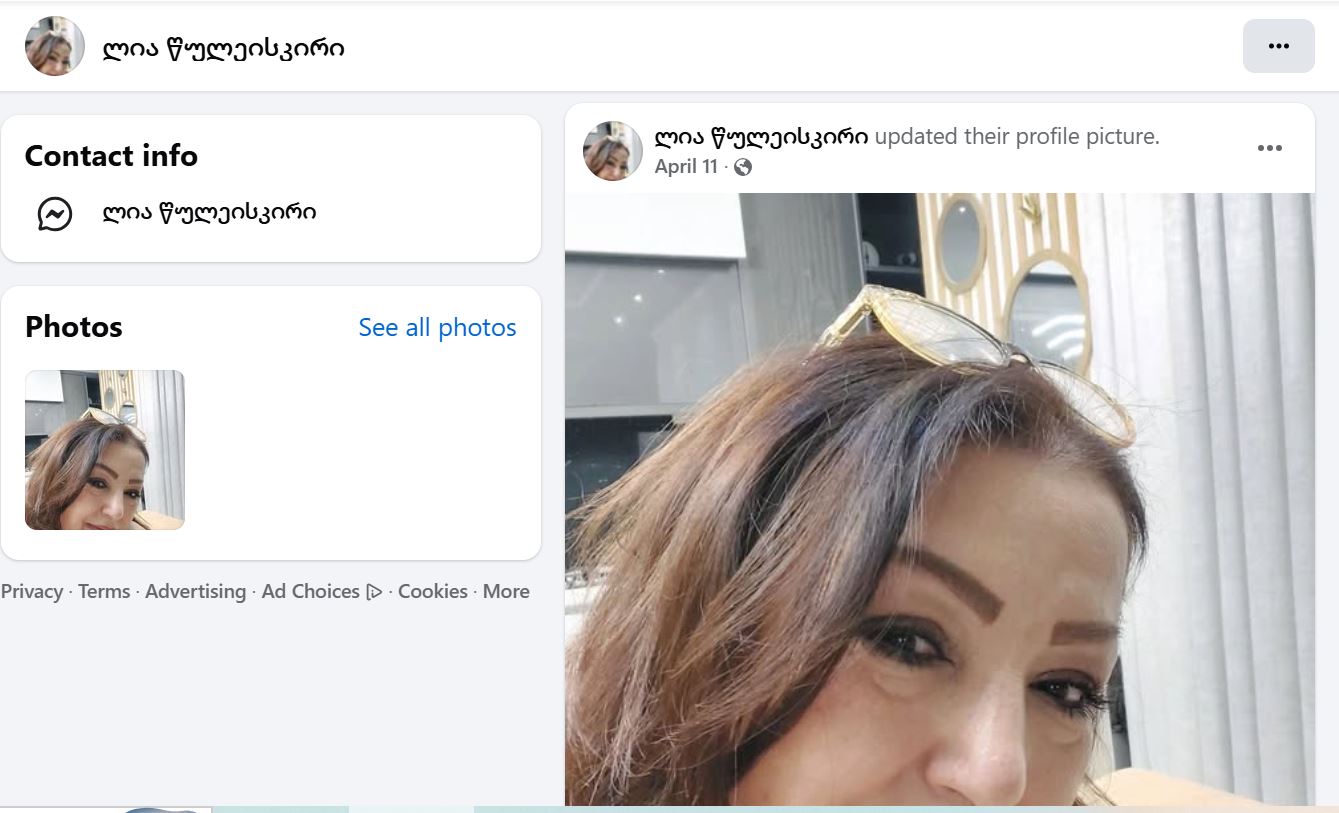
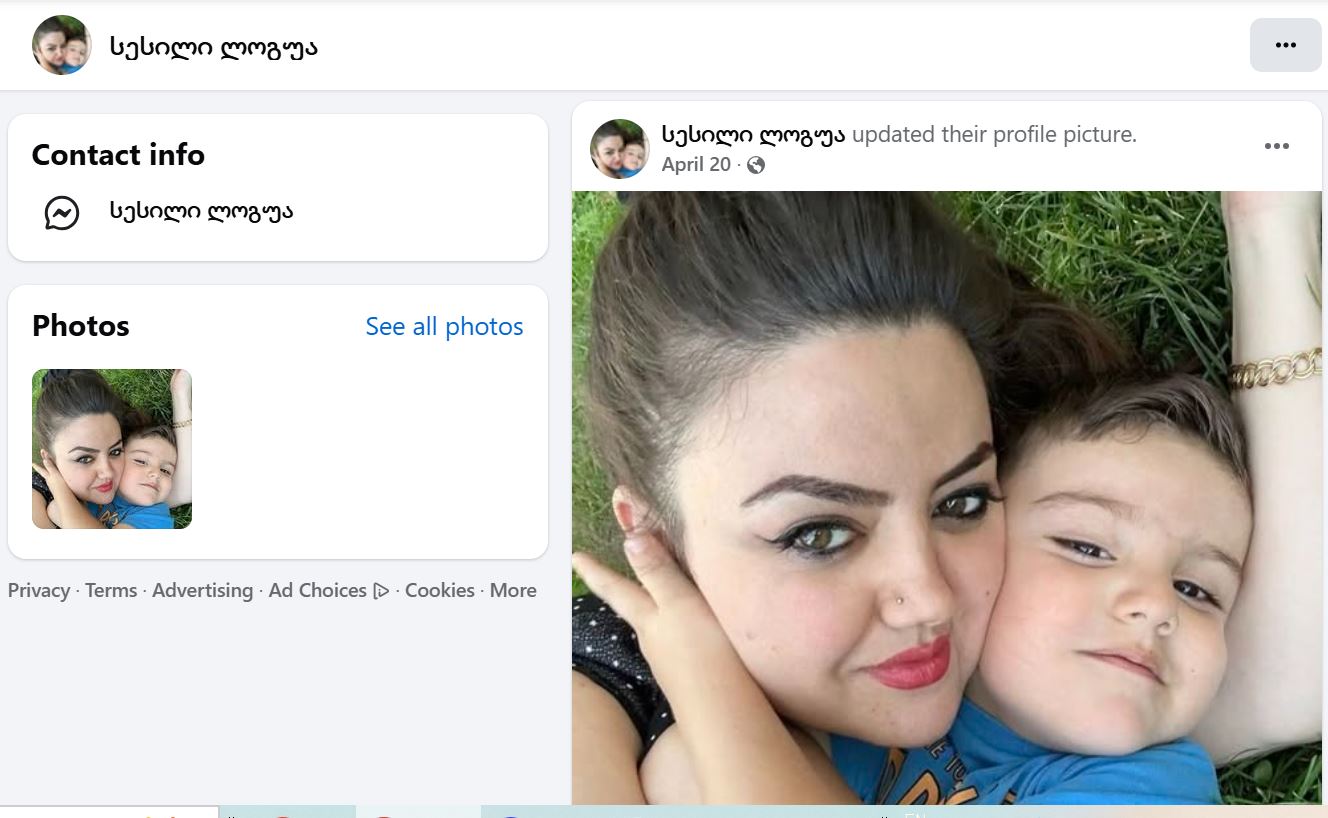
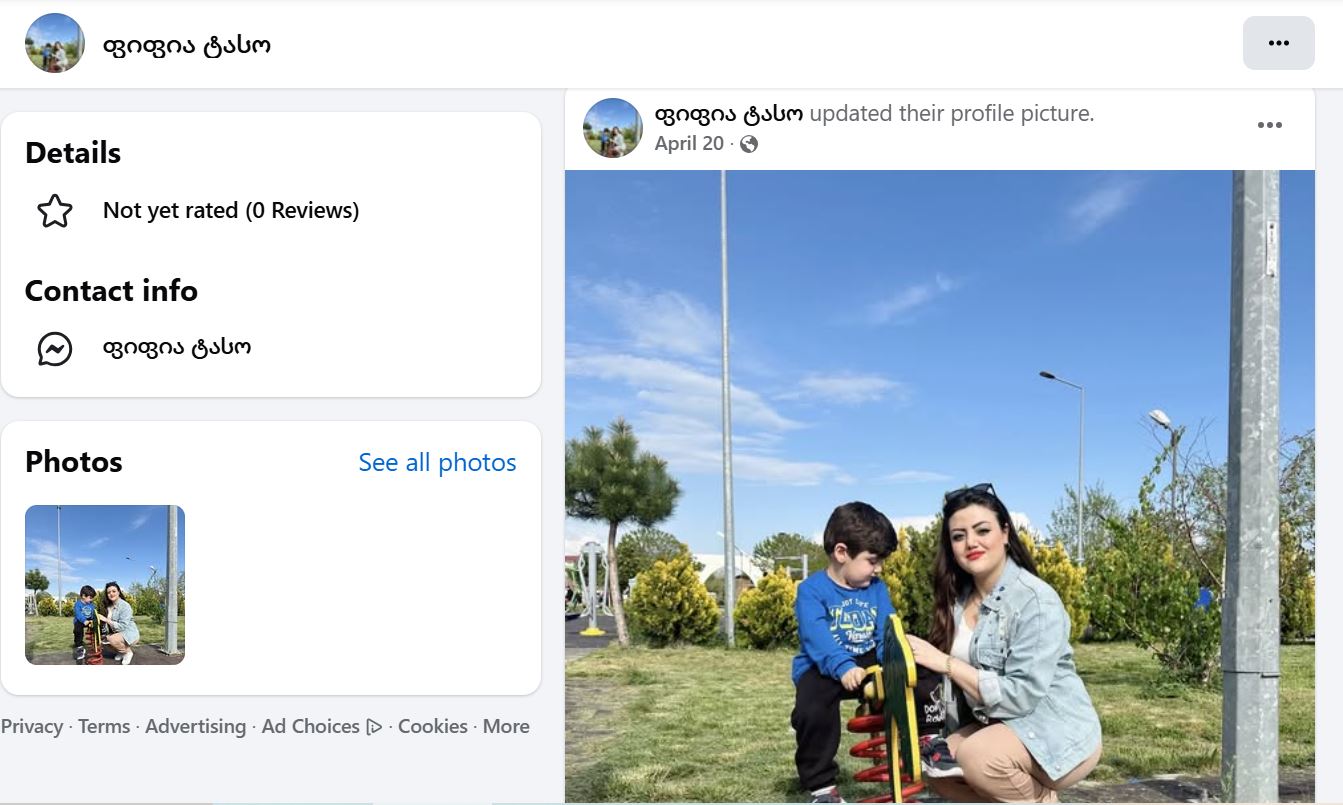
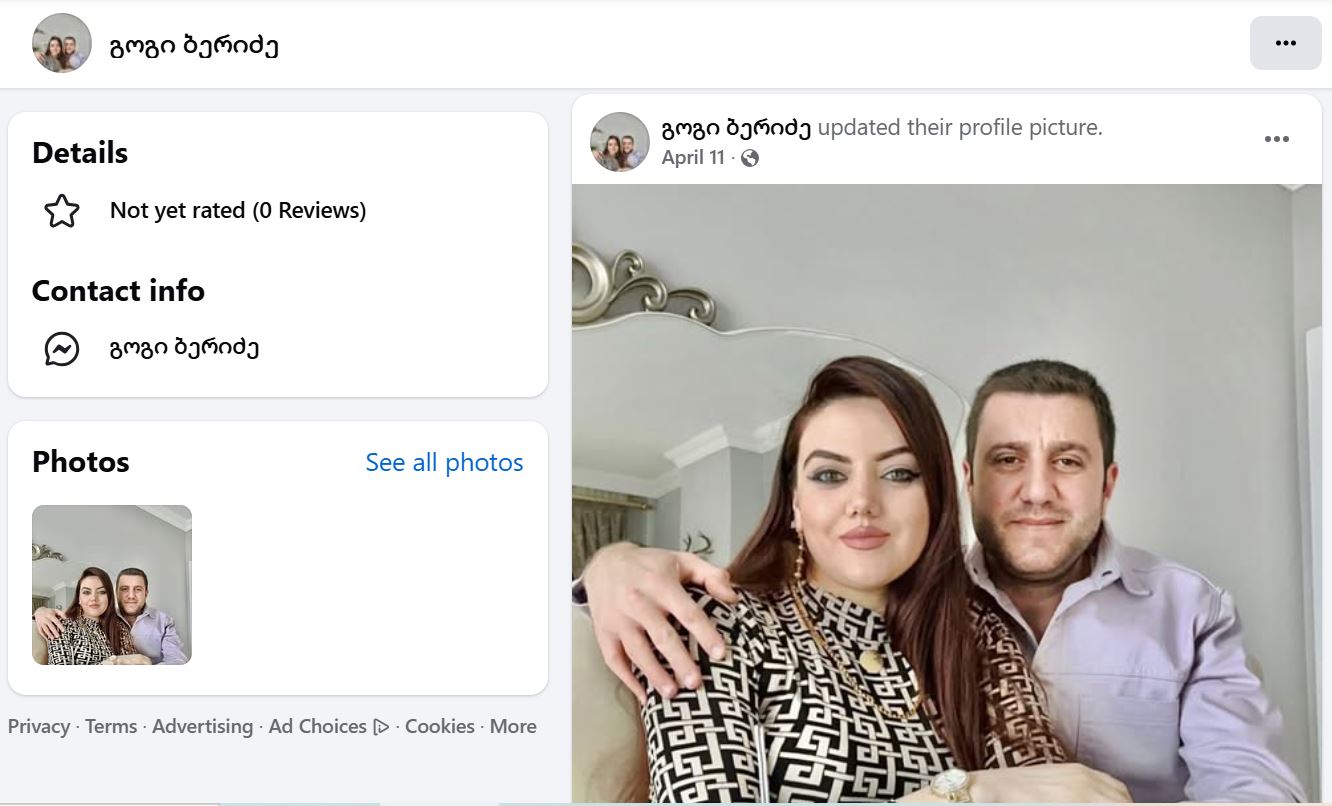
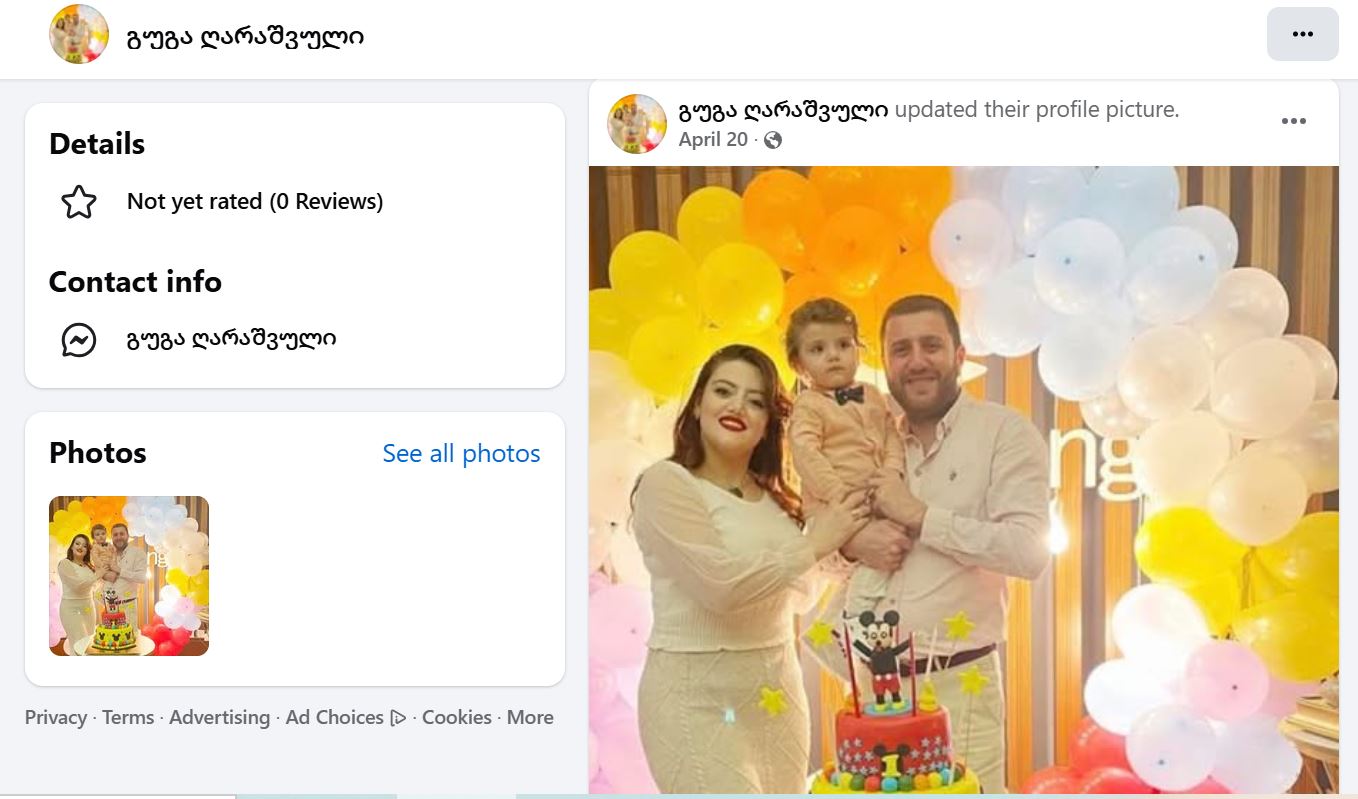
The monitoring identified cases in which a network of fake accounts obtained visual materials from a single source, the social media platform Pinterest, and used them extensively across multiple accounts. On April 11 and 20, 2026, one network created 10 fake accounts operating under different names, yet all of them used photos taken from the same Pinterest user. Similar practices were observed in several other cases. During the same period, another group created four new accounts based on photos stolen from Pinterest.
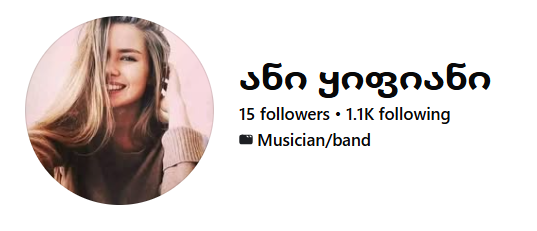
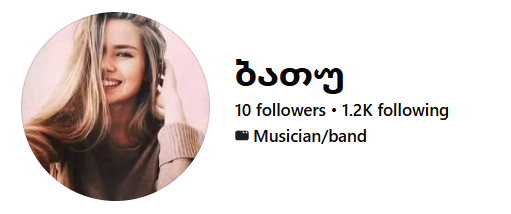
3. Repeated Use of the Same Photos
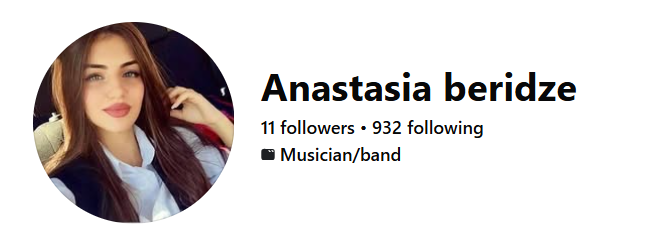
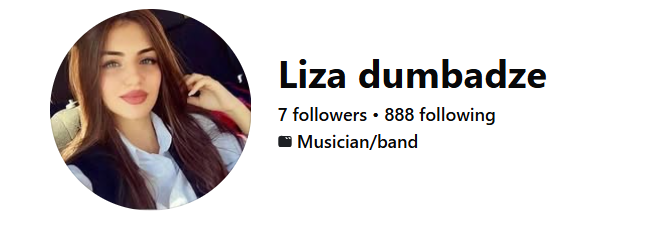
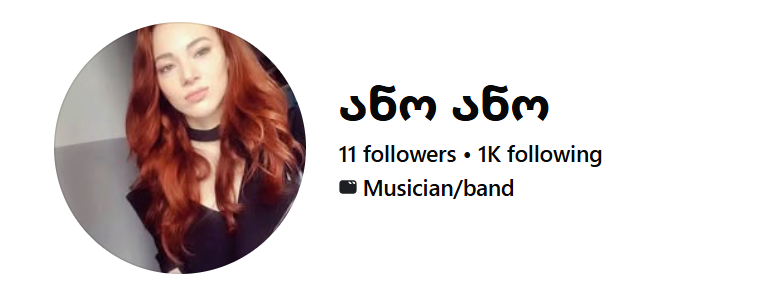
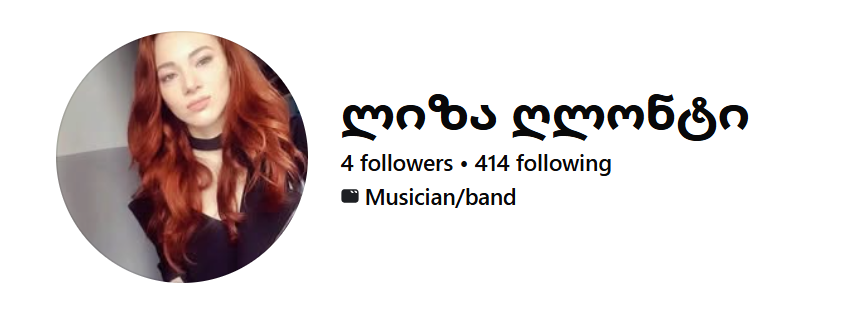
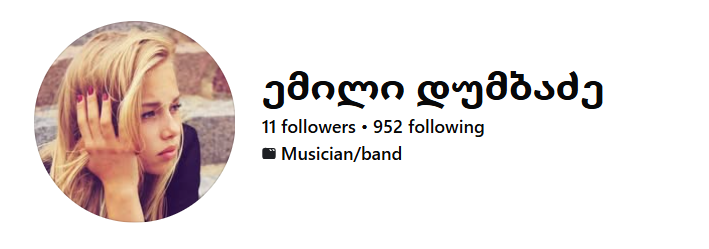
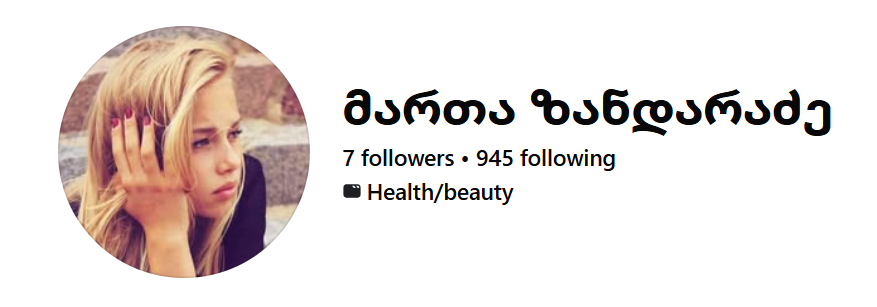
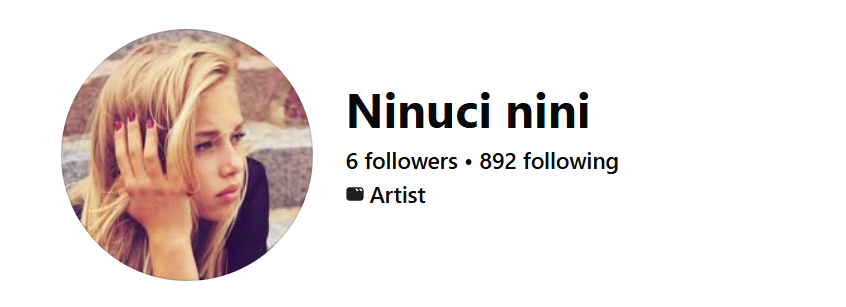
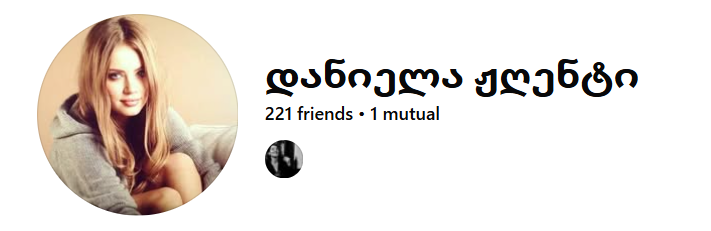
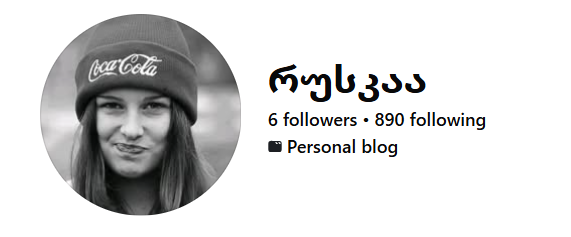
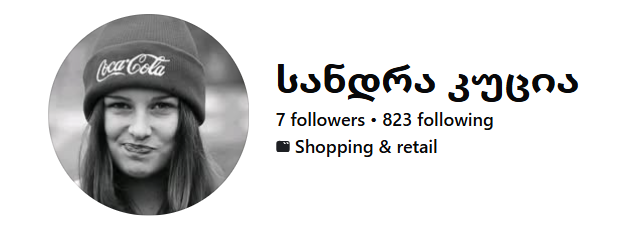
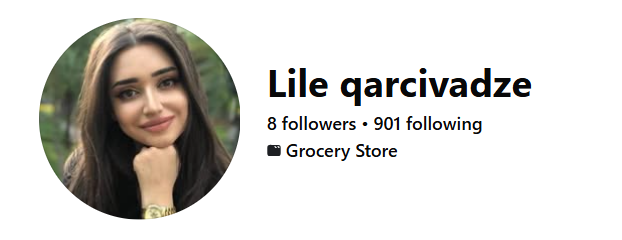
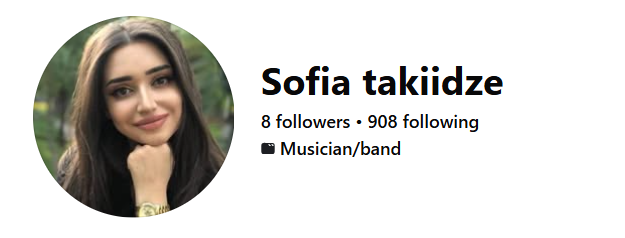
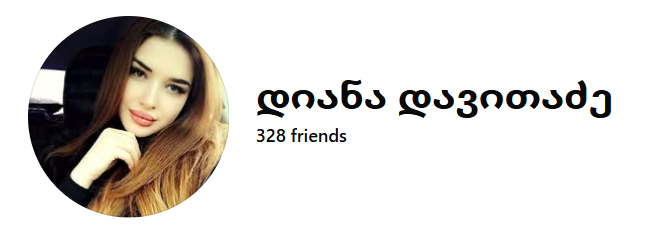
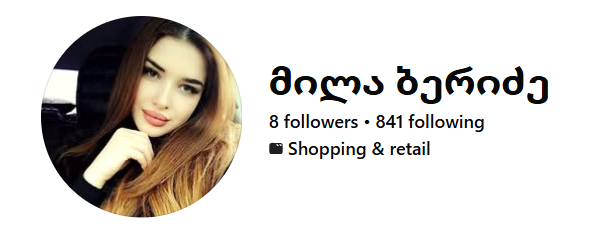
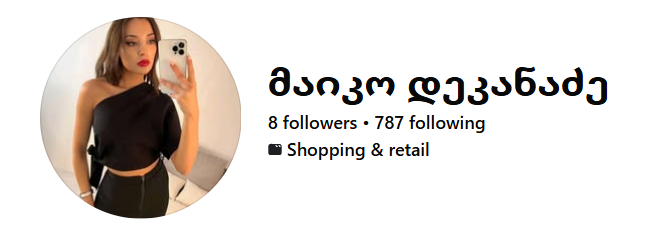
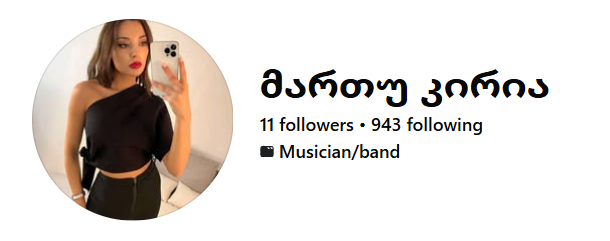
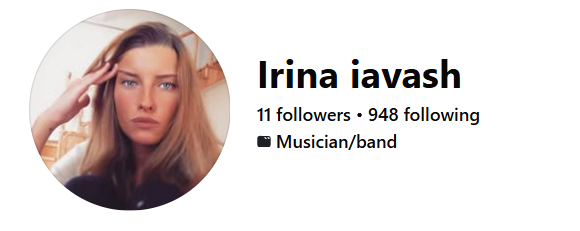
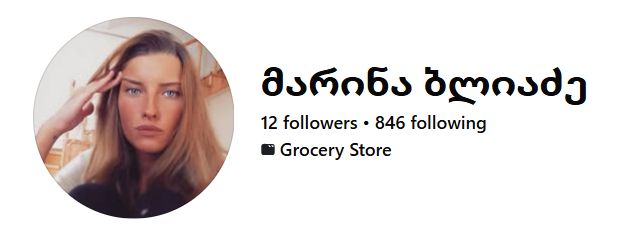
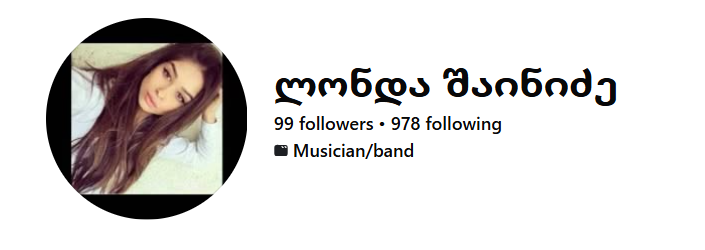
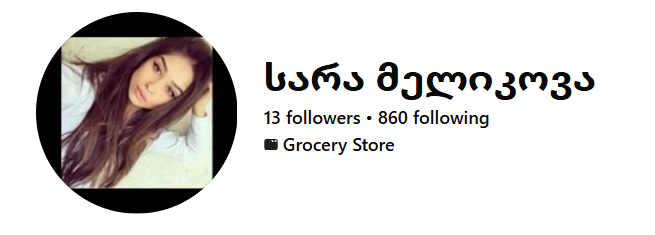
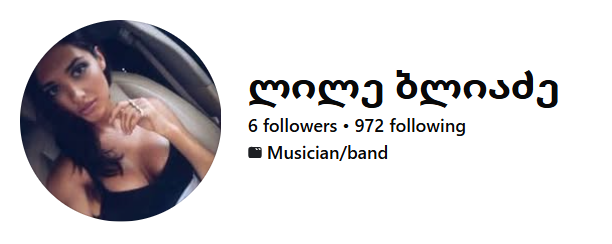
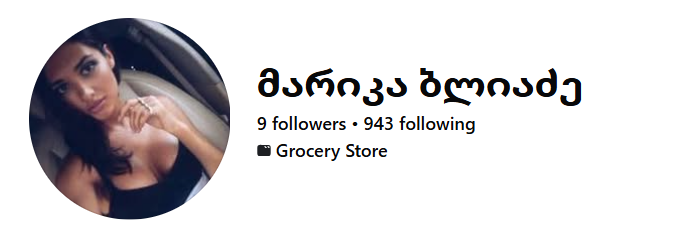
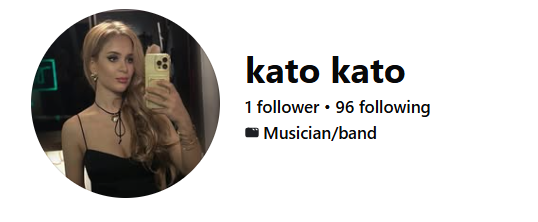
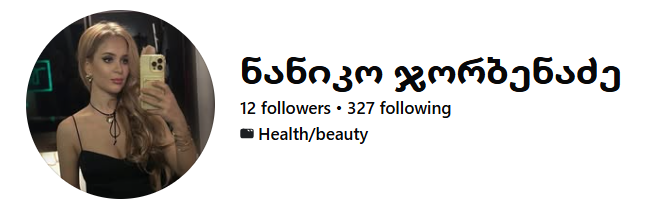
Numerous cases were identified in which accounts created at different times and operating under different names used the same profile photos. Such practices indicates that these account networks may have been managed from a single source or were using visual materials selected from a shared database.
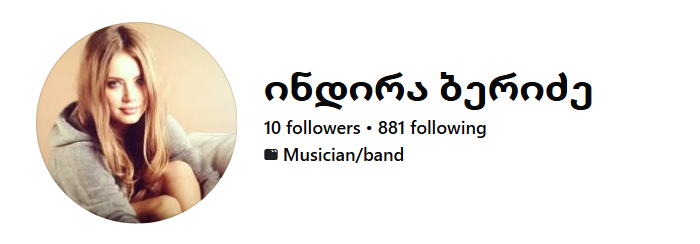
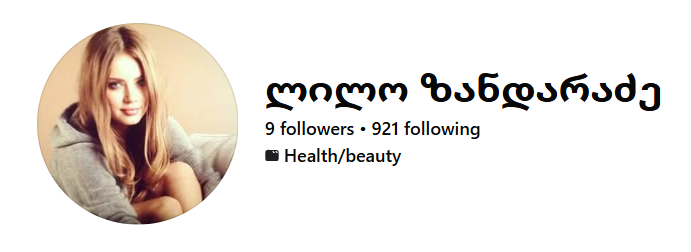
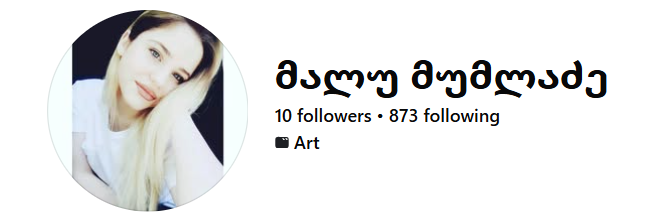
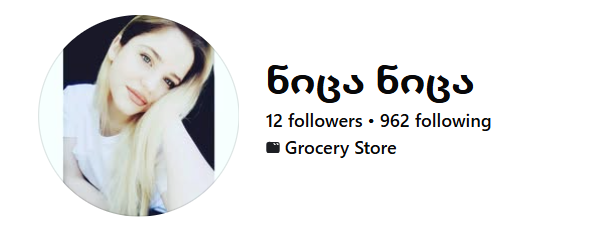
4. AI-Generated Profiles
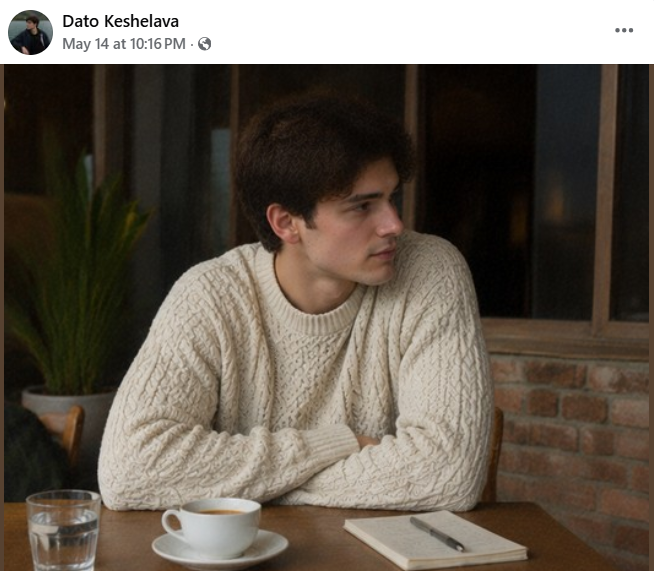
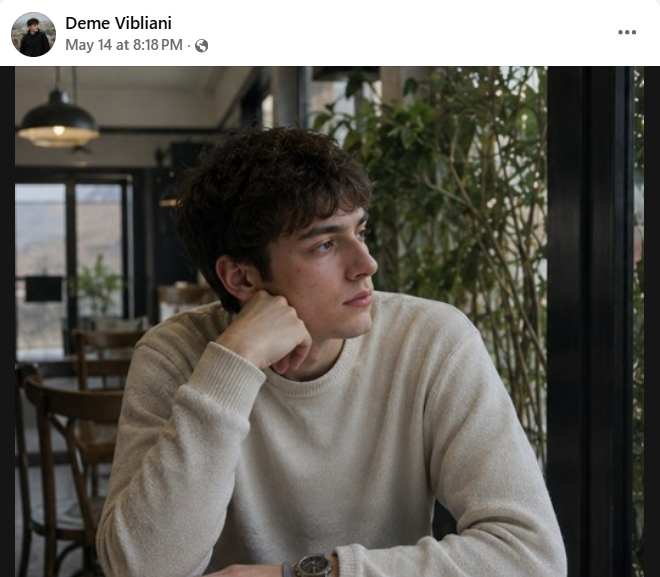
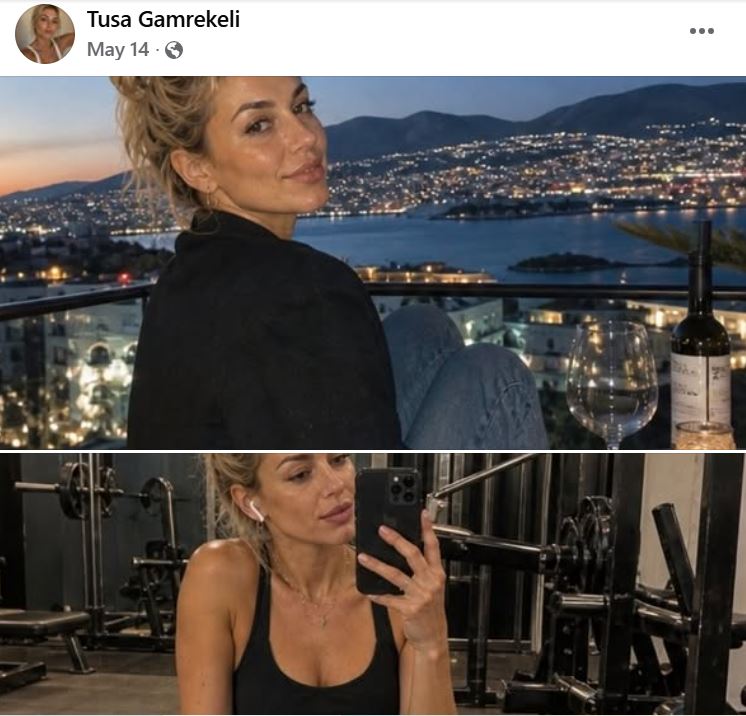
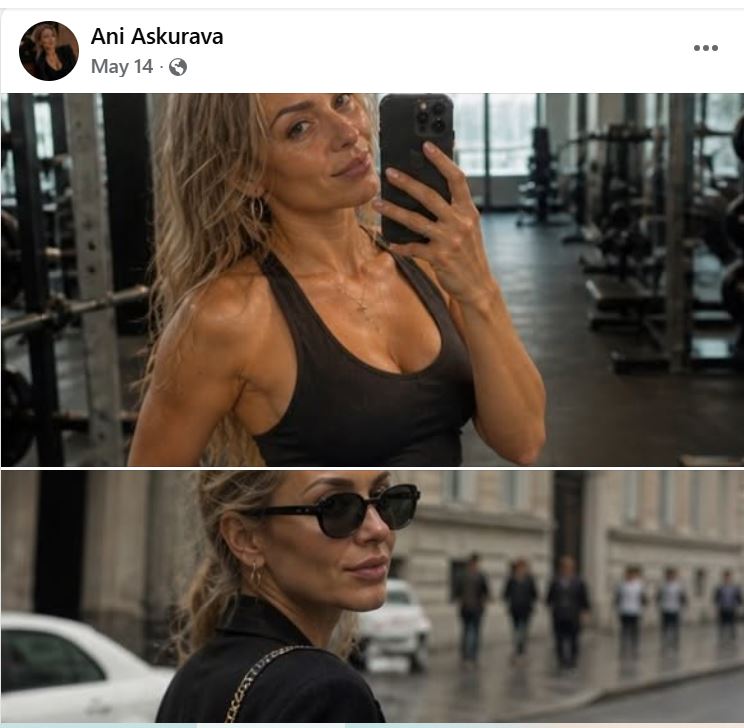
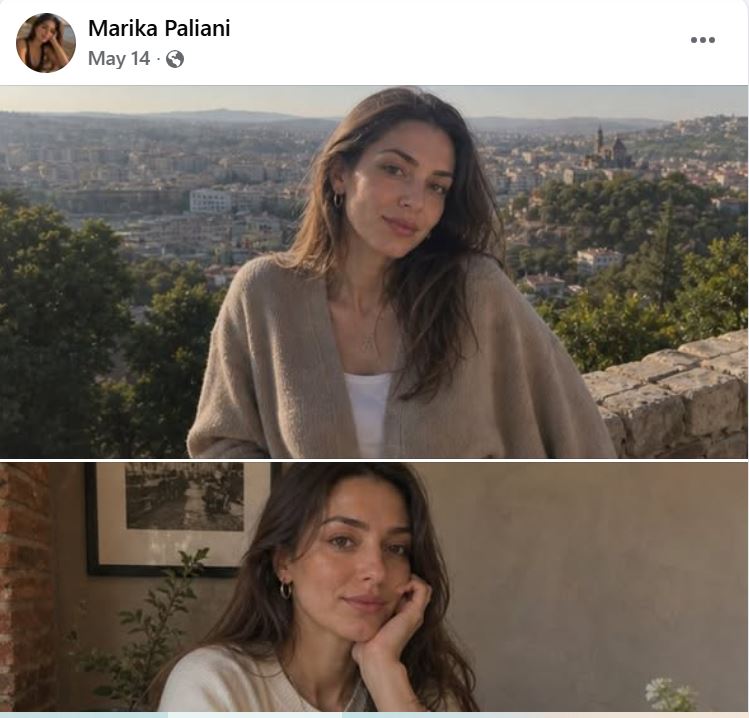
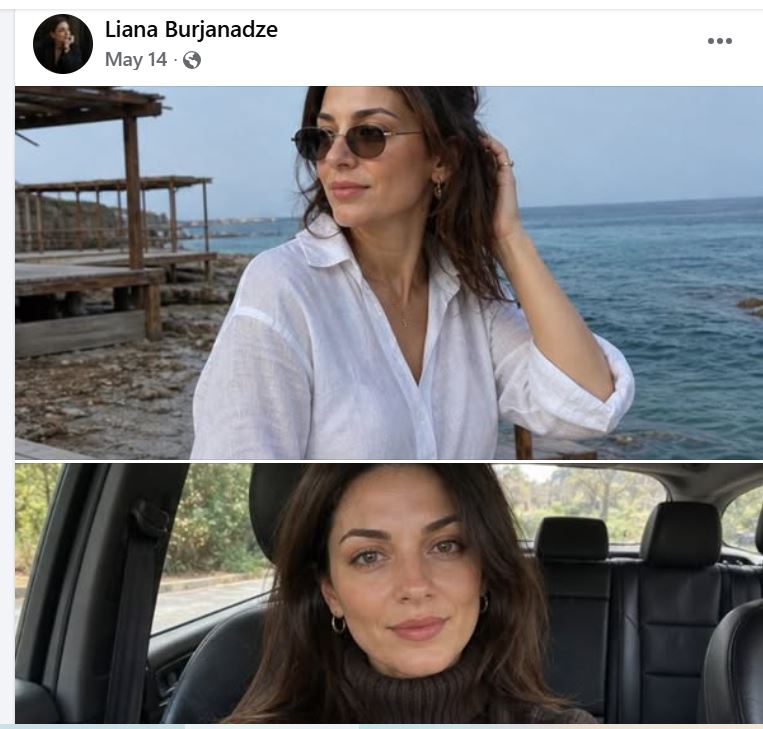
Some of the fake Facebook accounts identified use images generated by artificial intelligence (AI). Such photos often appear realistic; however, detailed analysis reveals characteristics typical of AI-generated images. It is noteworthy that in recent years, advances in artificial intelligence technologies have significantly facilitated the creation of fake profiles. Whereas previously network operators had to steal photos of real individuals, they can now generate images of non-existent people within seconds, making the identification of such accounts more challenging.
5. Changed Names
For some of the fake Facebook accounts identified by the ISFED, the username in the profile’s Uniform Resource Locator (URL) differs from the account’s current displayed name. This indicates that these profiles were initially created under different names and surnames, which were later replaced with other fabricated identities.
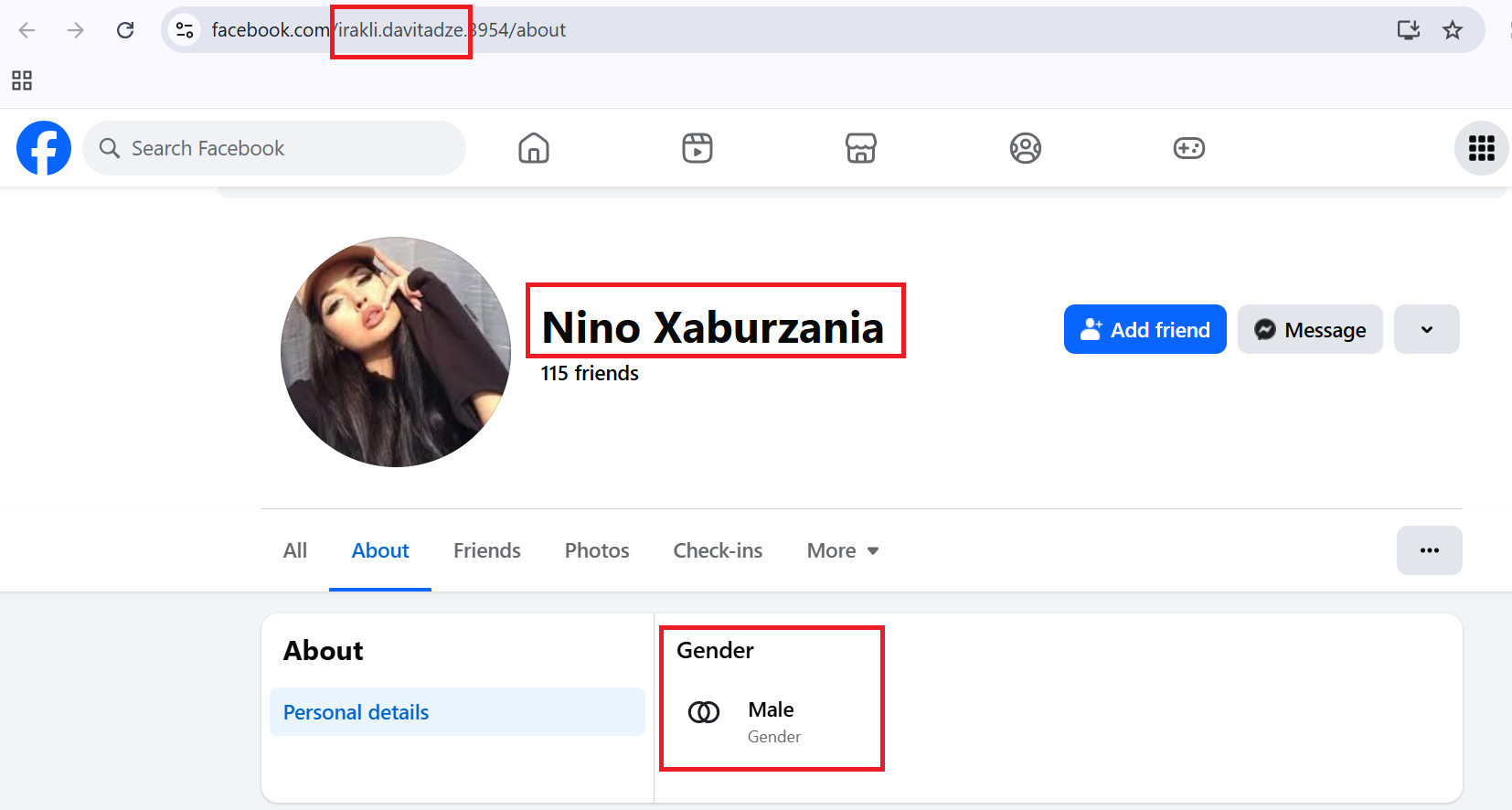
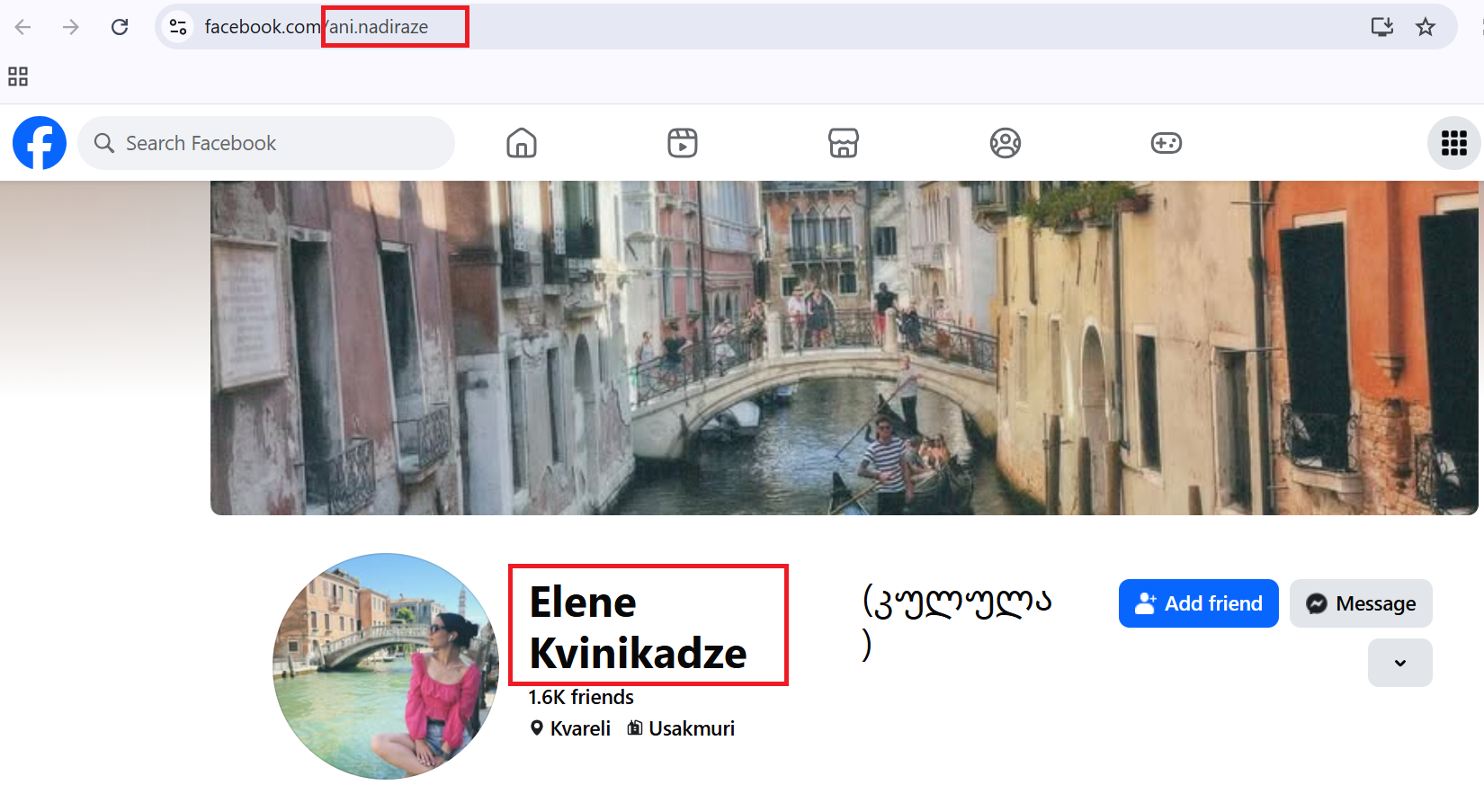
In addition to changed names, in some cases, errors were made during the creation of the profiles, resulting in their registration under non-existent names and surnames.
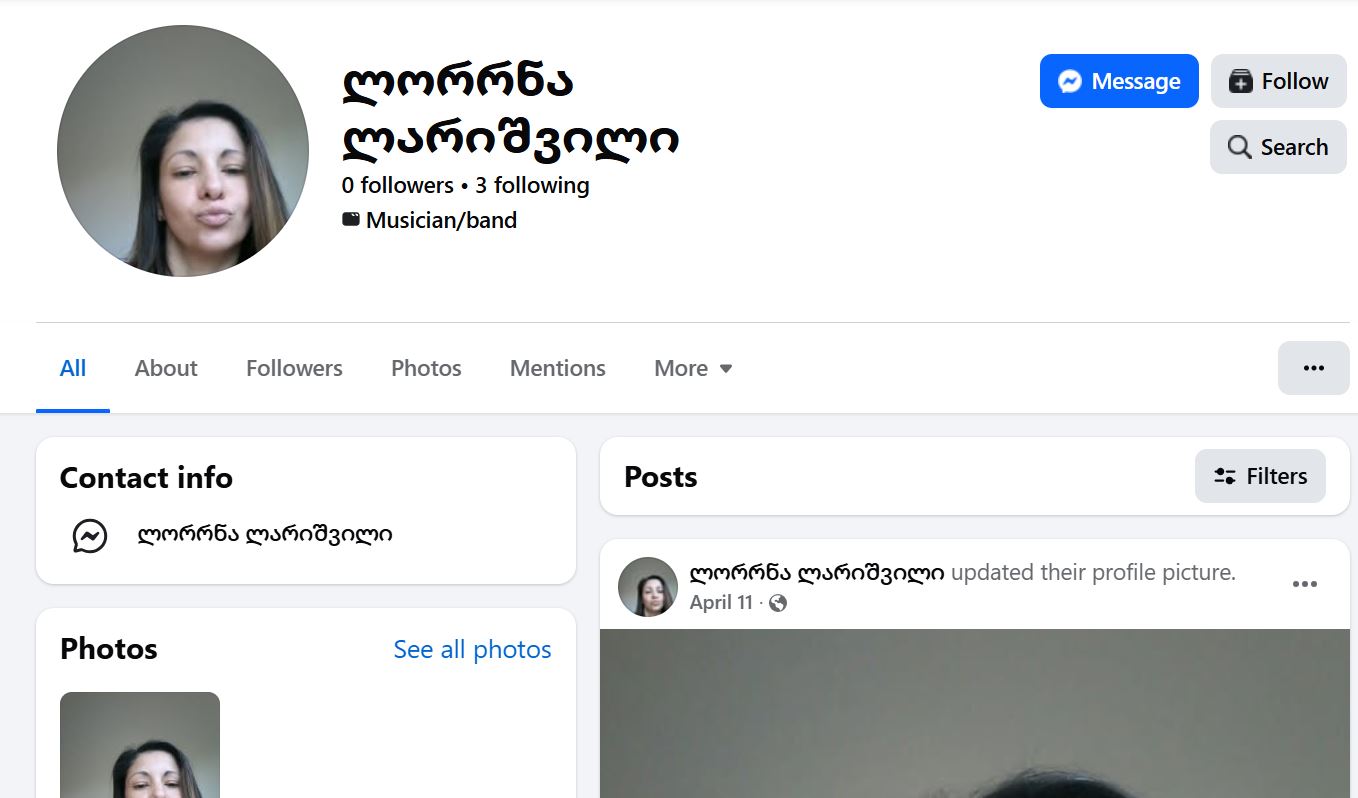
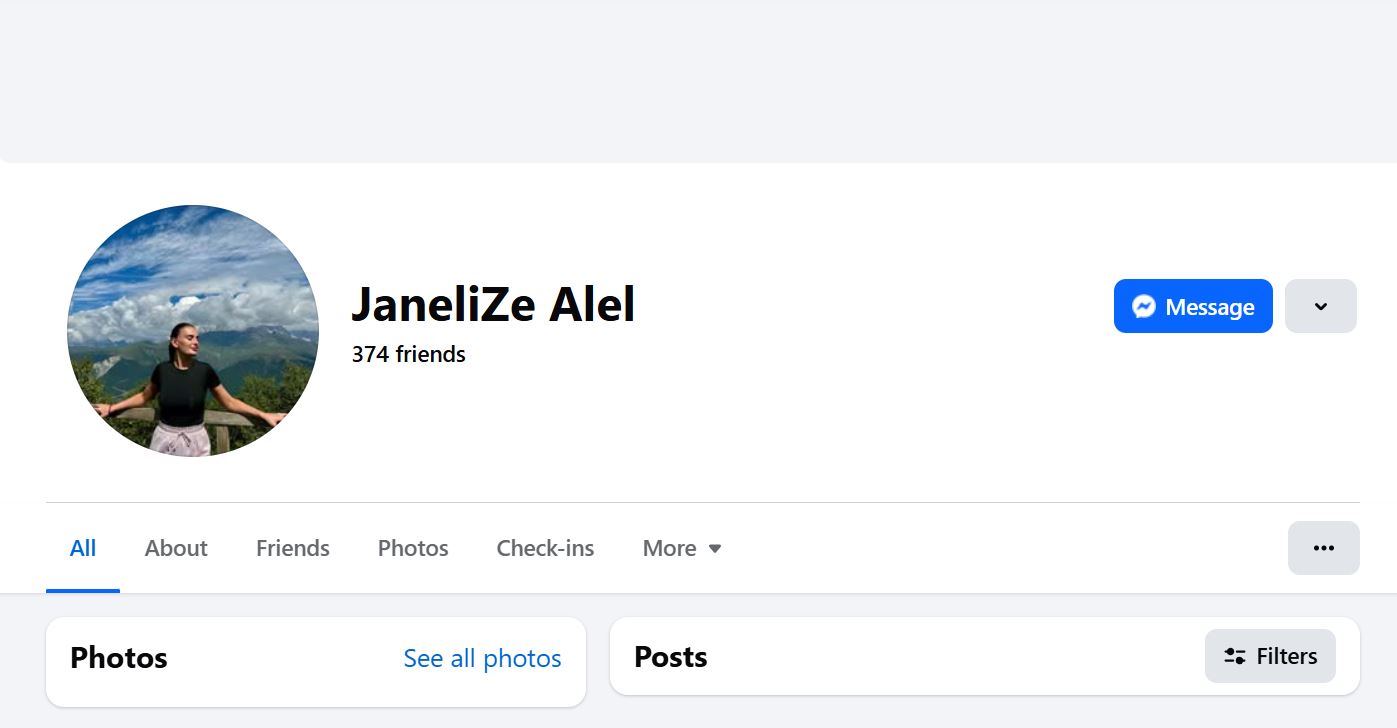
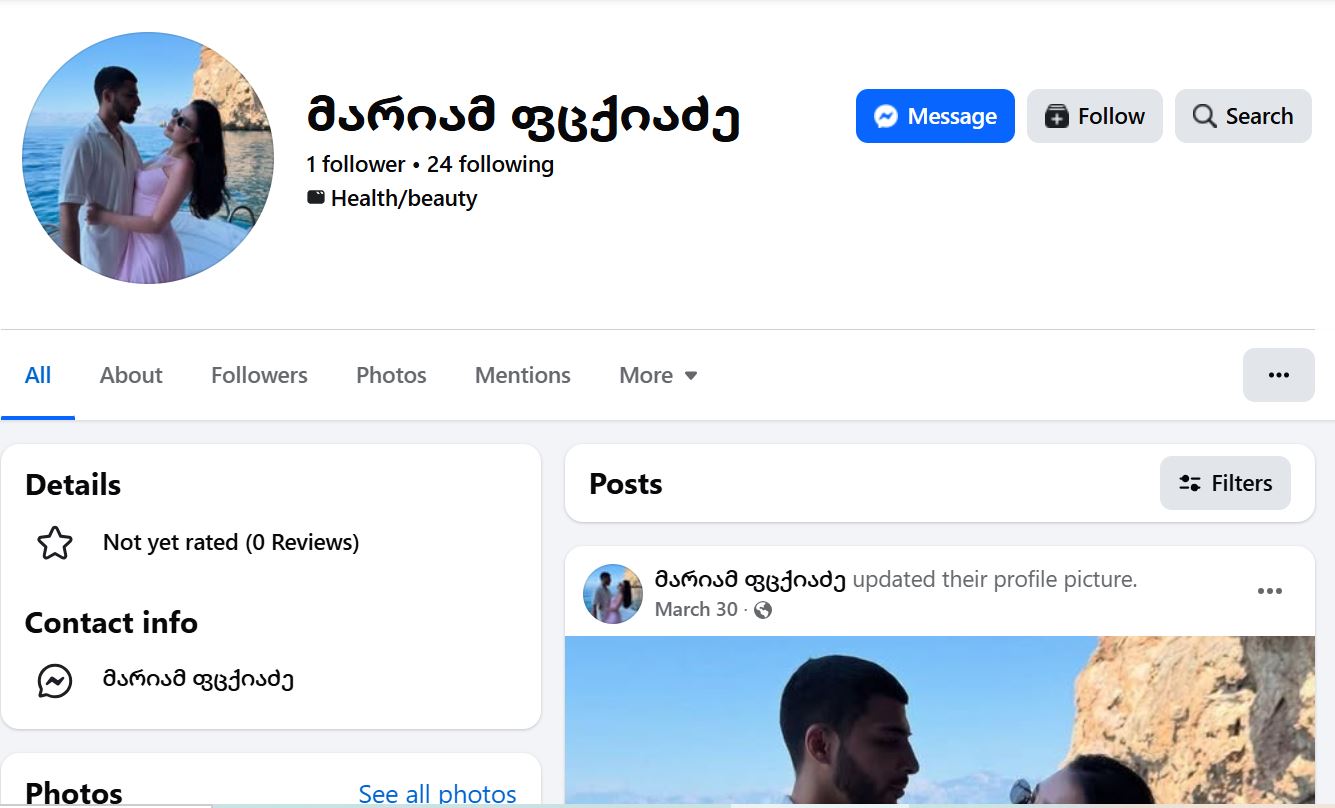
6. Connections with Other Pages
Some of the fake accounts appear to be connected to specific Facebook pages that they follow in large numbers. Among them, the Facebook page AI Consulting Space is particularly notable, as it is followed by more than 300 fake profiles created in 2022–2023 and in 2025.
A significant portion of the fake Facebook profiles activated in 2024 are connected to the Facebook page “Ar Agarevinebt” (“We won’t let you mess it up”), which is linked to Vato Shakarishvili, one of the leaders of the political movement “United Neutral Georgia,” which is close to “Georgian Dream,” these profiles are also connected to pages belonging to an open supporter of Georgian Dream, Gia Gachechiladze (“Utsnobi), including “აი მსოფლიო ამბები” (“Ai World News”), “აი პოლიტიკა” (“Ai Politics”), and “i ucnobi • აი უცნობი (Ai Utsnobi).”
Among other pages followed by a significant number of fake accounts created during different periods are “Qvevri • ქვევრი,” “მხარე • mkhare.ge,” as well as the official Facebook pages of Georgian Dream politicians Mamuka Mdinaradze and Irakli Chikovani, among others.
7. Combination of Commercial and Political Purposes
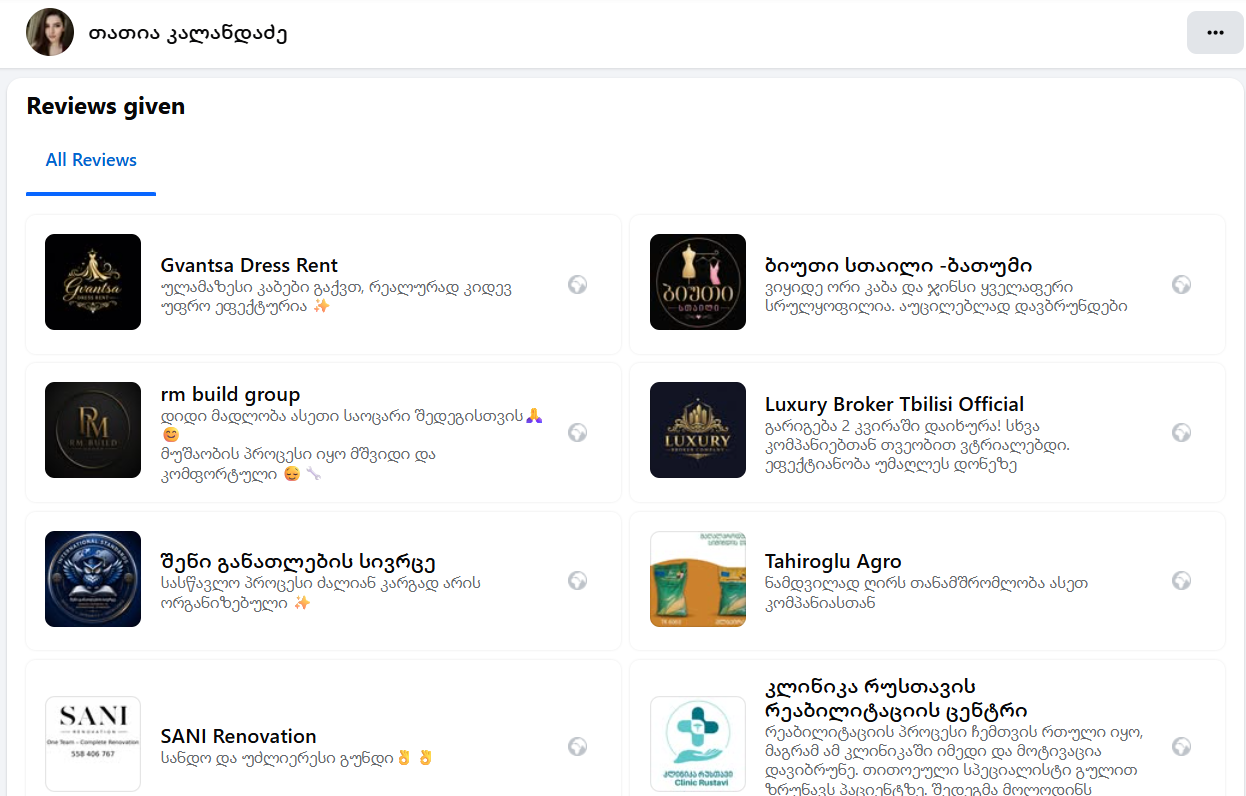
The monitoring showed that some of the fake accounts are not limited to interacting with political content. They are also used to promote products and services of various companies, including posting fake reviews and ratings. This suggests that some of the identified networks may be multifunctional, with the services they provide serving different purposes, including amplifying political narratives, manipulating public opinion, and generating commercial benefits.
Fake accounts
Photo Gallery
