
A Coordinated Propaganda Campaign by Georgian Dream Against the OSCE Moscow Mechanism Report

On March 12, 2026, within the framework of the OSCE Moscow Mechanism, a significant report was published on the state of human rights and fundamental freedoms in Georgia since the spring of 2024. The report offers a sharply critical assessment of all anti-democratic and human rights–violating steps taken by the Georgian Dream party. Among the OSCE/ODIHR recommendations are:
- Cooperation with international organizations, including the Organisation for the Prohibition of Chemical Weapons (OPCW), regarding the possible use of chemical agents during the protests in November-December 2024;
- Cessation of the disproportionate use of force against peaceful demonstrators, journalists, and the opposition;
- Conducting independent investigations into all allegations of torture and ill-treatment;
- The immediate release of political prisoners;
- Independent investigation of alleged electoral violations;
- The invitation of international observers for future elections;
- The repeal of the laws on “Transparency of Foreign Influence” and “Foreign Agents Registration Act”;
- The termination of efforts to ban opposition parties and politically motivated cases against opposition leaders;
- Ensuring a fair trial and the independence of the judiciary;
- Safeguarding freedom of expression, assembly, and the media, and ending arbitrary detention and fines against protest participants.
Following the publication of the document, 24 OSCE member states, in a joint statement, called on the Government of Georgia to fully implement the recommendations of the Moscow Mechanism.
The OSCE report also includes the response of the Georgian Dream government, which had been submitted prior to the publication. According to the position expressed through Georgia’s Permanent Representative to the OSCE and various state institutions, the government does not agree with the report’s findings and recommendations. The publication of the report was immediately followed by criticism from Georgian Dream. Party representatives argued that the document does not reflect the full picture of the situation in the country and contains factual inaccuracies, selective interpretations, and politically biased conclusions, thereby calling its credibility into question.
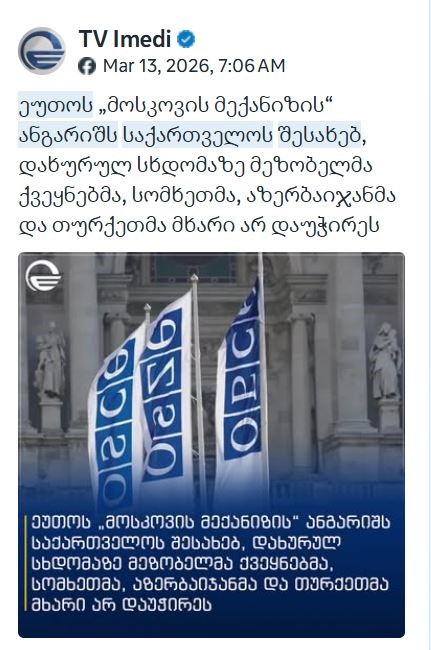
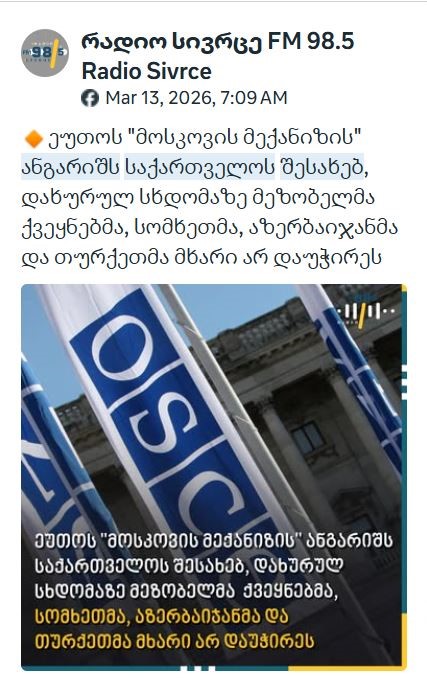
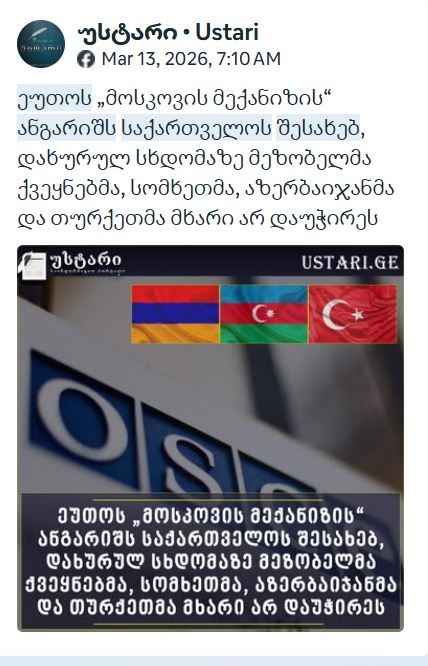
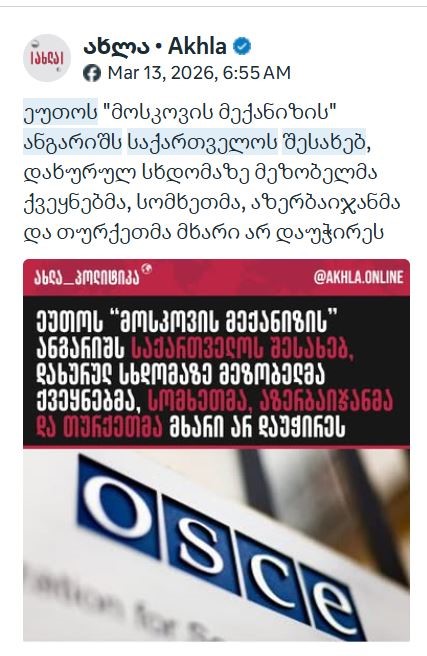
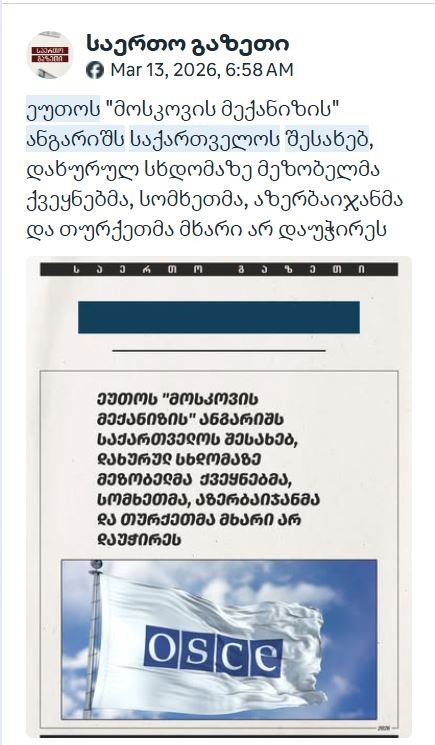
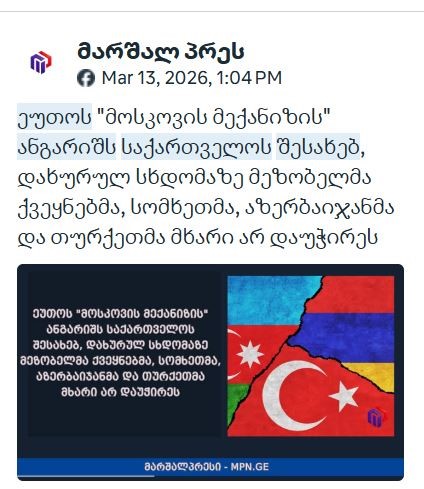
To discredit the conclusions prepared under the Moscow Mechanism and to manipulatively present its recommendations to the public, the propaganda ecosystem of Georgian Dream- previously documented multiple times by the International Society for Fair Elections and Democracy (ISFED) - launched a coordinated information campaign. According to the campaign’s core message, the OSCE is demanding the repeal of the “Law on Family Values” and the “Law on Transparency of Foreign Influence.” Only these demands were highlighted on disseminated information cards, creating the impression that the report addressed solely these issues. These cards, featuring identical text, were posted across all propaganda media pages within minutes of the report’s publication. On pages without restrictions on advertising, the posts were sponsored.
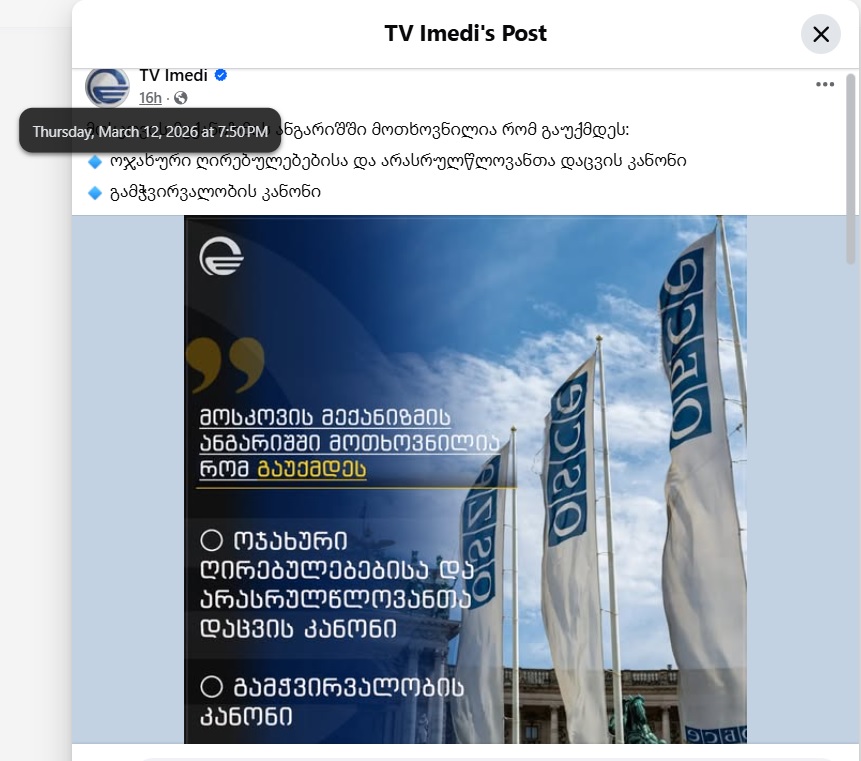
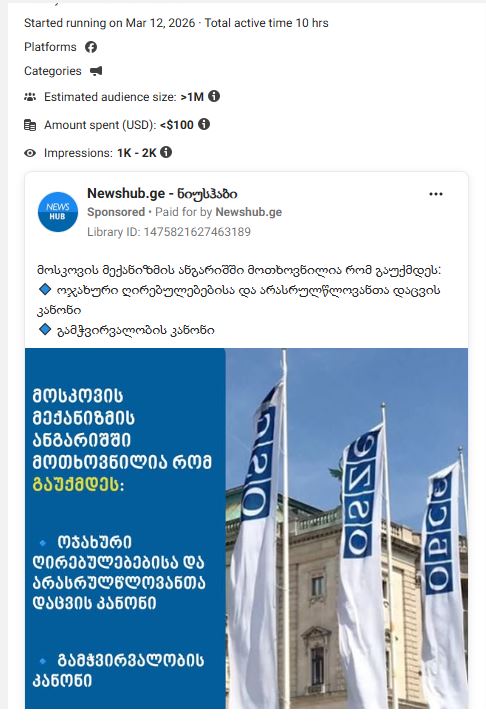
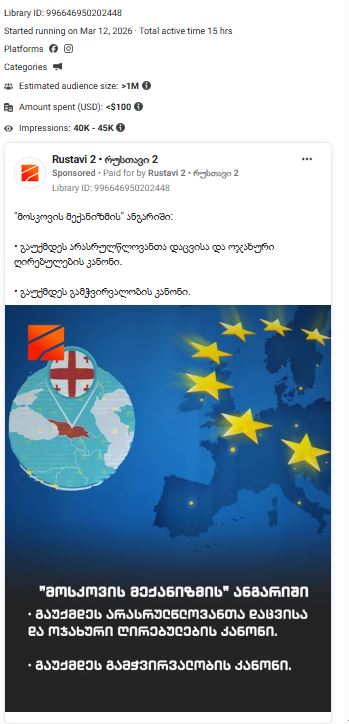
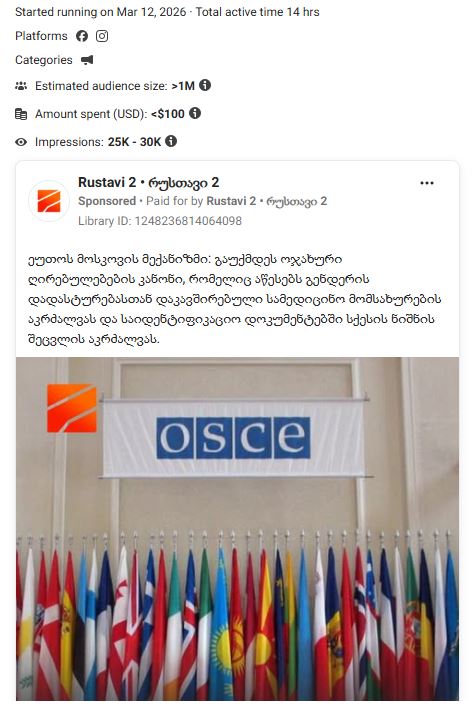
In line with tactics characteristic of the Georgian Dream propaganda ecosystem, the campaign initially involved individuals positioned as experts. They claimed that the report calls on the Georgian public to allow gender change for children and to “renounce national dignity, customs, traditions, and faith.” Another group of actors affiliated with Georgian Dream portrayed the activation of the Moscow Mechanism yet another attempt by external forces to incite unrest in the country. Members of the Georgian Dream party later joined the campaign as well.
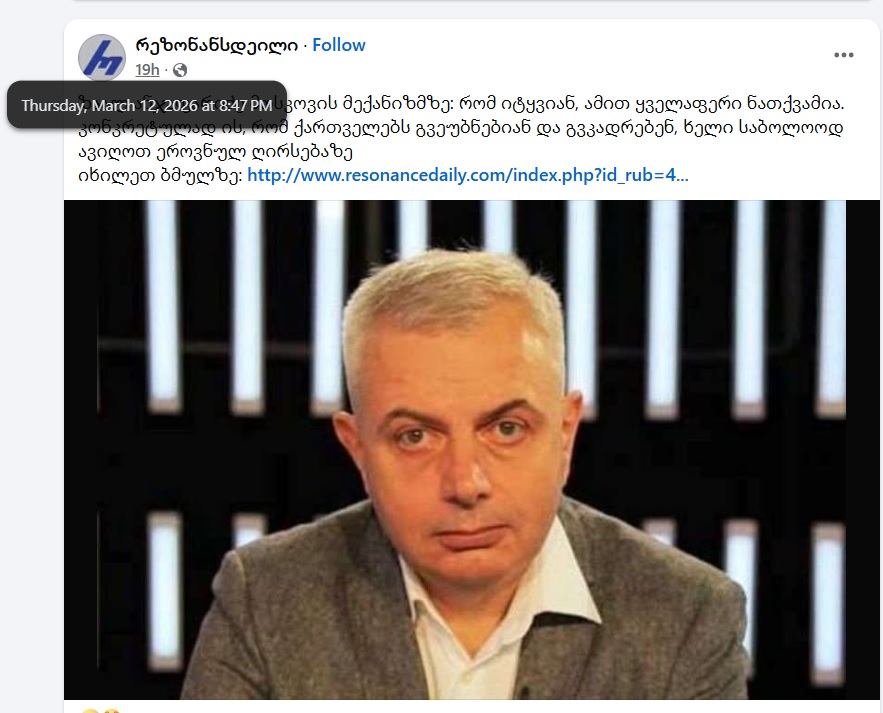
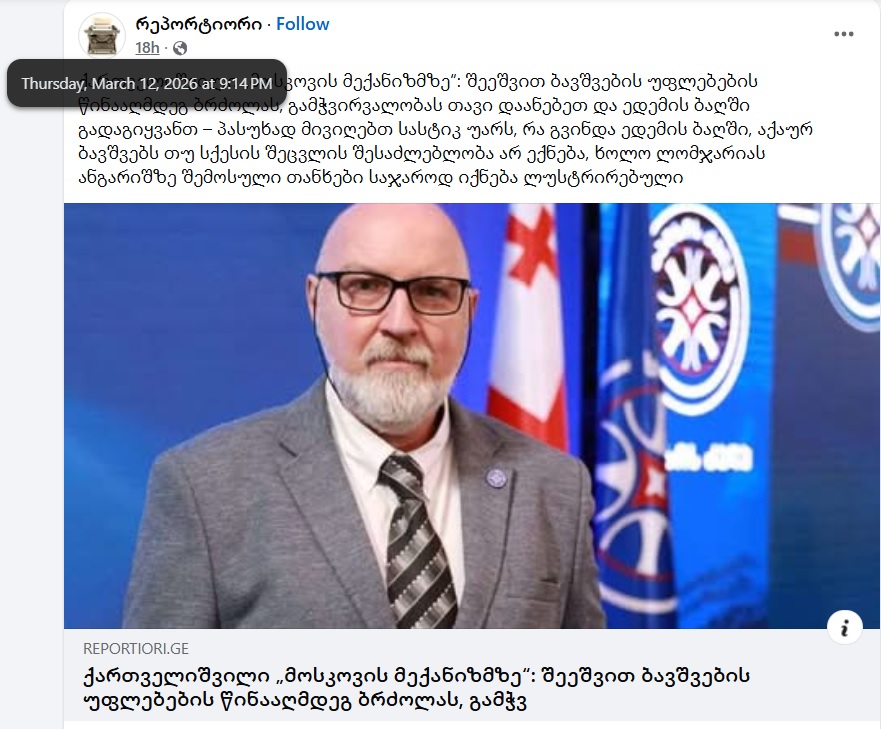
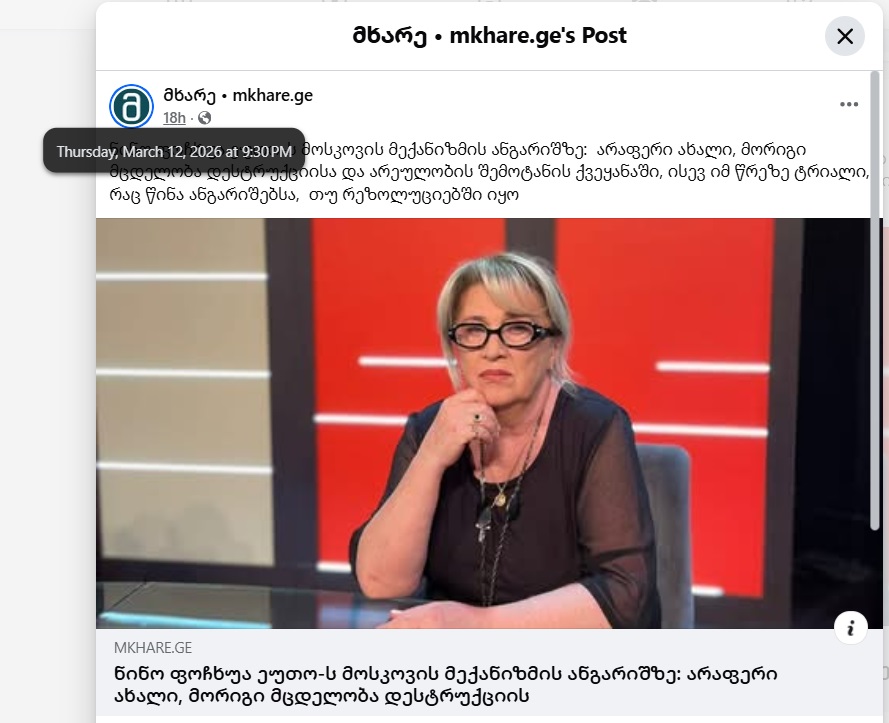
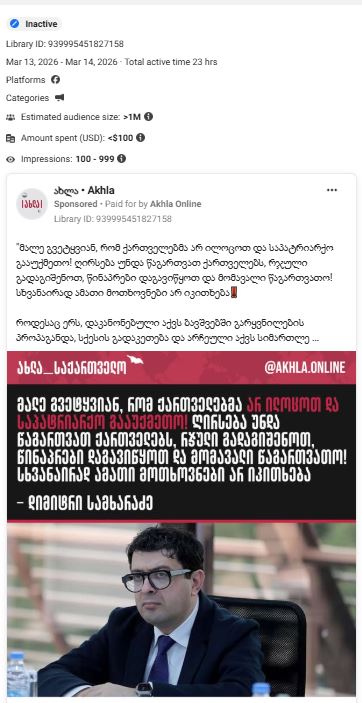
A key line of the Georgian Dream propaganda was the minimization of international support for the report prepared under the Moscow Mechanism. According to media outlets involved in the campaign, only 24 OSCE participating states supported the document, and these did not include neighboring countries or the United States. Notably, the text on the cards published by propaganda media was entirely identical, and some of the posts were sponsored, including by a page which, according to a report by Myth Detector, has been promoting content from “POSTV” and “Imedi” on Meta platforms through advertisements following sanctions.
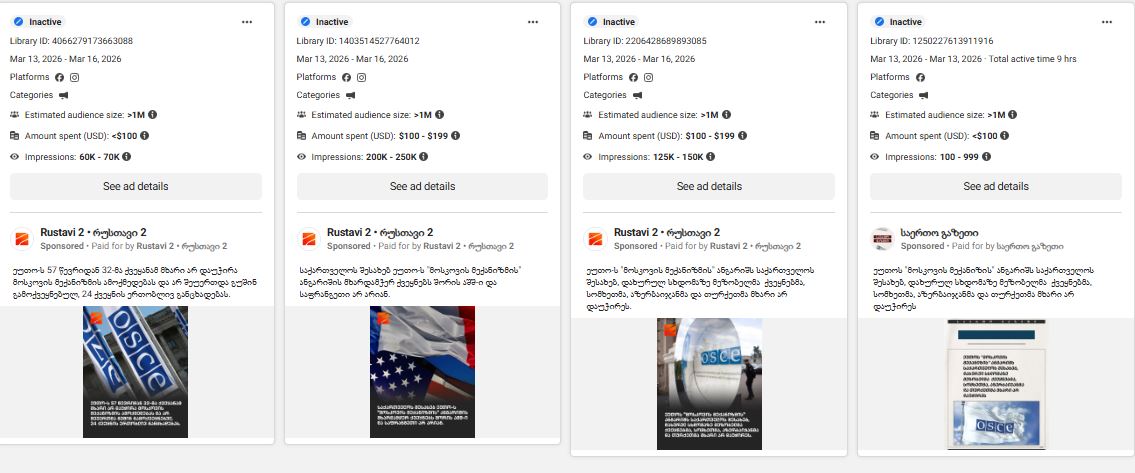
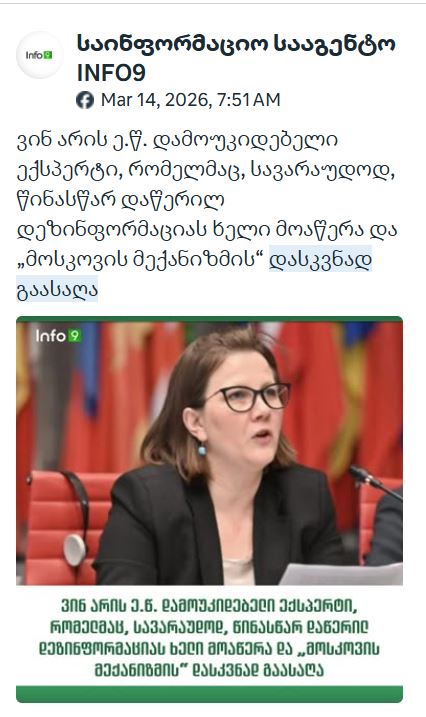
The next stage of the campaign was the discrediting of the author of the report prepared under the Moscow Mechanism. In this case as well, the campaign was coordinated and involved representatives of Georgian Dream, their supporters, and propaganda media outlets. The cards disseminated by the media again featured identical text, with some posts being sponsored. The propaganda portrayed the author of the OSCE report as biased, emphasizing her professional experience related to cooperation with the Polish government. The main message advanced by the Georgian Dream representatives was that the report was not written by an expert, but rather that the expert had merely signed a document prepared by the “collective United National Movement.”
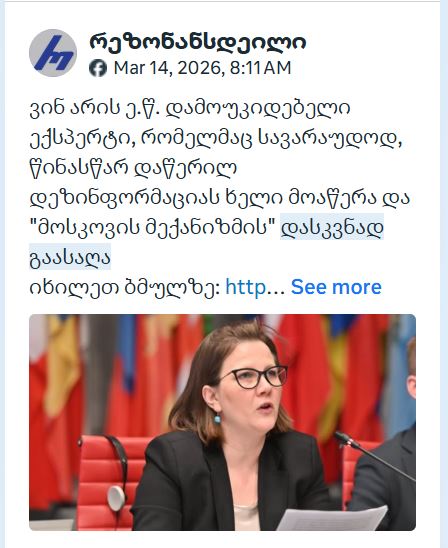
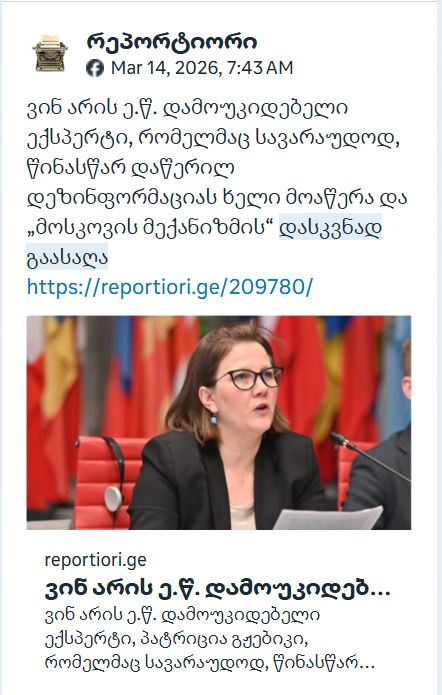
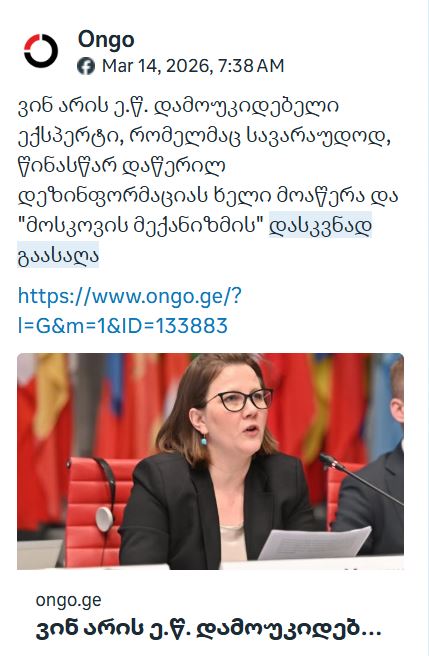
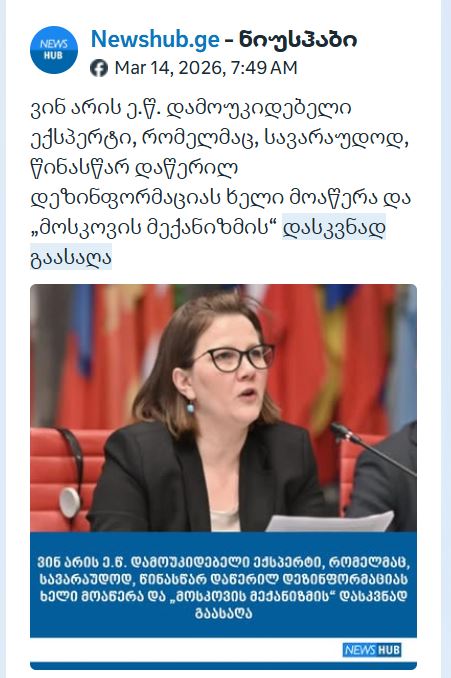
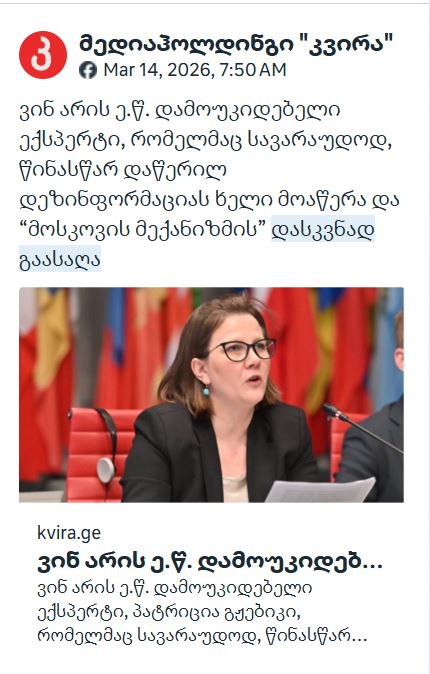
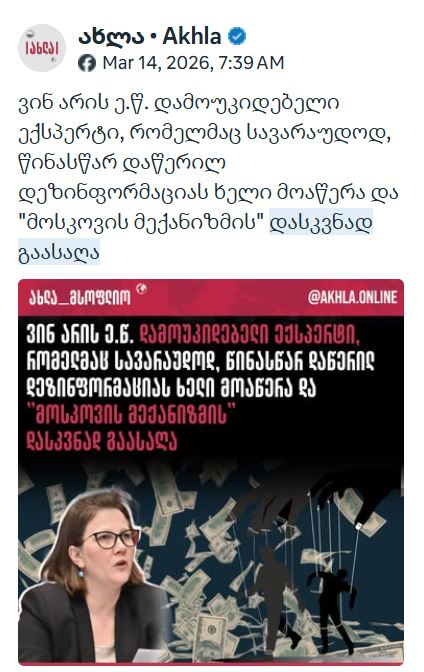
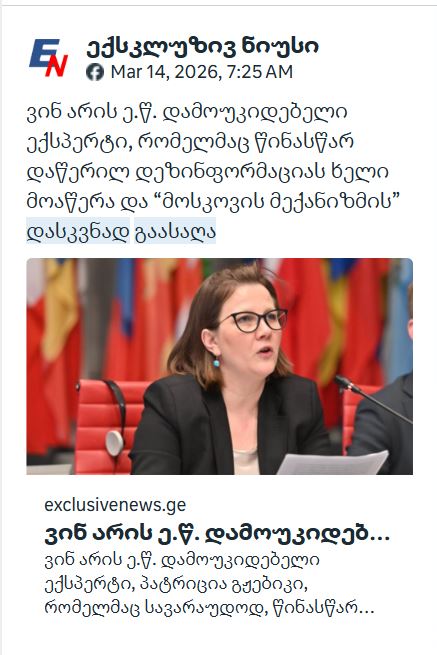
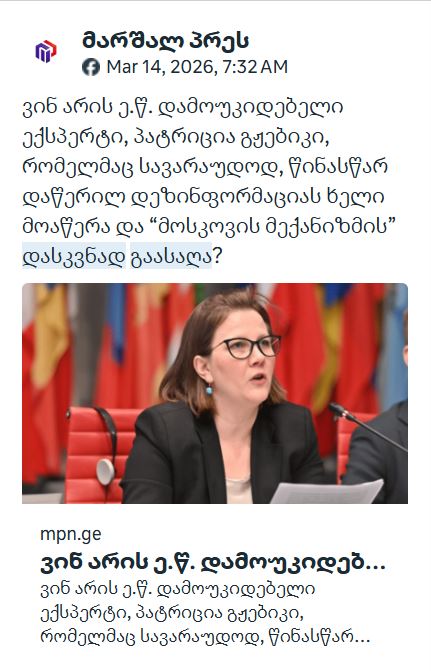
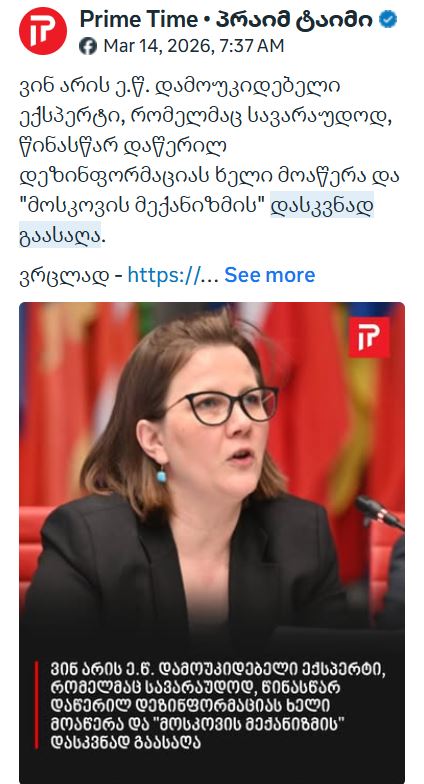
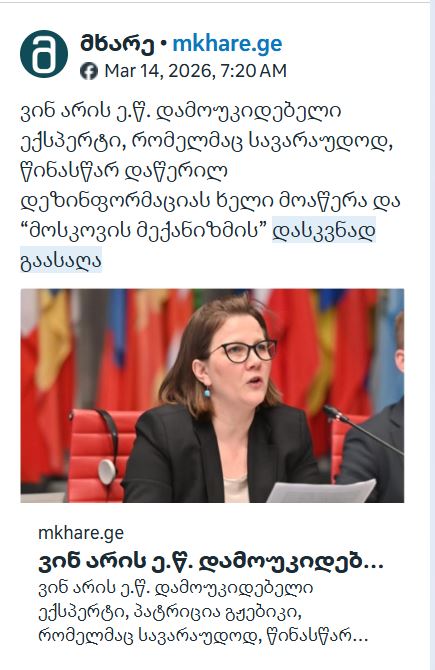
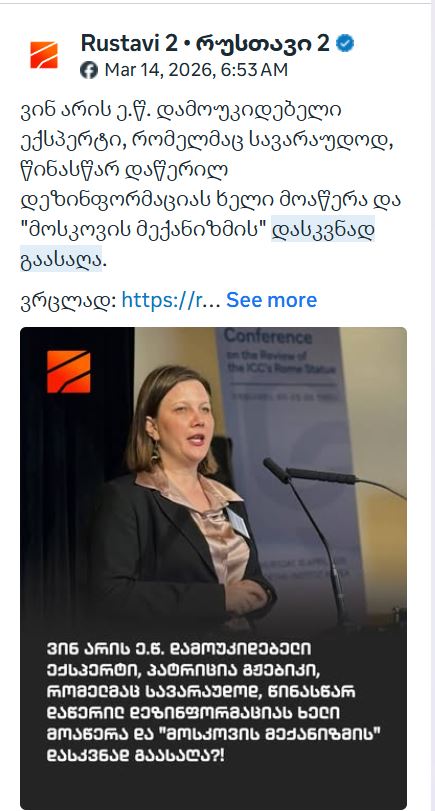
Anonymous actors were also actively involved in the campaign aimed at discrediting the Moscow Mechanism. Narratives disseminated through pro-Georgian Dream Facebook pages and TikTok channels framed the OSCE conclusions as an attempt to interfere in Georgia’s domestic politics. Identical-content cards and statements by Georgian Dream leaders were disseminated in a coordinated manner across various pages. On the one hand, these statements portrayed the report prepared by the OSCE special mission as reflecting the narrow political interests of certain countries and as defamation against Georgia; on the other hand, they emphasized Georgia’s democratic development under Georgian Dream governance. Statements by Irakli Kobakhidze were widely circulated, in which he identified the Polish government as an interested party behind critical assessments of Georgia.
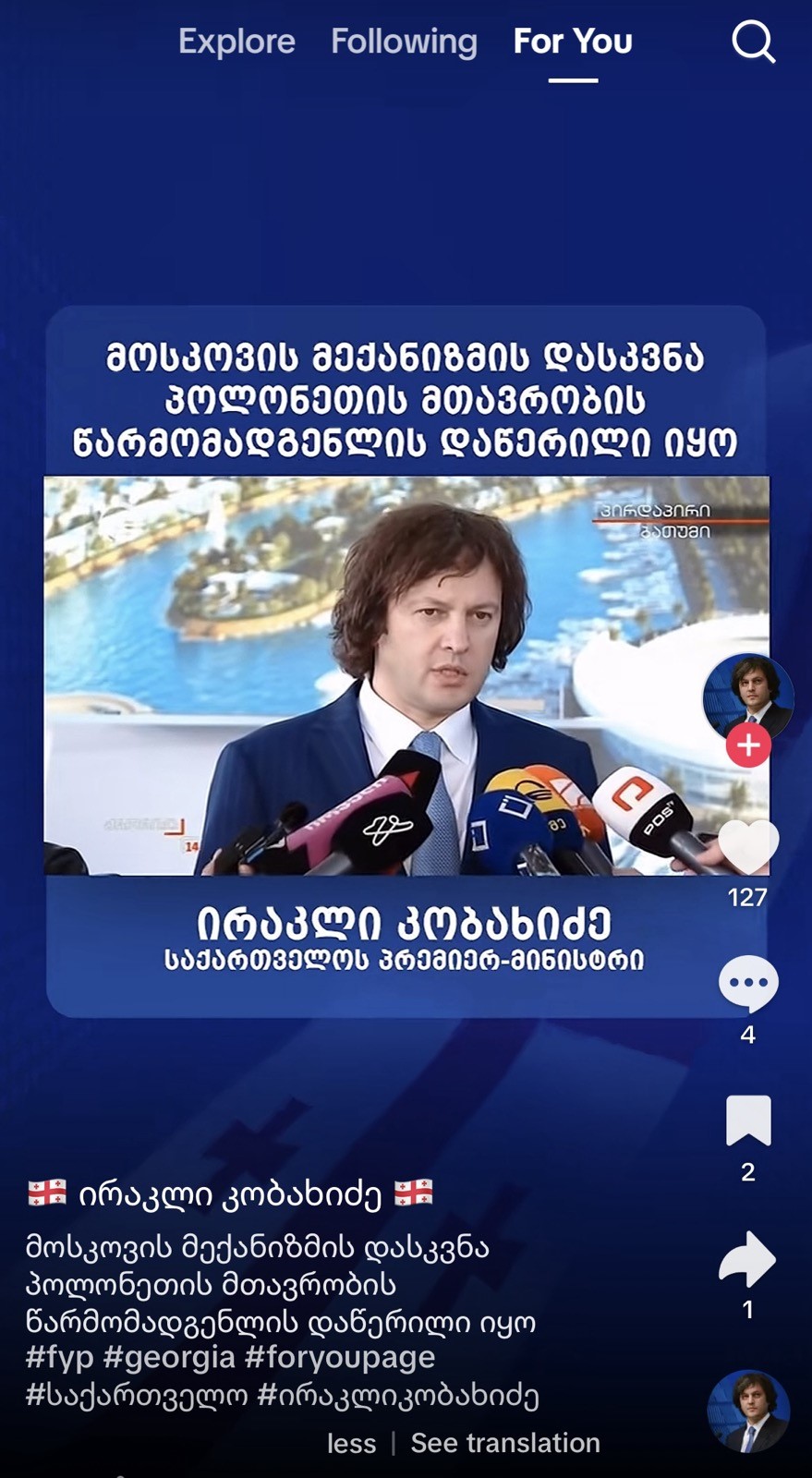
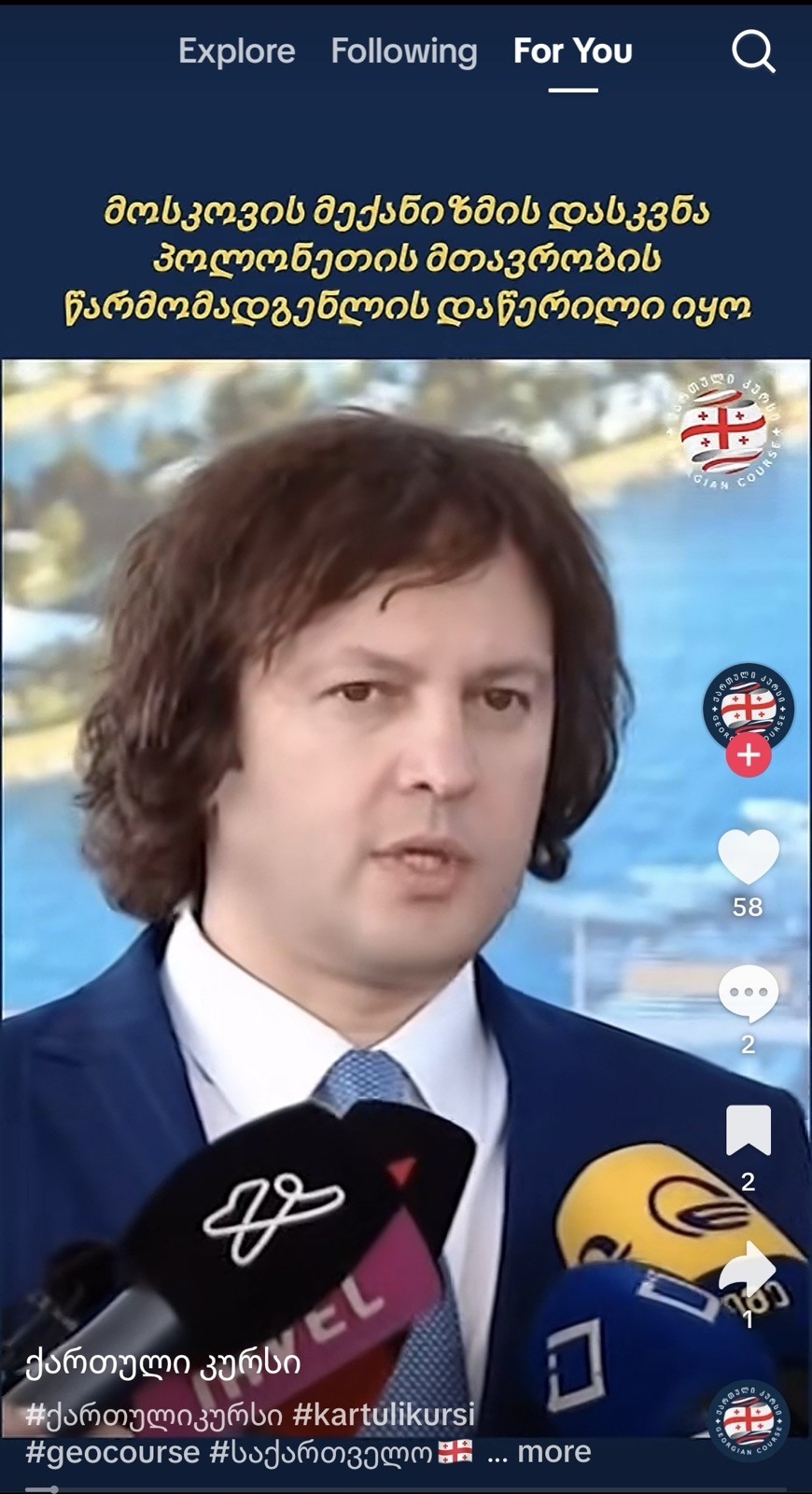
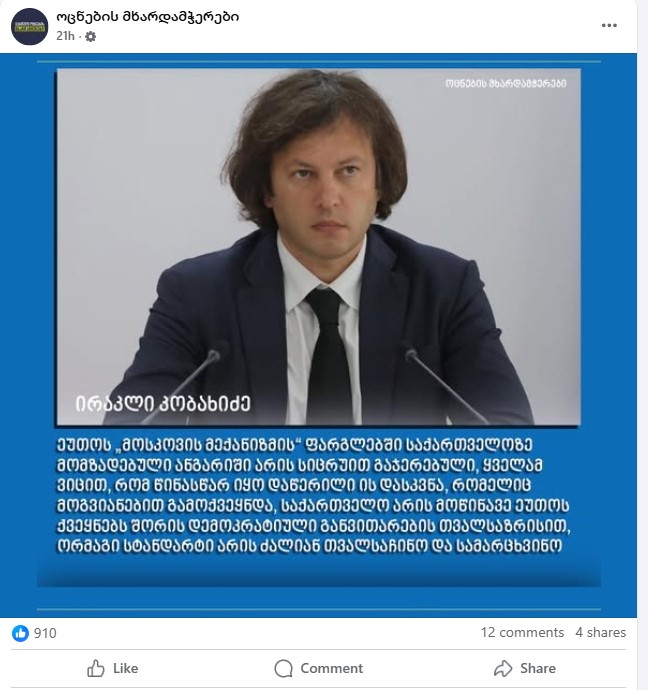
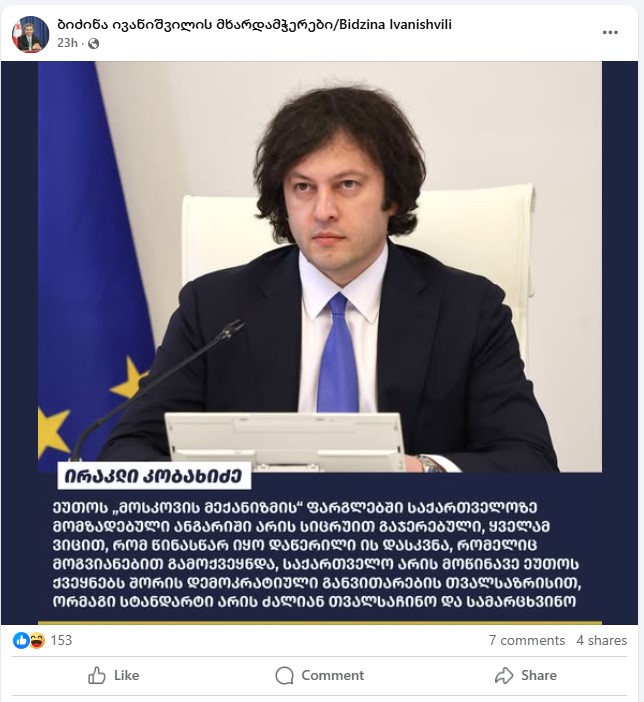
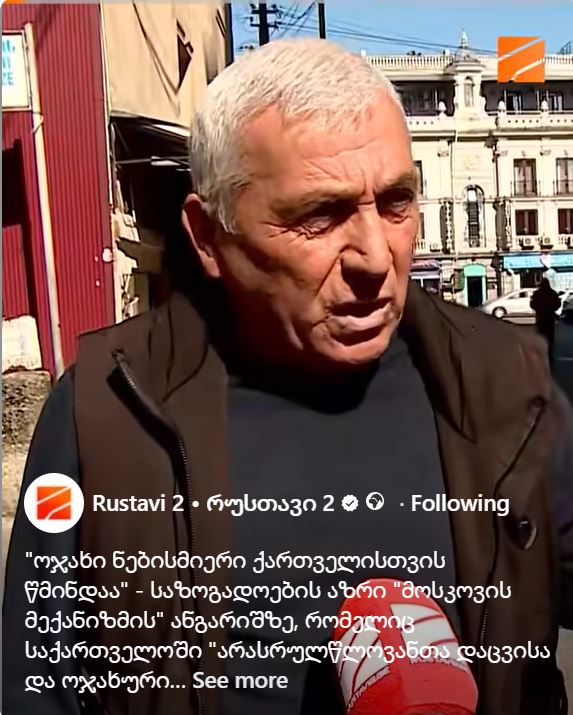
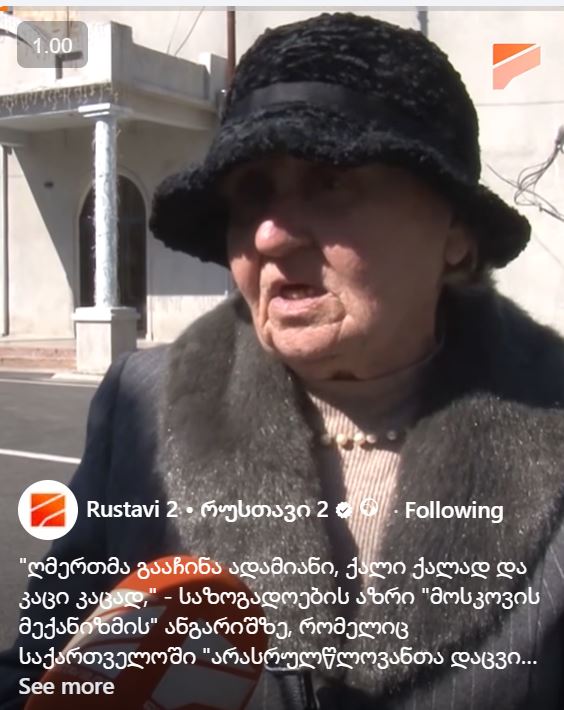
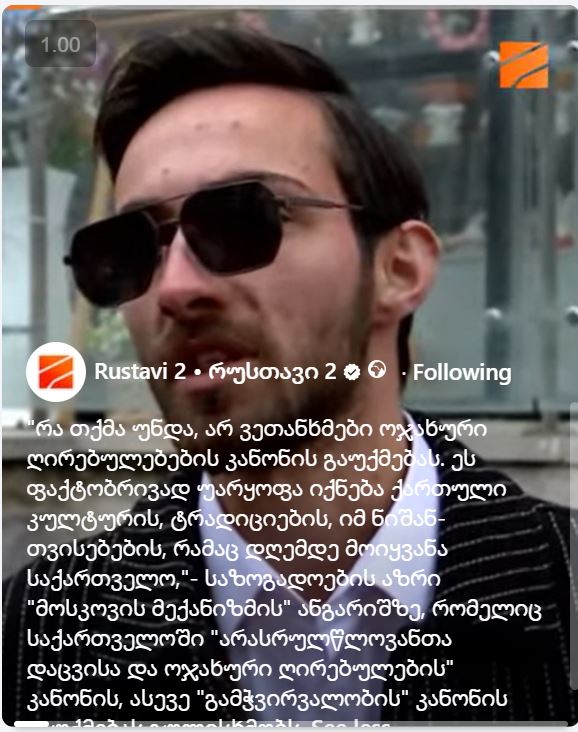
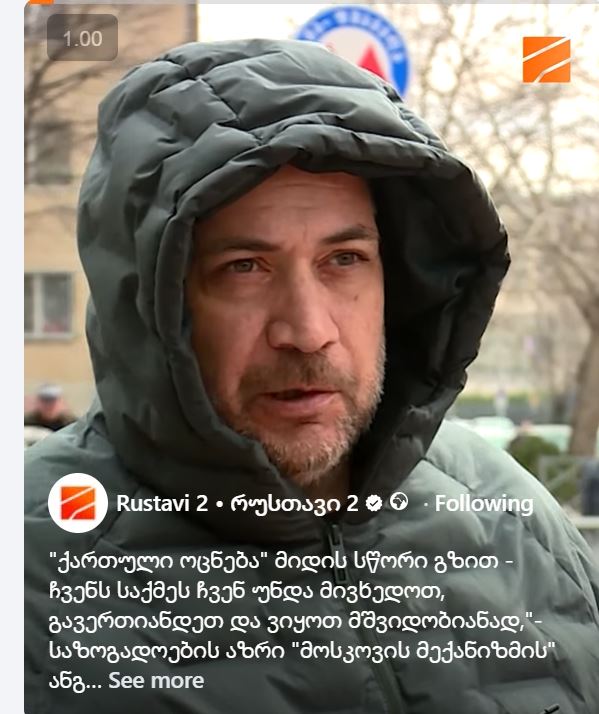
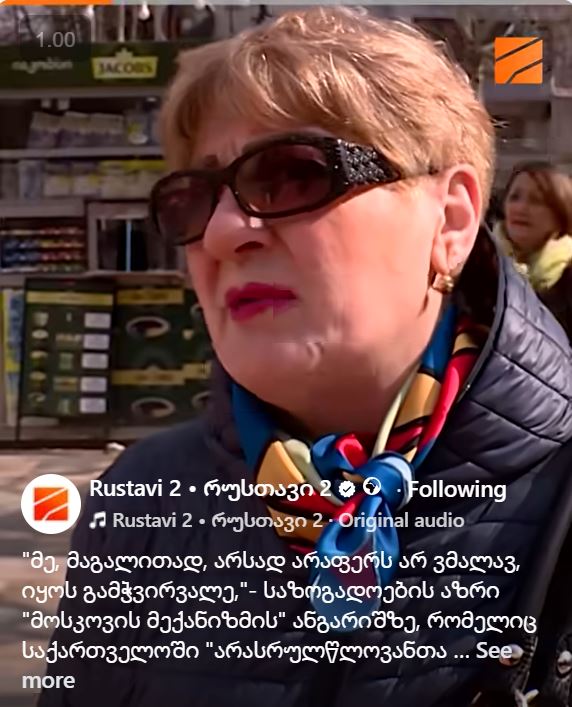
In addition, as part of the campaign against the conclusions prepared under the Moscow Mechanism, propaganda media employed a well-established tactic - “street interviews.” On the Facebook page of “Rustavi 2,” five such videos were published, in which respondents’ answers were fully aligned with propaganda narratives. The purpose of these interviews was to present propaganda messages as the opinion of the majority. Notably, the wording of the questions was not audible in the videos, while the follow-up questions included in the footage were posed in a manipulative manner.
On March 16, Irakli Kobakhidze held a briefing in which he spoke about the Moscow Mechanism and once again described the published report as based on falsehoods. His statement consolidated all the narratives that had been disseminated by the propaganda ecosystem since the report’s publication.
The developments following the publication of the OSCE Moscow Mechanism report demonstrate that actors affiliated with the authorities avoided engaging with the substance of the document and instead focused on discrediting it. The coordinated dissemination of messages indicates that the campaign aimed to divert public attention from the problems identified in the report and to undermine its credibility.
Photo Gallery
